
Last updated September 22, 2026
Level 1 sweep and inspection to the NFPA 211 annual standard - flue, crown, cap, and flashing checked and photographed
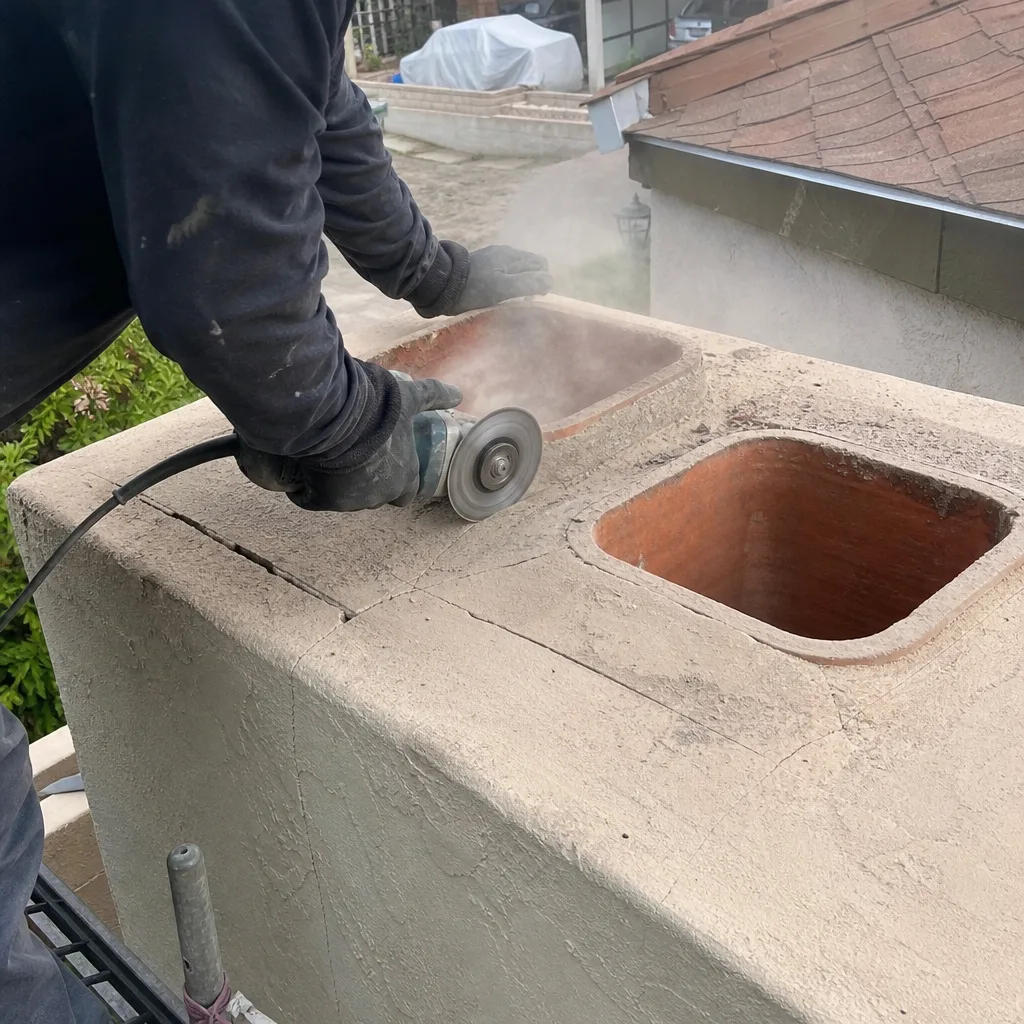
Chimney sweep logs do not sweep chimneys. They loosen some creosote - which then falls where a brush and vacuum still have to collect it.
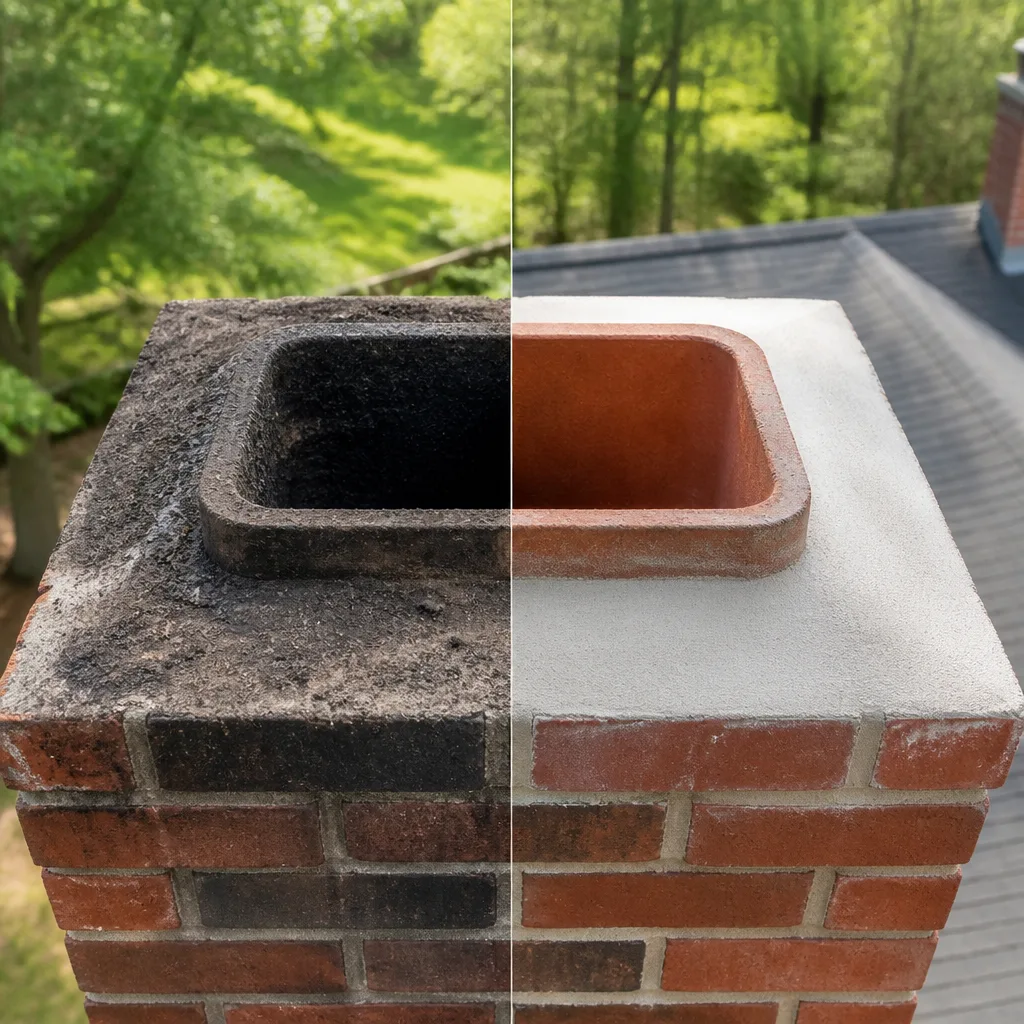
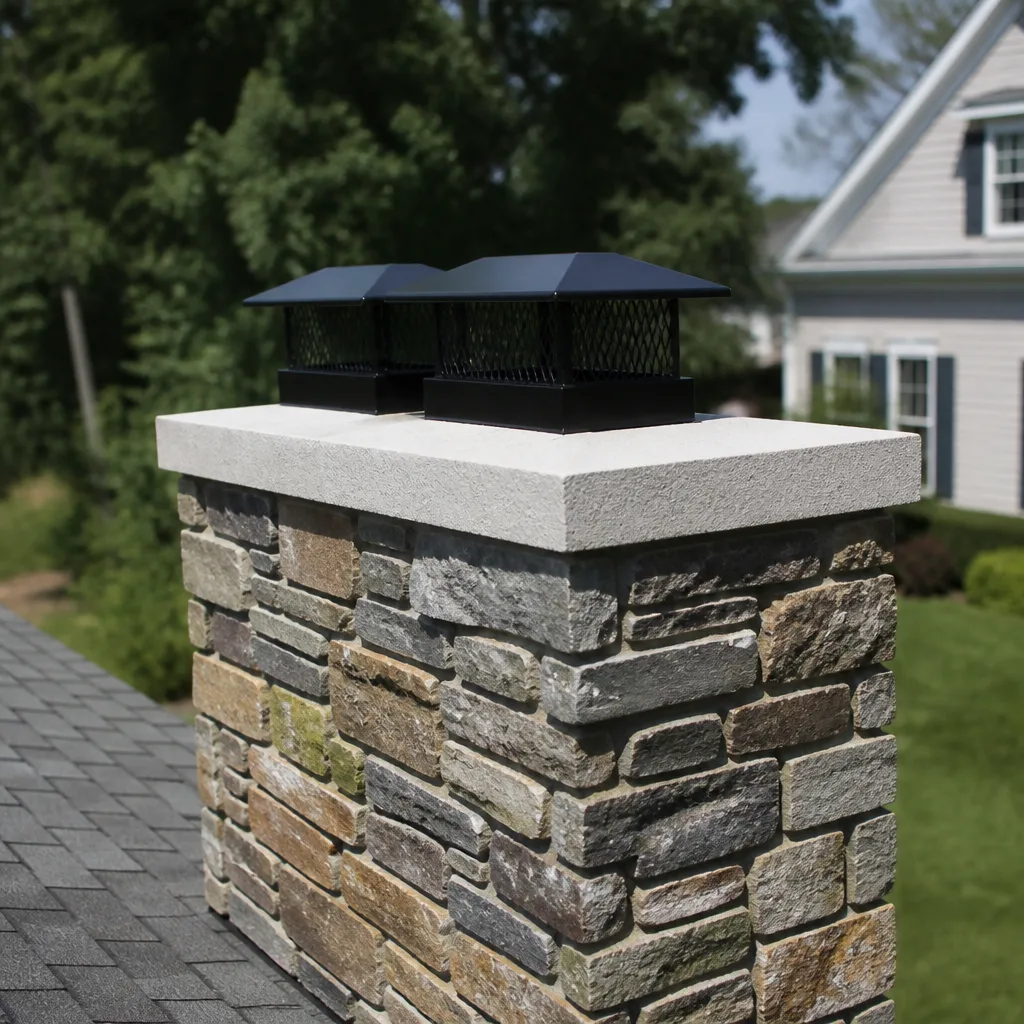
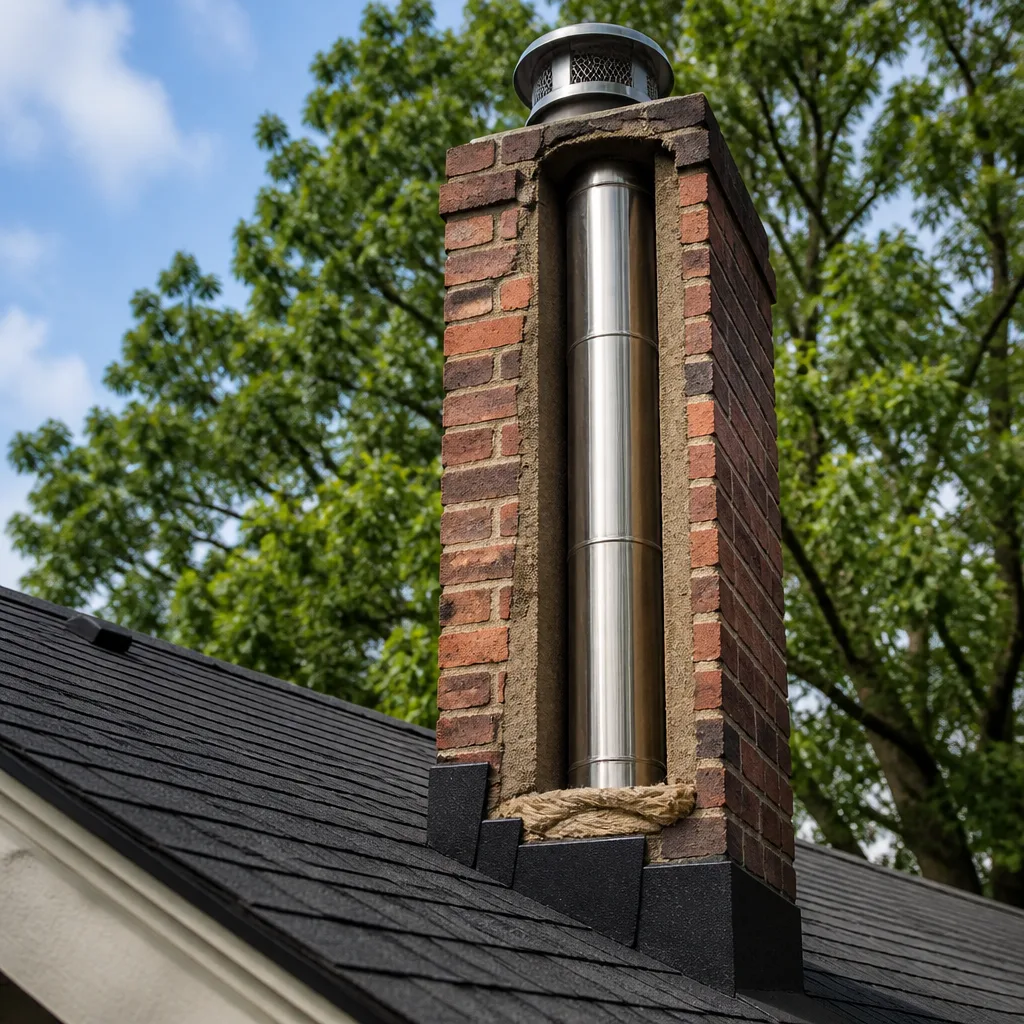
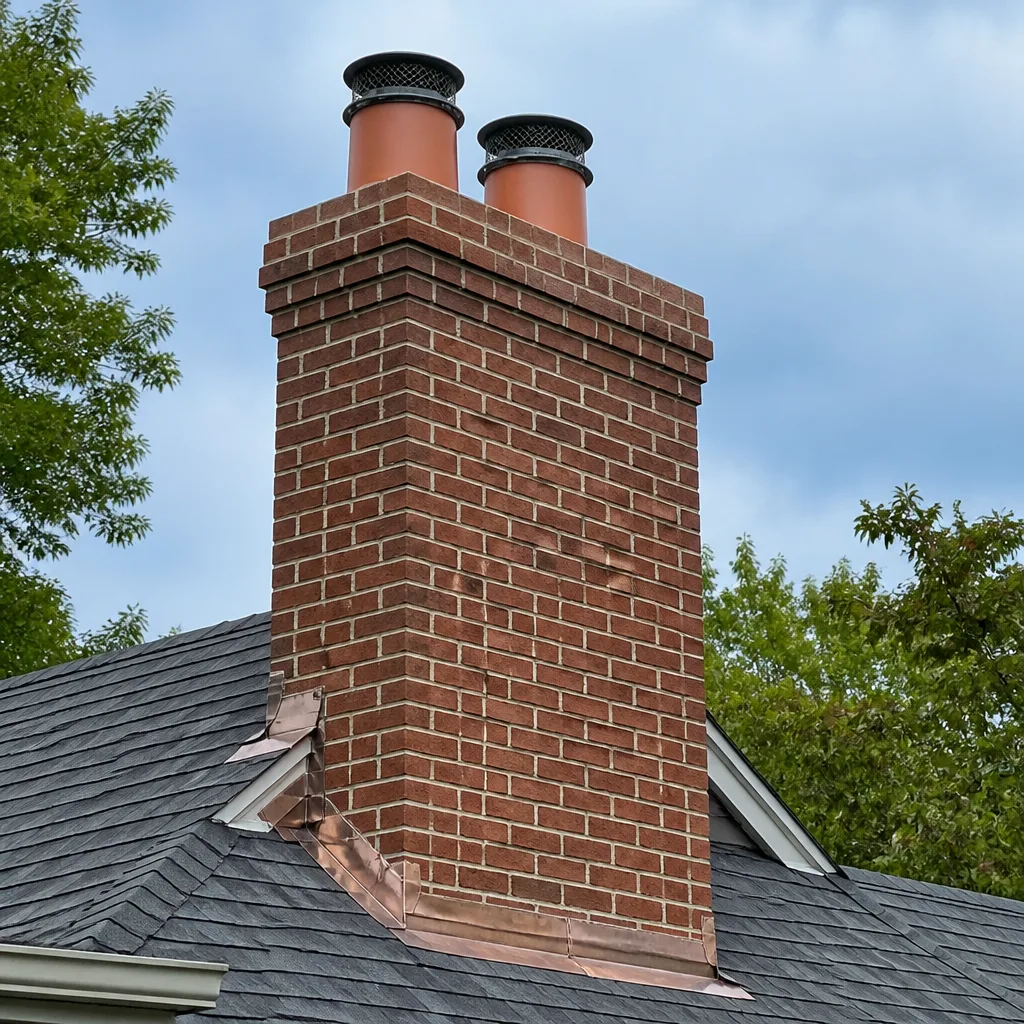
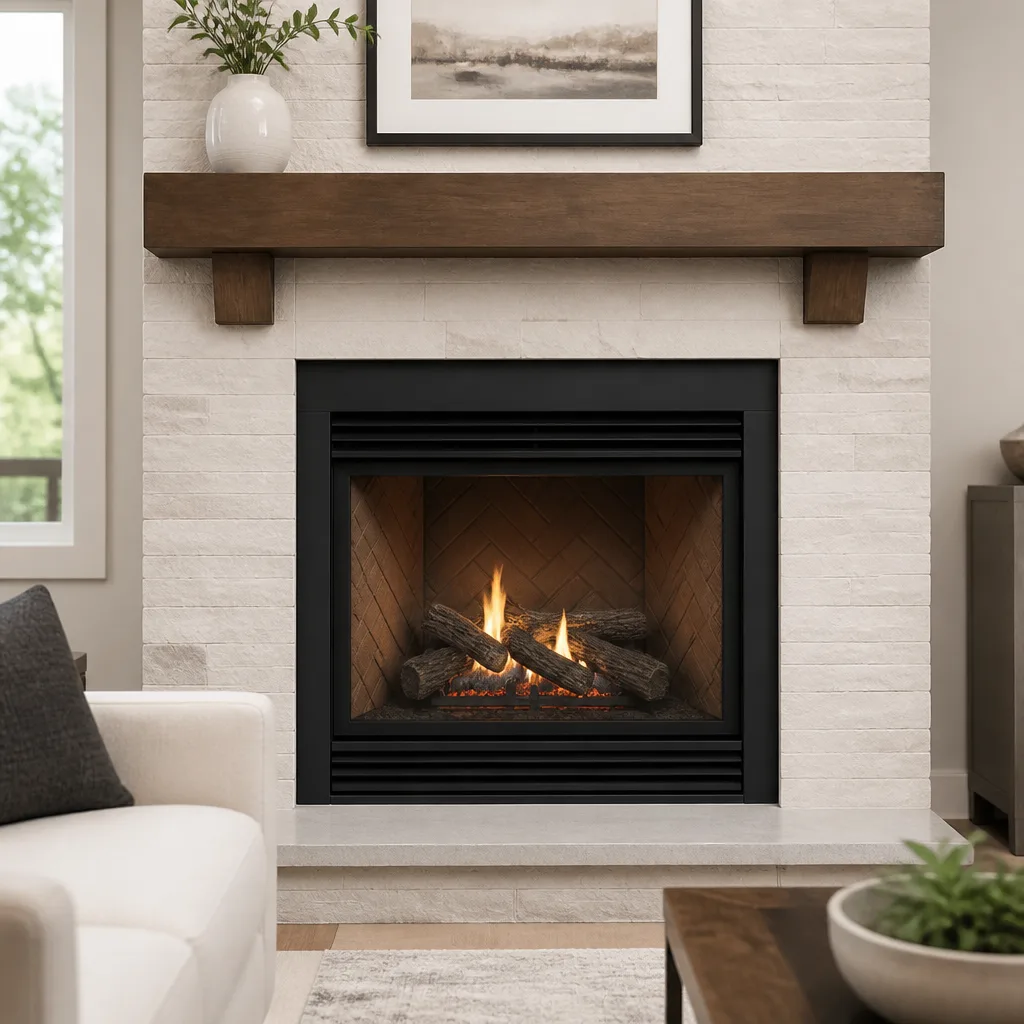
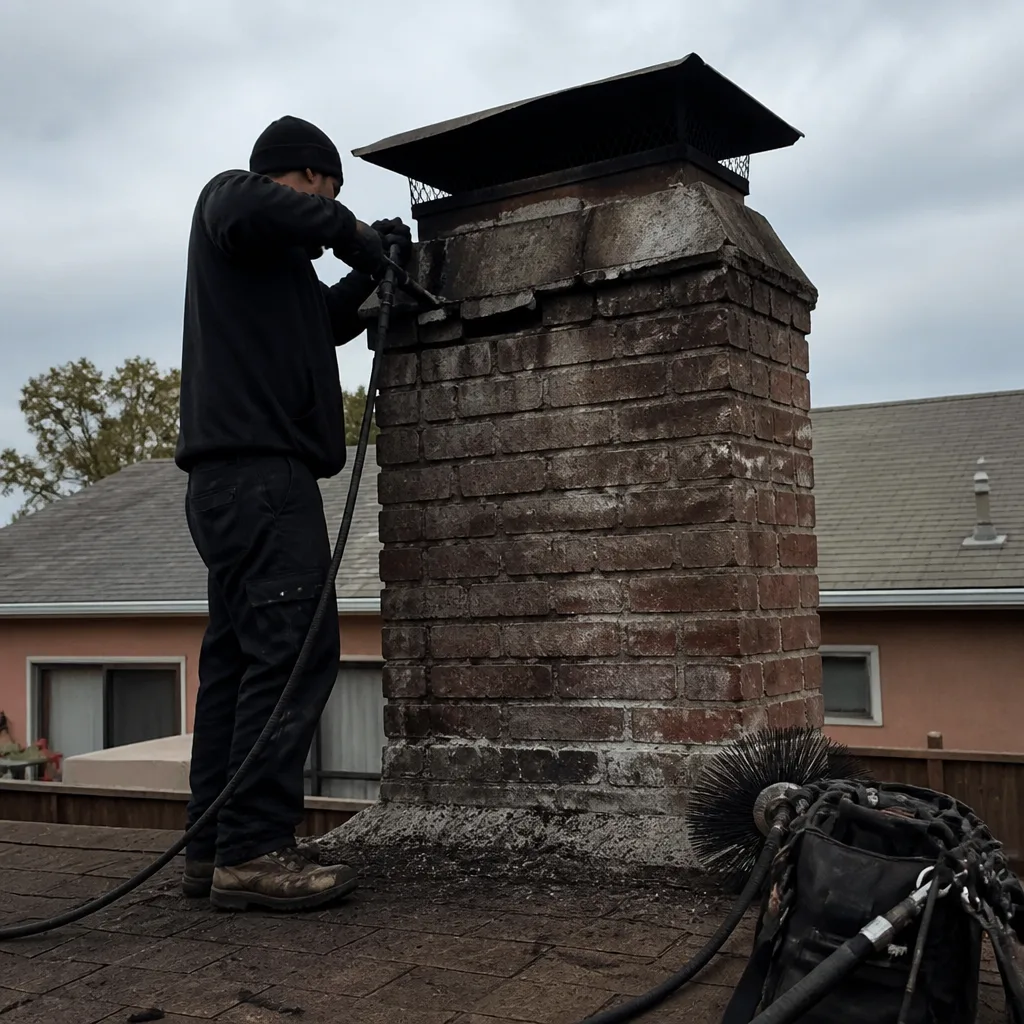 Before
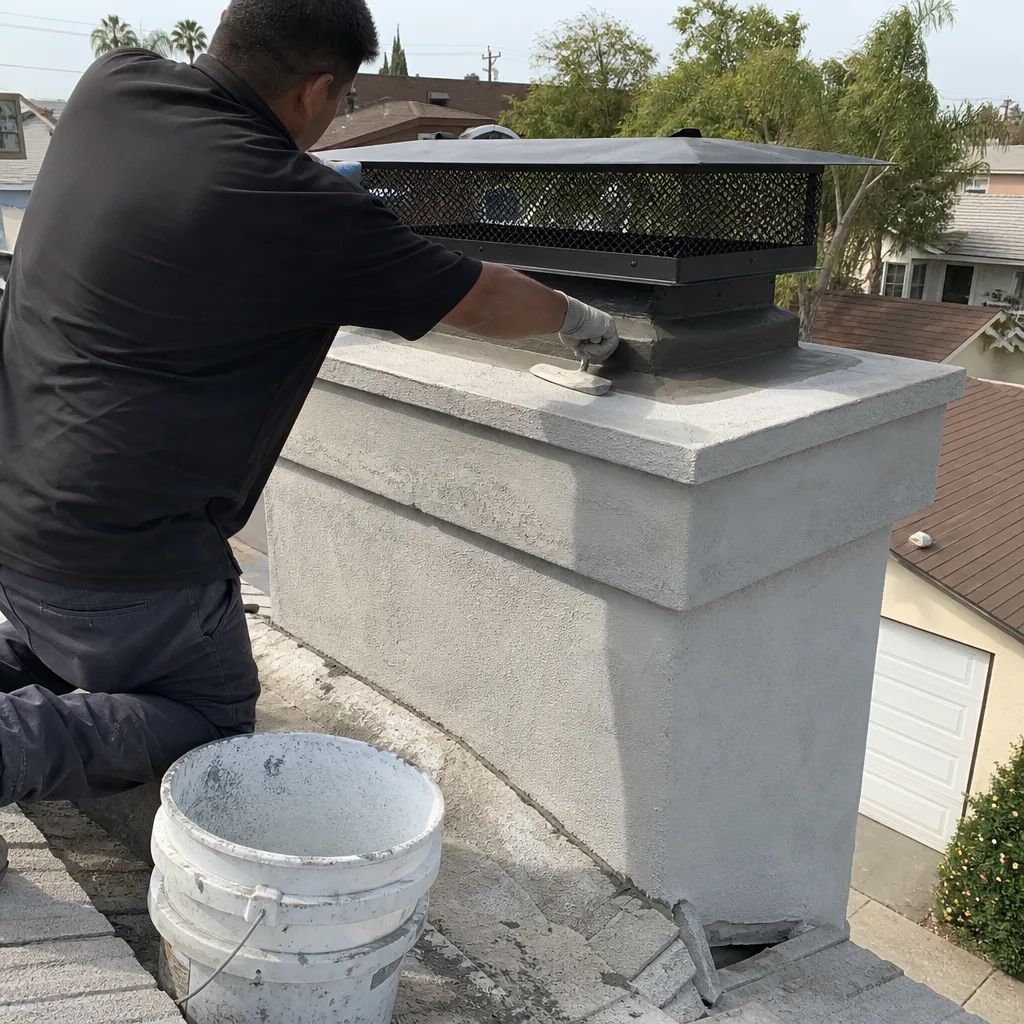 After
After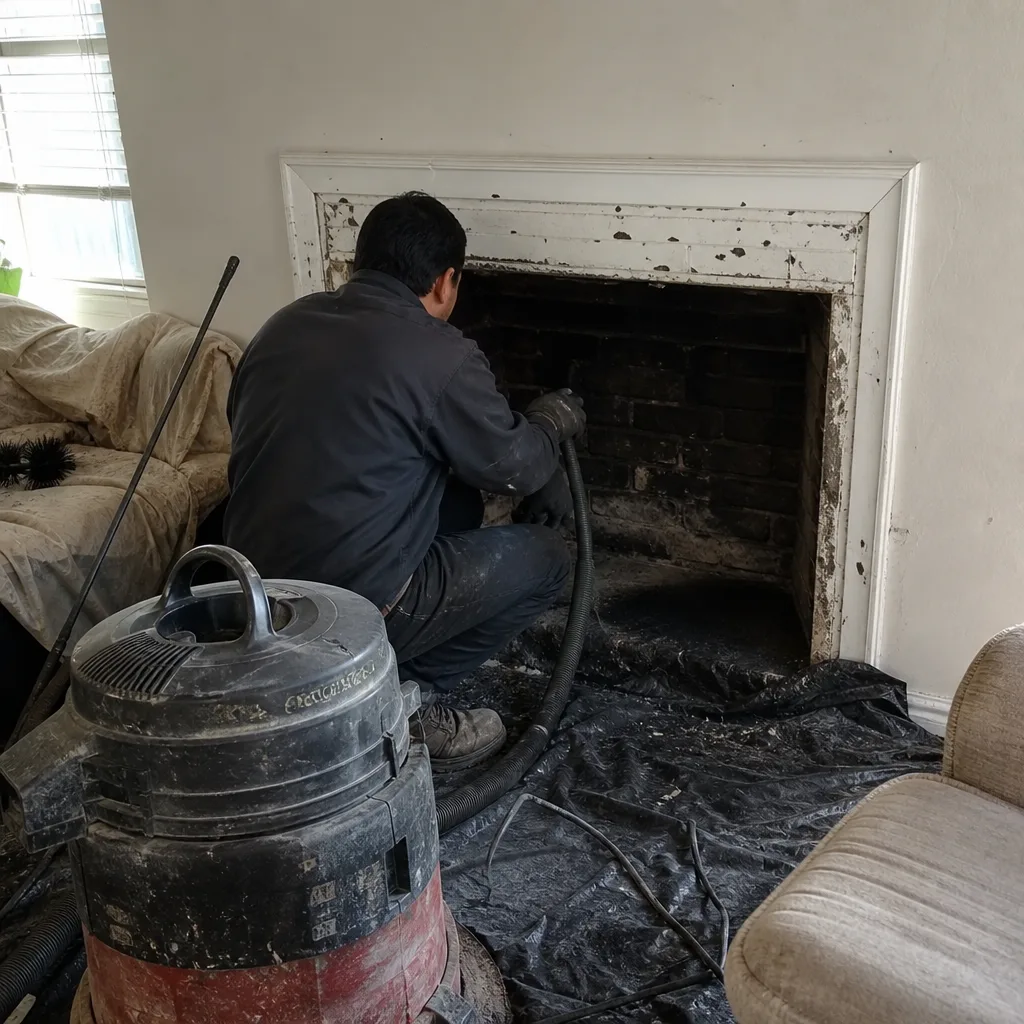 Before
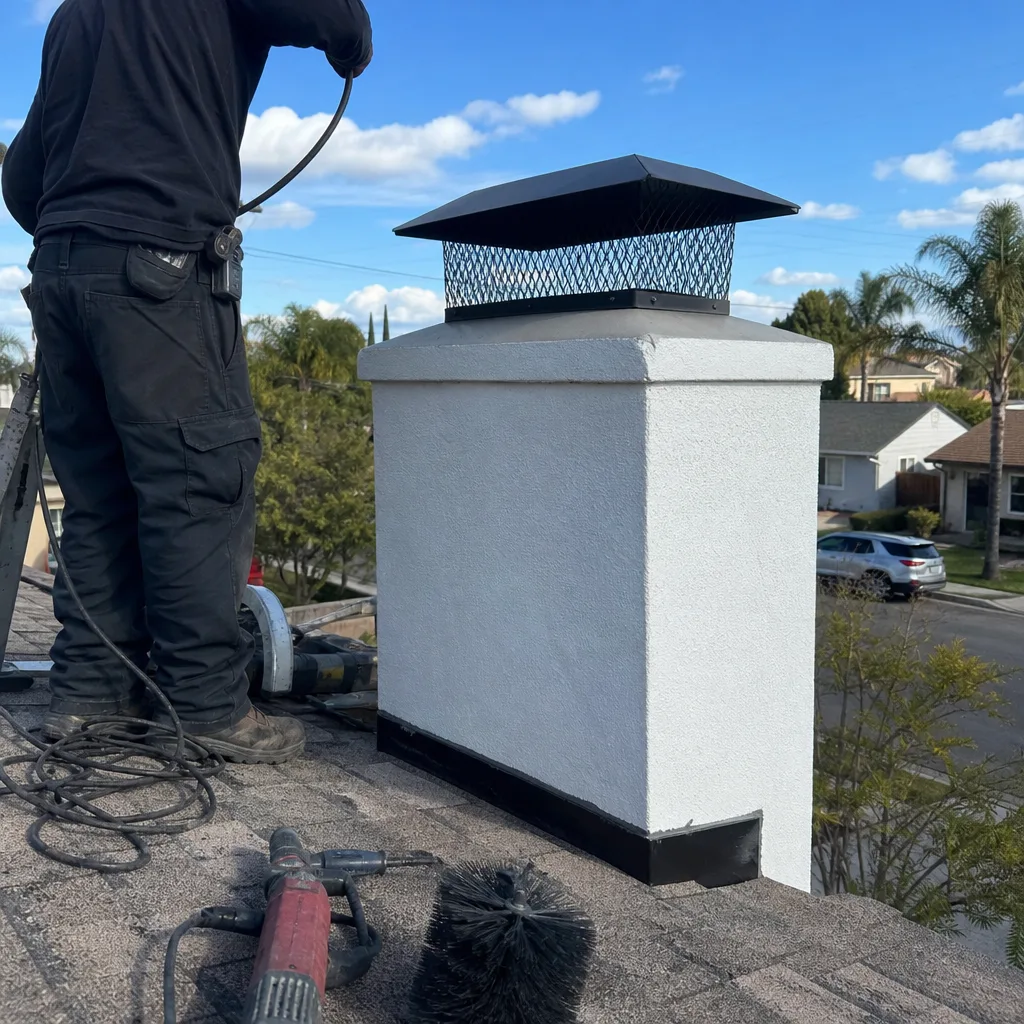 After
After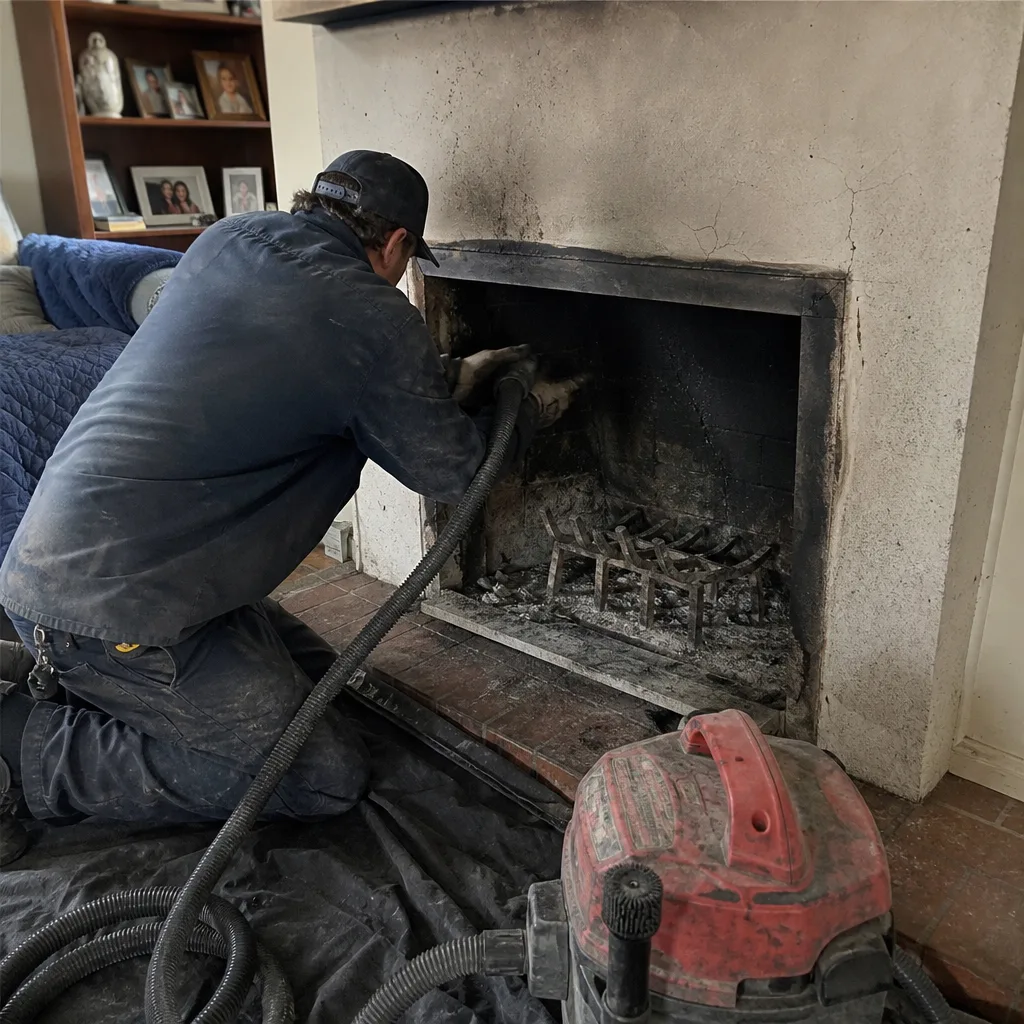 Before
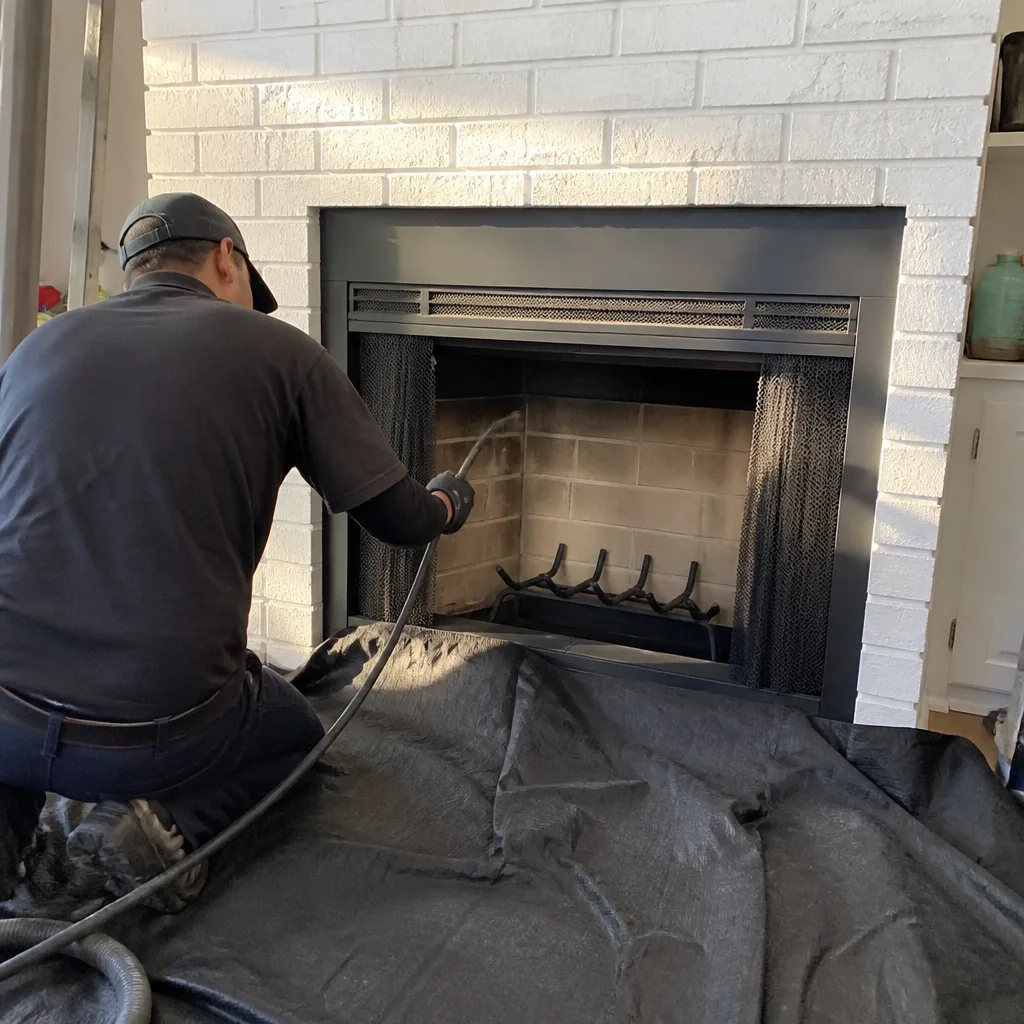 After
AfterThe Complete Guide to Chimney Cleaning in Long Beach
Long Beach sits inside the marine layer roughly 200 days a year. That humidity doesn’t just make mornings gray - it turns light creosote deposits into glazed stage-three buildup faster than anywhere inland, and most seasonal chimney care guides ignore Long Beach’s year-round humidity. If you’re searching for chimney cleaning in Long Beach, you’re probably dealing with a coastal flue that behaves nothing like the dry-climate examples in standard NFPA literature. This guide walks through what actually happens during a proper sweep here: how salt air changes your cleaning schedule, why a flashlight inspection misses what a camera scan catches, and what a written estimate should itemize before anyone touches your firebox.
Quick Answer
A professional chimney cleaning in Long Beach costs $199-$349 for a standard sweep with Level 2 camera inspection, and should be performed every 12 months if you burn regularly - or every 8-10 months if you’re within two miles of the coast, where marine moisture accelerates creosote glazing. The service includes a documented photo record of your flue liner condition, a written price before work begins, and a sweep of the firebox, smoke chamber, and damper assembly.
Table of Contents
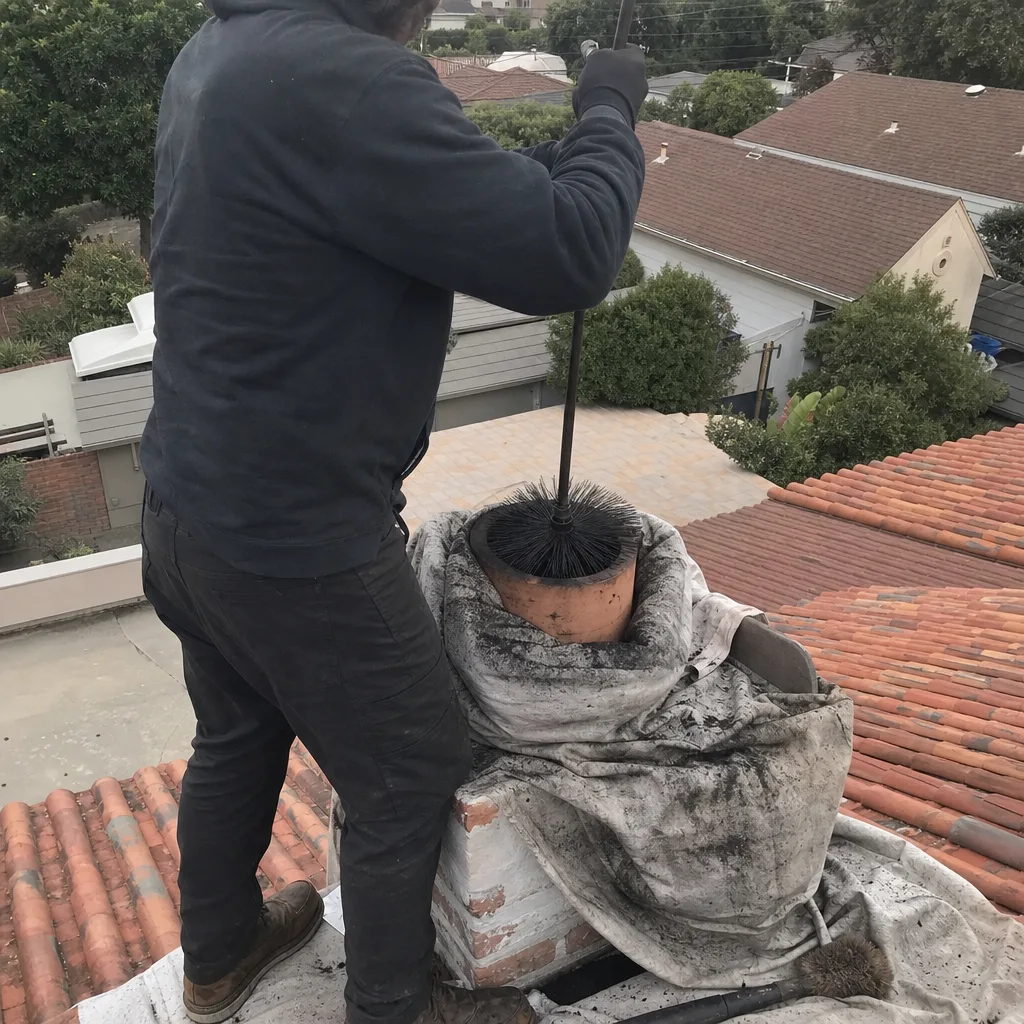
- Why Long Beach’s Salt Air Changes Everything About Creosote
- Level 1 Flashlight Check vs. Level 2 Camera Scan - What’s Actually Required
- The Real Sequence of a Chimney Cleaning Appointment
- What a Written Estimate Should Itemize (And What “Chimney Cleaning” Alone Hides)
- How a Documented Photo Record Protects You in LA County
- Cleaning Frequency and Cost in Long Beach
- Common Mistakes to Avoid
- When to Call a Professional
- Frequently Asked Questions
 Before
 After
AfterWhy Long Beach’s Salt Air Changes Everything About Creosote
Most DIY chimney cleaning guides treat creosote as a function of wood choice and burn temperature. That’s true in Tucson. In Long Beach, the marine layer adds a variable those guides don’t address: hygroscopic moisture absorption.
Here’s what happens. Wood smoke condenses on the cooler upper flue, creating a tacky layer of Stage I creosote - flaky, sooty, easy to brush away. In dry climates, it stays there until your next fire. In Long Beach, especially in neighborhoods like Belmont Shore, Naples, and the Peninsula where onshore flow is constant, that layer absorbs atmospheric moisture 200-plus days annually. The result is accelerated glazing: Stage II (tar-like) and Stage III (hard, glassy, nearly impossible to remove with standard brushes) develop faster than NFPA 211’s generic “annual inspection” timeline suggests.
We’ve seen this in practice. A homeowner in the Bluff Park area burning seasoned almond on weekends can develop Class III glazed creosote in 14 months - what might take 24-30 months in Riverside or San Bernardino. The salt content in coastal air doesn’t directly cause glazing, but the humidity cycle does: wet-dry-wet-dry hardens deposits progressively.
What this means for your cleaning schedule:
- Within 1 mile of the Pacific (Peninsula, Belmont Shore, Naples, Bluff Park): inspect every 8-10 months if burning 2+ times weekly
- 1-3 miles inland (Downtown, Alamitos Beach, Bixby Knolls): standard 12-month cycle
- North Long Beach, Lakewood border areas: 12-month cycle unless burning daily in winter
- Any visible moisture staining on exterior masonry: add a mid-season check regardless of schedule
The cleaning protocol changes too. Glazed creosote often requires mechanical removal (chains, whips, or rotary systems) rather than poly brushes alone. A sweep who treats your Long Beach flue like a Phoenix flue will leave significant buildup in place.
Materials matter here. We use Olympia Chimney stainless liners and Gelco cap systems in coastal installations specifically for corrosion resistance - standard galvanized caps show pitting within 3-4 years in Long Beach’s salt air, where stainless or copper-grade materials last 15-plus.
Level 1 Flashlight Check vs. Level 2 Camera Scan - What’s Actually Required
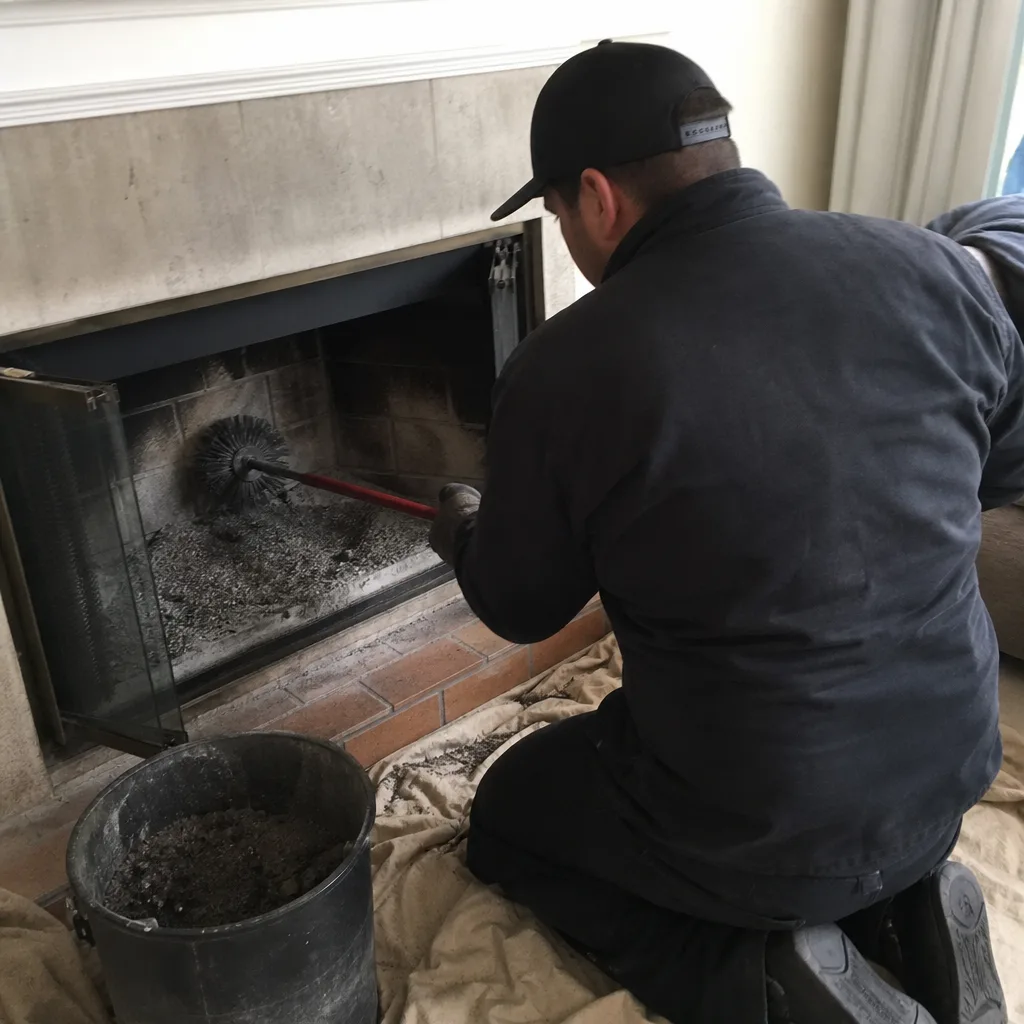
California doesn’t mandate camera inspection by state law for residential sweeps. But Los Angeles County’s building code alignment with NFPA 211, plus insurer requirements increasingly common in Long Beach’s 90802, 90803, and 90814 ZIP codes, makes understanding the distinction financially important.
Level 1 Inspection is a visual check of readily accessible portions of the chimney exterior, interior, and appliance connection. The technician uses a flashlight, maybe a mirror. No tools are used to open sealed panels. It’s appropriate when:
- The system hasn’t changed
- You’re continuing the same appliance and fuel type
- No performance problems exist
Level 2 Inspection adds a camera scan of the internal flue surface, plus inspection of attics, crawl spaces, and basements as accessible. It’s required by NFPA 211 when:
- The property is being sold or transferred
- The system has been modified (new liner, new appliance, relining)
- There’s been a chimney fire, seismic event, or weather damage
- Performance problems exist (smoke backup, odor, moisture)
In Long Beach’s market, the practical reality is this: most home sales in Belmont Heights, California Heights, or the Plaza now include a Level 2 inspection as a buyer contingency. Insurance adjusters after any fire-related claim increasingly request documented flue condition. And the city’s older housing stock - pre-1970s bungalows in Wrigley, Craftsman homes in Rose Park - often has unlined or partially lined flues that a flashlight simply cannot assess.
We’ve performed over 38,000 chimney inspections and cleanings since 2009, and we’ve documented the difference. A flashlight inspection misses roughly 40% of liner gaps, spalling, and mortar joint failures we catch on camera. Clause 4 of the Haven Standard requires a photo record on every job because the camera doesn’t guess - it shows.
Cost difference in Long Beach: a Level 1 sweep runs $149-$199; Level 2 with camera documentation runs $199-$349 depending on flue count and accessibility. For homes in the 90804 or 90805 areas with terra cotta liners from the 1940s-1960s, the camera scan isn’t an upsell. It’s the only way to know if your liner is intact before you light another fire.
The Real Sequence of a Chimney Cleaning Appointment
Skipping steps wastes money. Here’s the actual order a documented service follows, and why the sequence matters.
- Exterior condition assessment. We photograph the crown, cap, flashing, and visible masonry before entering the home. This establishes baseline moisture damage - critical in Long Beach where salt air accelerates spalling (surface flaking of brick or concrete).
- Interior appliance and firebox inspection. Damper operation, firebrick condition, lintel clearance, and hearth extension measurements. We note any combustible proximity violations - common in older Long Beach homes where built-ins were added around original fireplaces.
- Camera scan before sweeping. This is the step many companies skip, and it’s backwards. You scan first to identify liner condition, creosote class, and any obstructions. Sweeping blind can damage a deteriorating liner or push debris past a partial blockage. The camera footage becomes your “before” record.
- Creosote classification and mechanical removal. Stage I: poly brushes, HEPA vacuum. Stage II: rotary whips or chains. Stage III: mechanical de-glazing, sometimes chemical treatment if buildup exceeds 1/4 inch. We specify what we’re finding before selecting tools.
- Smoke chamber parge coat check. The smoke chamber (the area above the damper, below the flue) is where most chimney fires start. We inspect for exposed corbelling, gaps, or thin parging. Repairs here are separate from standard cleaning but noted in your written estimate.
- Post-sweep camera verification. “After” footage proving the flue is clear, liner intact, and no debris remains. This is your documented record - Clause 4 of the Haven Standard again.
- Written findings, written price for any repairs, written warranty. Before we leave, you have: photos, camera stills, a scope of what was done, and a separate line-item estimate for anything recommended. No verbal “you might want to think about” suggestions. Everything in writing.
The entire appointment runs 60-90 minutes for a single flue in Long Beach. Two-story homes in Belmont Heights or historic properties with steep roof access in Bluff Park may run longer. We text when the technician is en route, and every tech is background-checked and uniformed - license number visible on request.
What a Written Estimate Should Itemize (And What “Chimney Cleaning” Alone Hides)
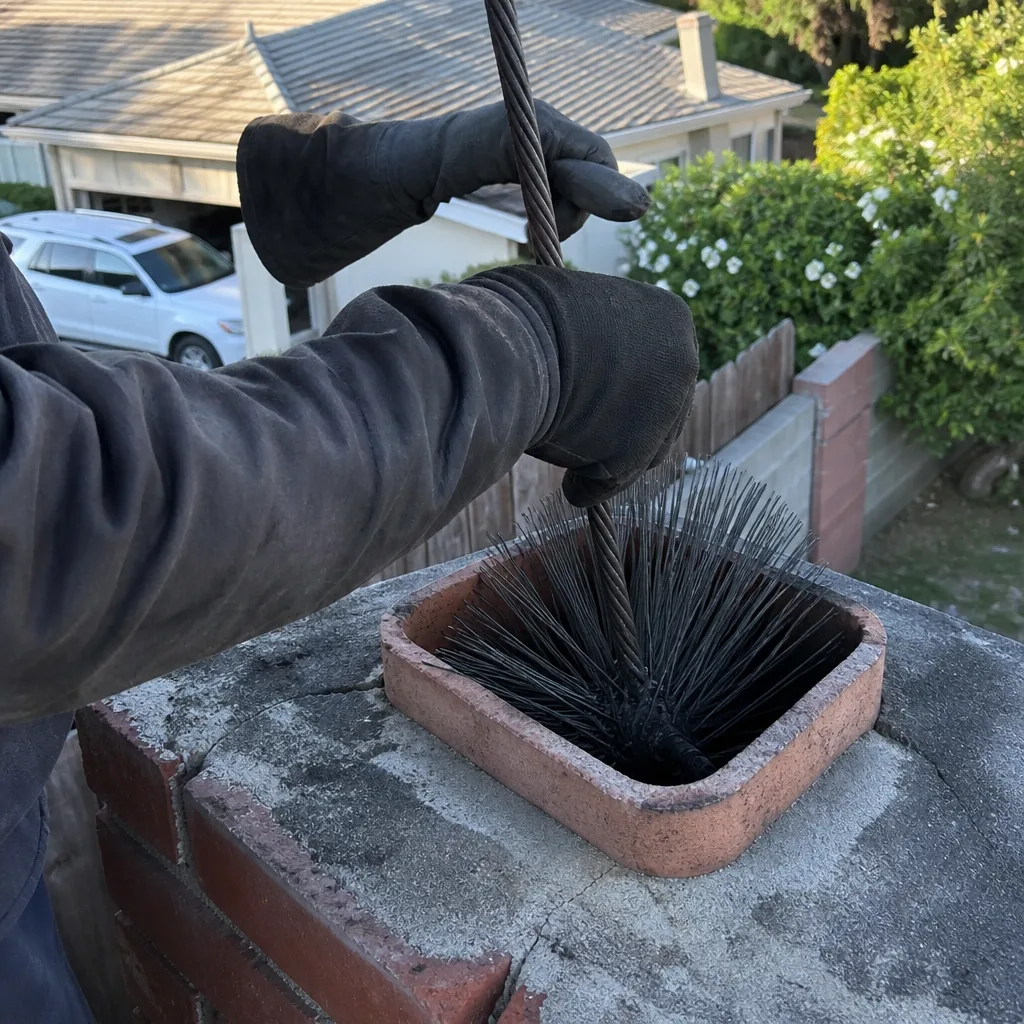
A written price before work starts is Haven Standard Clause 1: H.A.V.E.N., “Have it in writing.” But the writing needs to say something specific. Here’s what we itemize on every Long Beach estimate, and what to demand when hiring any chimney contractor.
| Item | What It Covers | Typical Long Beach Range |
|---|---|---|
| Standard sweep, single flue | Firebox, smoke chamber, damper, flue brushing, debris removal | $199-$249 |
| Level 2 camera inspection | Internal flue scan, photo documentation, written condition report | $50-$100 (bundled with sweep) |
| Class III creosote removal | Mechanical de-glazing, rotary chains/whips, extended labor | $75-$150 additional |
| Smoke chamber parging repair | UL-listed refractory coating, applied to code depth (minimum 2 inches) | $450-$850 |
| Stainless cap installation | Famco or Copperfield custom fit, spark arrestor, lifetime warranty | $285-$495 |
| Flue liner repair/replacement | DuraFlex or HeatShield relining, full NFPA 211 compliance | $2,800-$5,500 |
Red flags in competitor estimates: lump-sum “chimney service” with no line items; “inspection” that doesn’t specify Level 1 or 2; repair recommendations without photo evidence; “free” sweeps that depend on finding $3,000 of “urgent” work.
Our Free Second Opinion on Any Written Estimate exists for exactly this scenario. Bring us a competitor’s line-item quote and we’ll review the scope against what our camera shows - no charge, no obligation.
How a Documented Photo Record Protects You in LA County
The photo record isn’t marketing. In Los Angeles County’s real estate and insurance environment, it’s documentation with legal weight.
Home sales: California’s Transfer Disclosure Statement requires seller knowledge of material defects. A chimney with a cracked liner or deteriorated crown qualifies. Buyers in competitive Long Beach markets increasingly request Level 2 inspection reports with dated camera footage. Sellers who have maintained annual records from Emberly Chimney Cleaners Long Beach can produce evidence of liner condition at closing, reducing last-minute repair credits or deal fall-through.
Insurance claims: After any chimney fire or smoke damage claim, insurers investigate maintenance history. A documented photo record proves the flue was clear and liner intact at the time of last service - or establishes pre-existing condition if damage was unrelated. We’ve provided records to adjusters for claims in Naples, Belmont Shore, and Downtown Long Beach. The absence of records works against the homeowner every time.
Warranty disputes: Our 365-Day Done Right Promise is stamped on every job. If a cap leaks or a repair fails within that window, the “before” and “after” photos establish what was warranted and when. No memory games, no he-said-she-said.
Clause 4 of the Haven Standard requires this archive practice - continuous since 2009, years before insurers or regulators asked for it. Every customer receives digital access to their record; physical copies available on request.
Cleaning Frequency and Cost in Long Beach
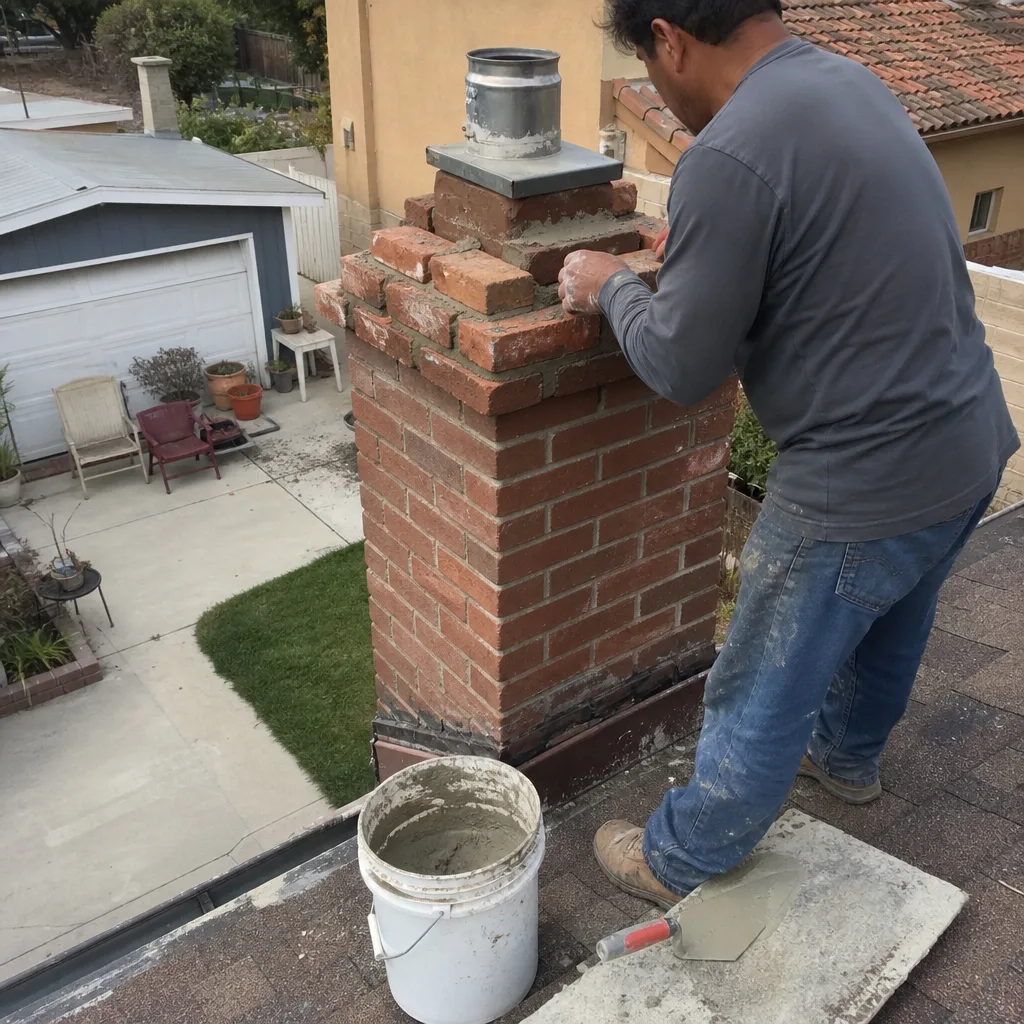
NFPA 211 recommends annual inspection for all chimneys, fireplaces, and vents. In Long Beach’s coastal climate, we modify that recommendation based on specific location and use patterns.
By neighborhood and use:
- Peninsula, Belmont Shore, Naples, Bluff Park (within 1 mile of water): 8-10 months for regular burners (2+ times weekly October-March); annual minimum for occasional use
- Downtown, Alamitos Beach, Bixby Knolls, California Heights: 12 months standard; 10 months if burning daily
- North Long Beach, Wrigley, Lakewood-adjacent: 12 months standard
- Rental properties or inherited systems with unknown history: Immediate Level 2 inspection, then scheduled
Cost factors specific to Long Beach:
- Two-story homes with steep roof pitch (common in Bluff Park historic district): +$25-$50 for access equipment
- Terra cotta liners pre-1960: higher probability of mechanical removal needs, +$75-$150
- Gas log conversions in original wood fireplaces: still require flue inspection; gas produces corrosive condensation in unlined or damaged flues
- HOA-managed properties in gated communities (Marina Pacifica, Shoreline Village area): coordinate access, no price difference
We don’t charge for estimates. A written price, written scope, and written warranty are delivered before anyone starts - Haven Standard Clause 1, no exceptions. Call (424) 401-5585 for scheduling.
Common Mistakes to Avoid
- Hiring based on “chimney sweep” search results without verifying inspection level. Many Long Beach listings advertise “inspection included” but deliver a 5-minute flashlight look. Ask specifically: “Is this a Level 1 or Level 2 inspection, and is camera documentation included?”
- Ignoring the smoke chamber. The area above your damper is invisible from the firebox and inaccessible to standard brushes from below. A proper service inspects it; skipping it leaves the highest fire-risk zone unexamined.
- Assuming gas fireplaces don’t need inspection. Gas produces water vapor and corrosive condensation. In Long Beach’s humid climate, we’ve found deteriorated flue liners in gas-only systems where moisture combined with residual soot to produce sulfuric acid attack on terra cotta.
- Accepting verbal repair recommendations. Any suggestion of liner work, crown rebuild, or masonry repair without dated, labeled photos is unverifiable. Haven Standard Clause 4 exists because we saw too many homeowners pressured into unnecessary work.
- Using the same schedule as inland friends. Your cousin in Ontario burns identical wood and cleans every 18 months. In Long Beach’s marine layer, that schedule risks glazed buildup that requires expensive mechanical removal instead of routine brushing.
- Skipping service before home listing. A pre-listing Level 2 inspection with clean documentation prevents buyer-requested credits. Post-inspection repair demands average $1,200-$3,500 in our Long Beach market; proactive service costs a fraction.
- Choosing caps by price alone. Standard galvanized caps in coastal Long Beach corrode through in 3-4 years. Famco stainless or copper-grade caps cost more upfront but eliminate replacement cycles and protect the flue from moisture intrusion that accelerates creosote glazing.
When to Call a Professional
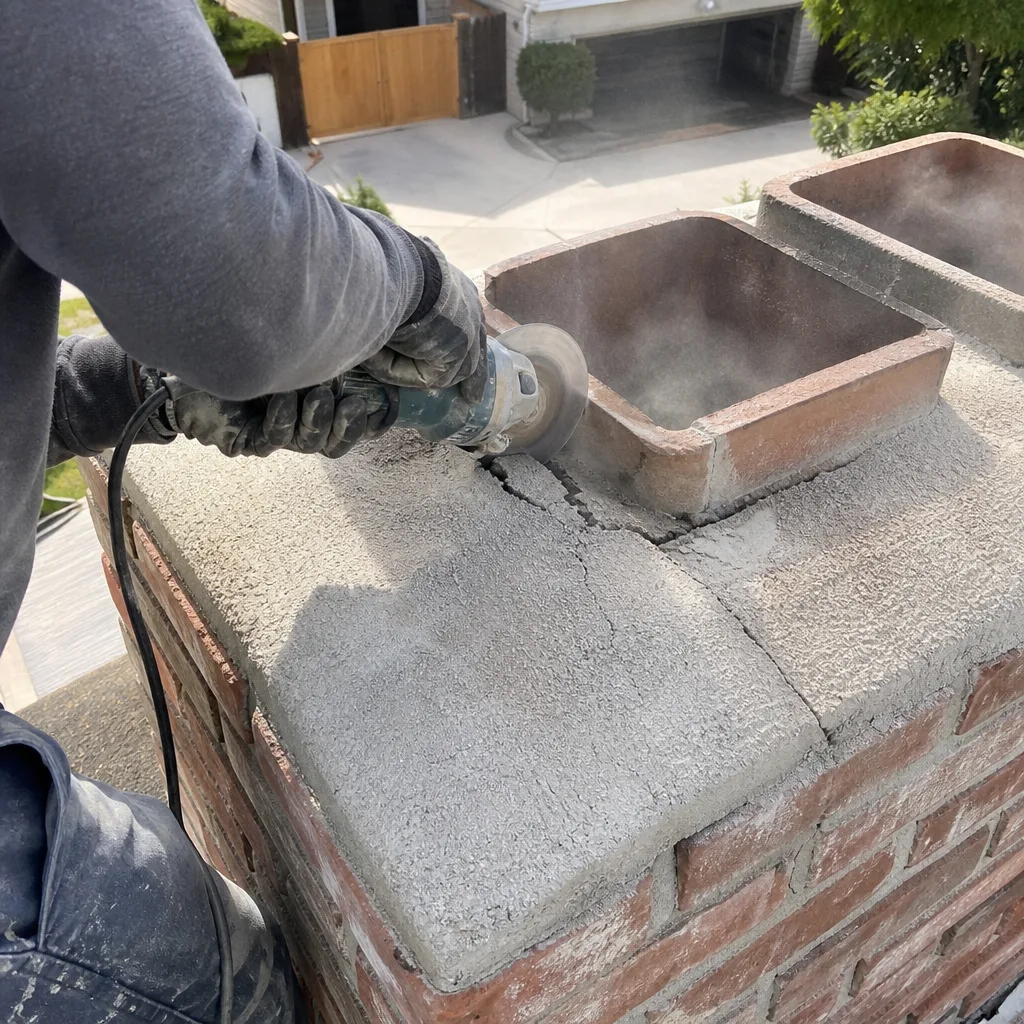
Call for inspection - not just cleaning - when you notice smoke backup into the room, a persistent tar-like odor even when not burning, visible moisture stains on interior walls near the chimney, or white efflorescence (salt deposits) on exterior brick. After any seismic event, including the minor tremors common to Long Beach’s proximity to the Newport-Inglewood fault zone, a Level 2 camera scan checks for liner displacement or mortar joint separation.
Emberly Chimney Cleaners Long Beach offers free estimates in Long Beach - call (424) 401-5585. Live phone support runs 24 hours a day, 7 days a week. We’ll schedule a technician, text you when they’re en route, and deliver a written price before any work begins.
Frequently Asked Questions
A standard chimney sweep with Level 2 camera inspection in Long Beach costs $199-$349 for a single flue, depending on creosote class and accessibility. Two-story homes or those with Class III glazed buildup fall at the higher end. Call (424) 401-5585 for an exact quote - estimates are free and written before any work starts.
You need a new liner only if the existing one is cracked, separated, missing, or improperly sized for your appliance - and only if that’s documented with camera evidence you can see yourself. In Long Beach’s older housing stock, unlined chimneys or damaged terra cotta are common, but we’ve also cleared many systems where a competitor’s “urgent” liner recommendation wasn’t supported by actual condition. Our Free Second Opinion on Any Written Estimate exists for exactly this situation.
Every 12 months as a baseline, but every 8-10 months if you’re within two miles of the coast and burn regularly. Long Beach’s marine layer moisture accelerates creosote glazing compared to inland climates. Annual inspection is the minimum; more frequent service prevents expensive mechanical de-glazing.
Skipped cleaning allows creosote accumulation, which restricts flue draft and increases chimney fire risk. In Long Beach’s humid climate, the progression to glazed, hardened buildup happens faster - and glazed creosote burns at higher temperatures when ignited, increasing the chance of liner damage or house fire. Carbon monoxide risk also rises if blockage or backdraft occurs. The cost of routine maintenance is consistently lower than fire restoration or emergency liner replacement.
A sweep removes deposits; an inspection evaluates condition. They’re often performed together, but they’re distinct services. In Long Beach, we perform the camera inspection first (Level 2), then sweep based on what we find. Sweeping without inspecting risks damaging a compromised liner or missing the root cause of performance problems.
California doesn’t mandate chimney inspection by state law, but LA County buyer contingencies and transfer disclosure requirements make it effectively standard. Buyers in Long Beach’s competitive market increasingly request Level 2 inspection with camera documentation. Sellers who maintain annual records from Emberly Chimney Cleaners Long Beach home can produce evidence at closing, preventing last-minute repair negotiations.
We don’t recommend DIY chimney cleaning for Long Beach homeowners. Roof access on two-story homes presents fall risk; improper brush sizing can damage terra cotta liners common in pre-1970s Long Beach construction; and without camera inspection, you cannot verify flue condition or confirm complete creosote removal. For safety, Chimney Cleaning & Sweep in Long Beach should be performed by trained technicians with documented equipment and insurance.
The Bottom Line
Chimney cleaning in Long Beach isn’t a generic maintenance task - it’s a coastal-specific service that accounts for marine layer moisture, salt-air corrosion, and an aging housing stock with unique liner challenges. The right approach: camera inspection first, mechanical removal matched to actual creosote class, documented photo records for your protection, and a written price before anyone starts. Schedule matters more here than inland guides suggest. And the right documentation - photos, written scope, written warranty - protects you at sale, at claim time, and under warranty. Chimney Repair in Long Beach and Fireplace Services in Long Beach are available through the same standard.
Emberly Chimney Cleaners Long Beach has operated under the Haven Standard since 2009, completing more than 38,000 inspections and cleanings with a written price before every job and a documented record after - see more guides & resources from our team. Materials come through our buying network from DuraFlex, HeatShield, Gelco, Olympia Chimney, Famco, and Copperfield - sourced to keep customer prices honest. Every job carries the 365-Day Done Right Promise.
Call (424) 401-5585 for a free estimate. Live phone support, 24 hours a day, 7 days a week.
Written by Corrine Halstead, Owner at Emberly Chimney Cleaners Long Beach, serving Long Beach since 2009.