
Last updated September 22, 2026
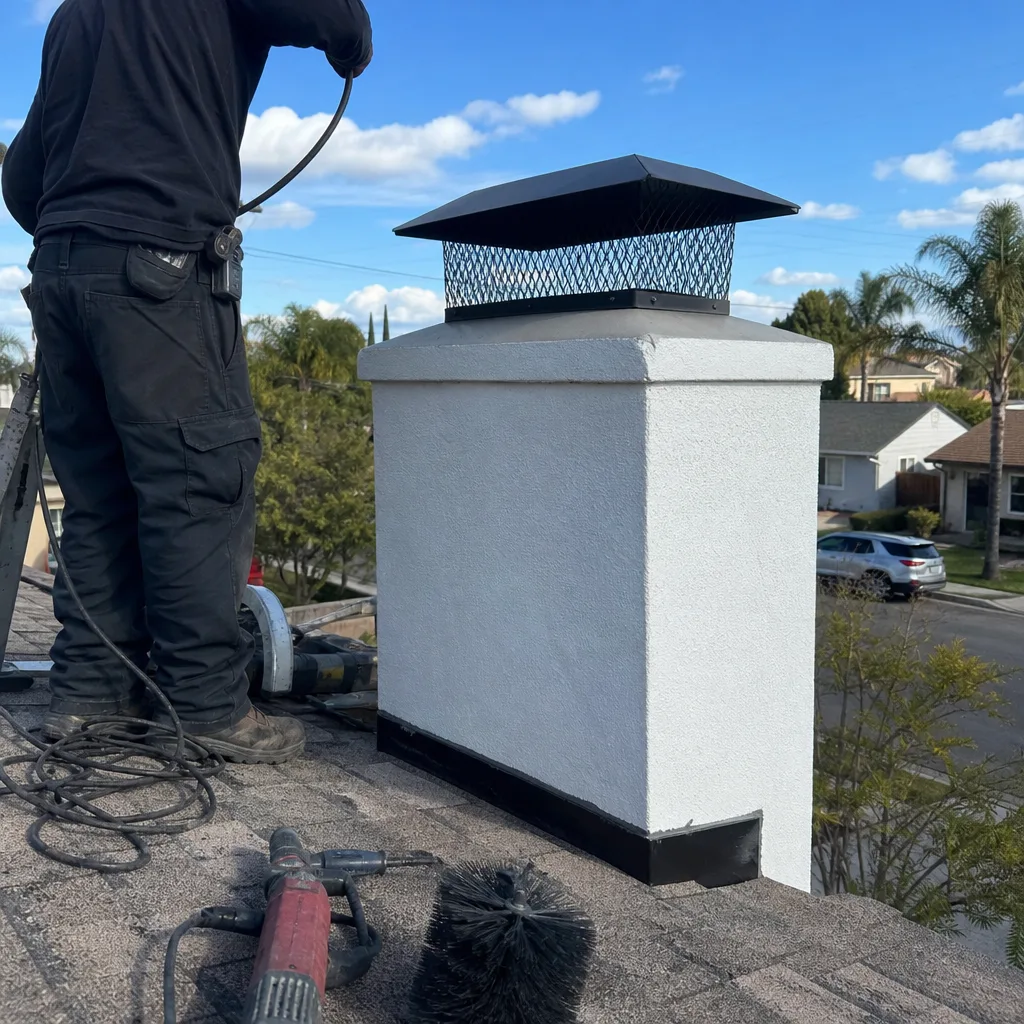
Level 1 sweep and inspection to the NFPA 211 annual standard - flue, crown, cap, and flashing checked and photographed
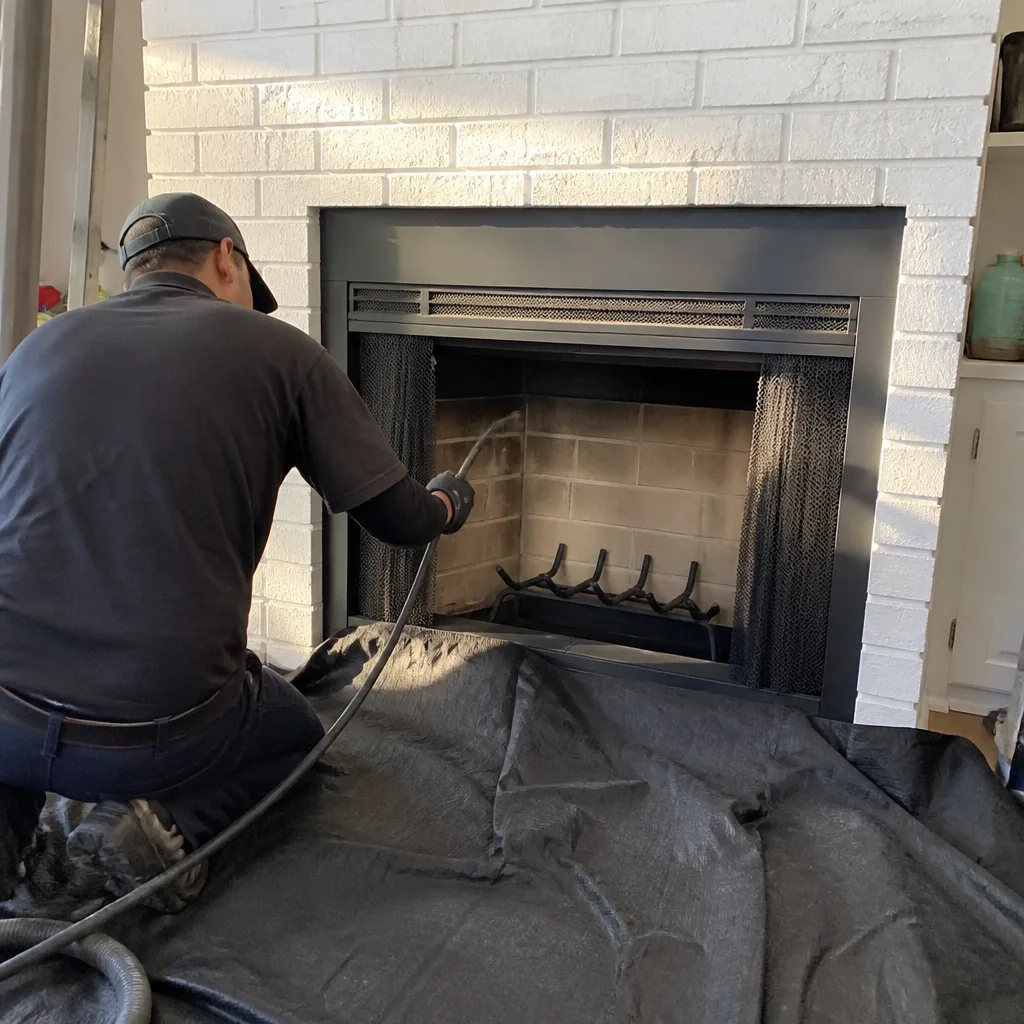
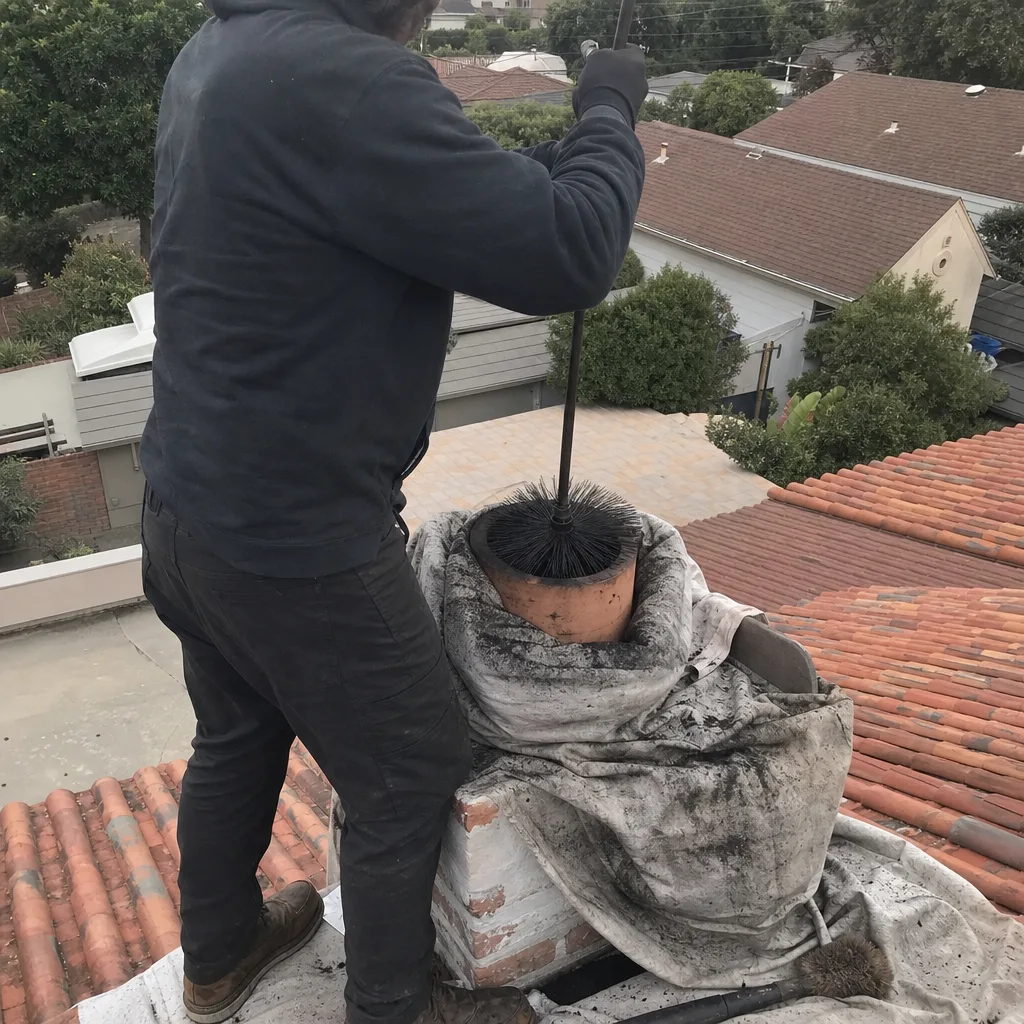
Chimney sweep logs do not sweep chimneys. They loosen some creosote - which then falls where a brush and vacuum still have to collect it.
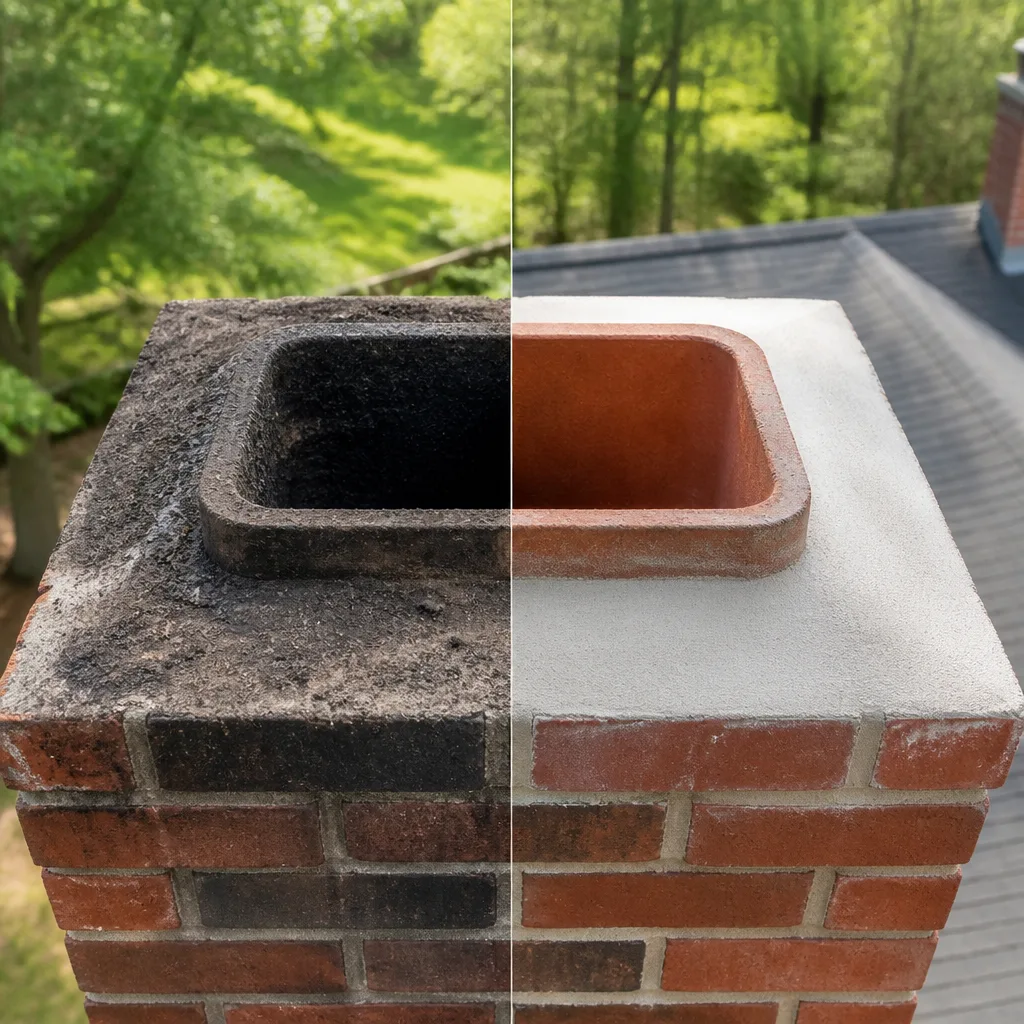
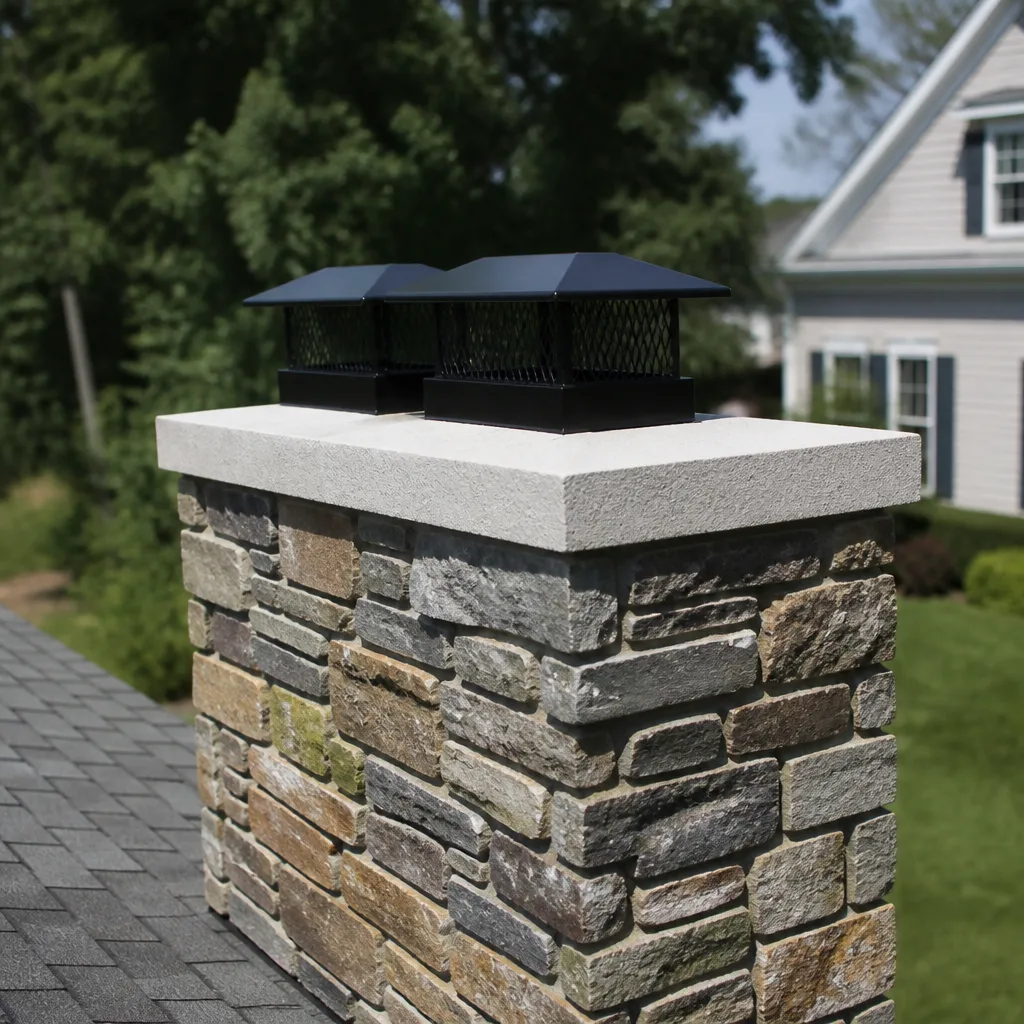
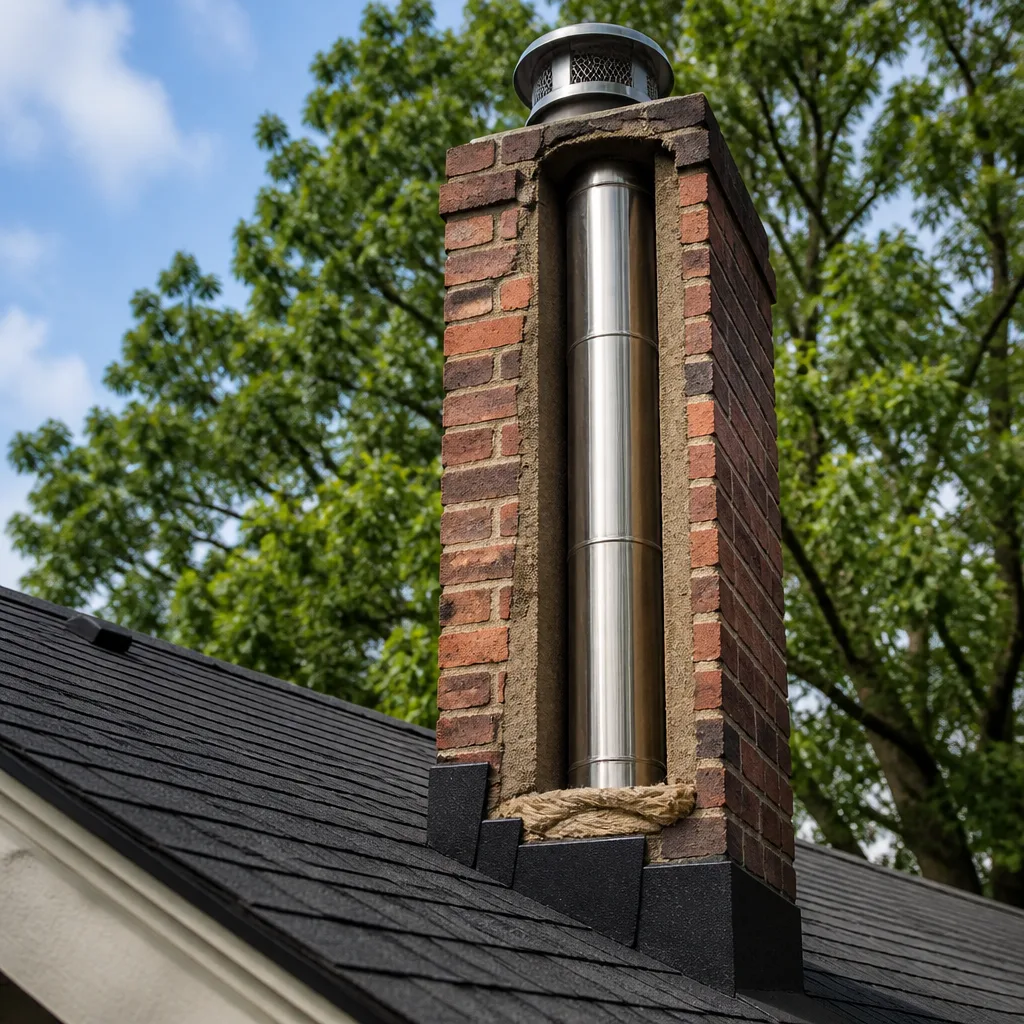
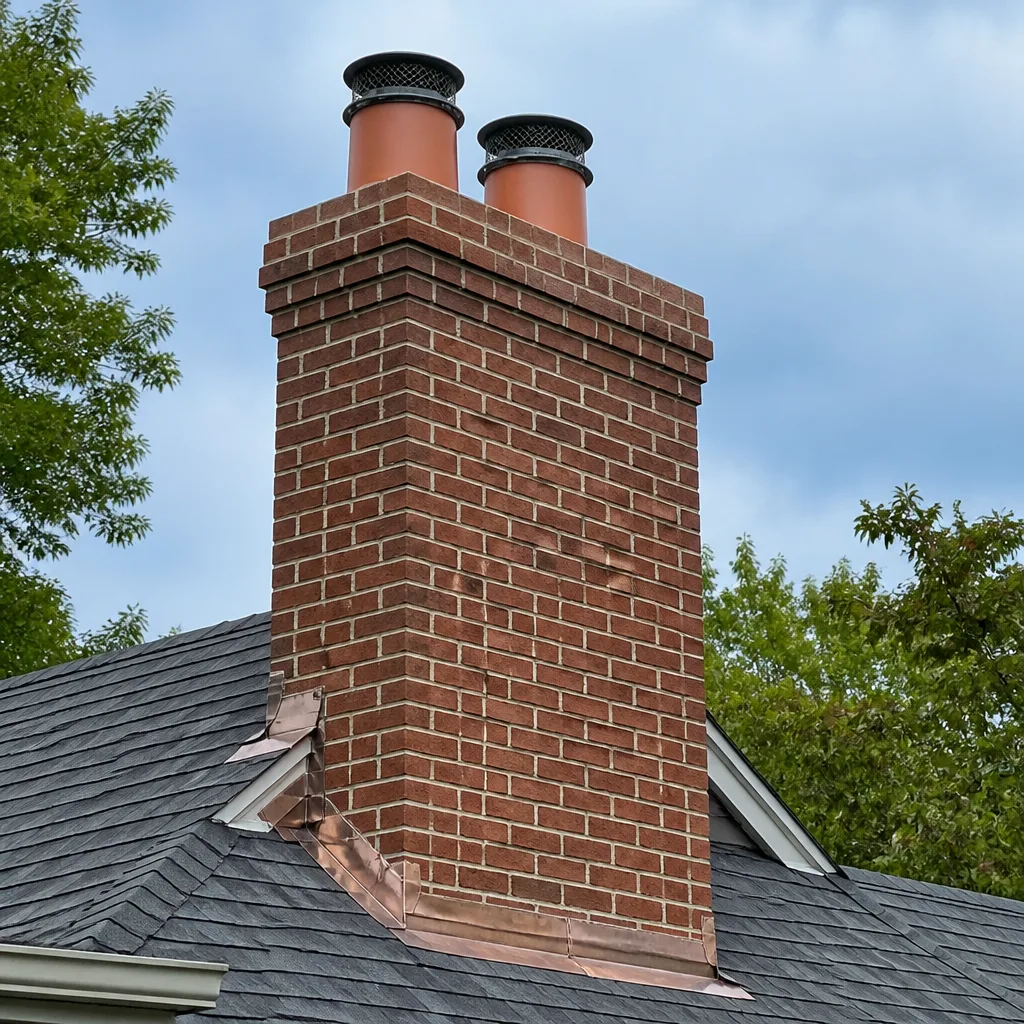
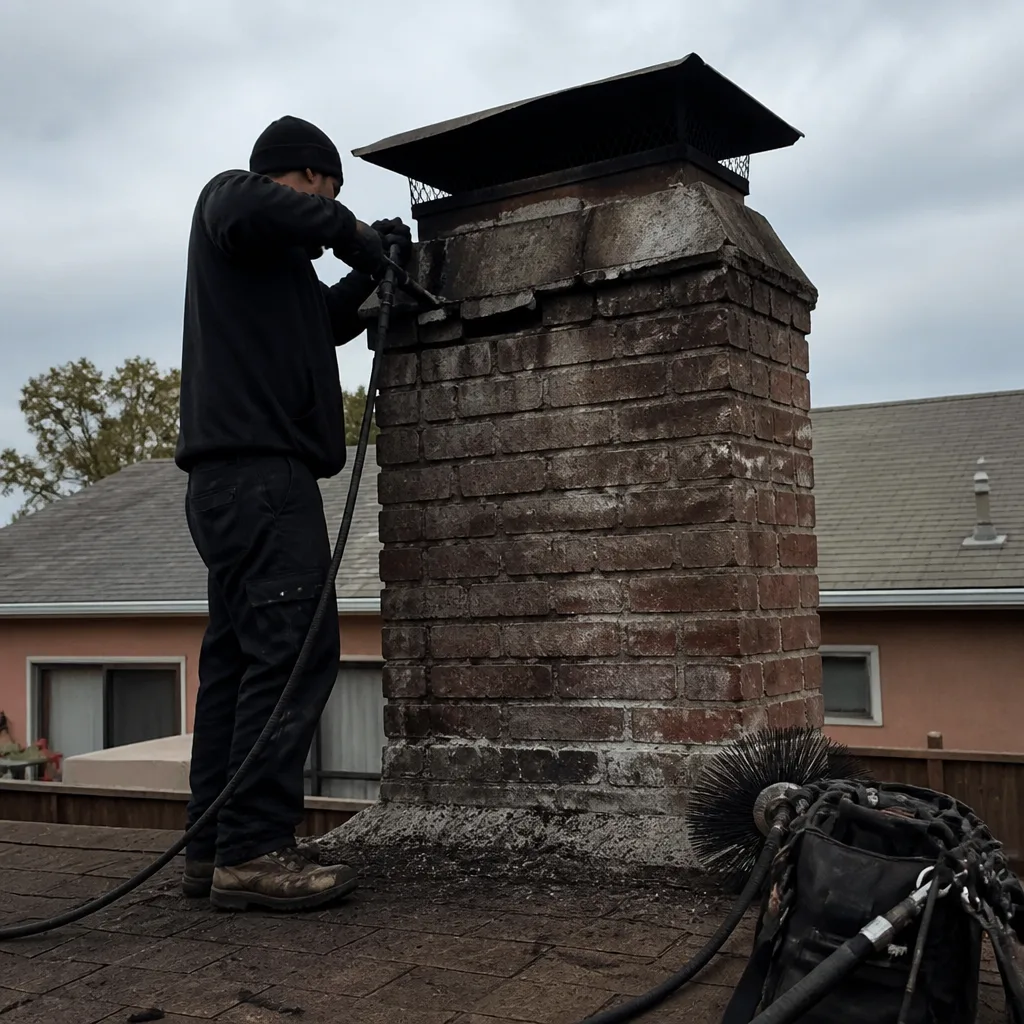 Before
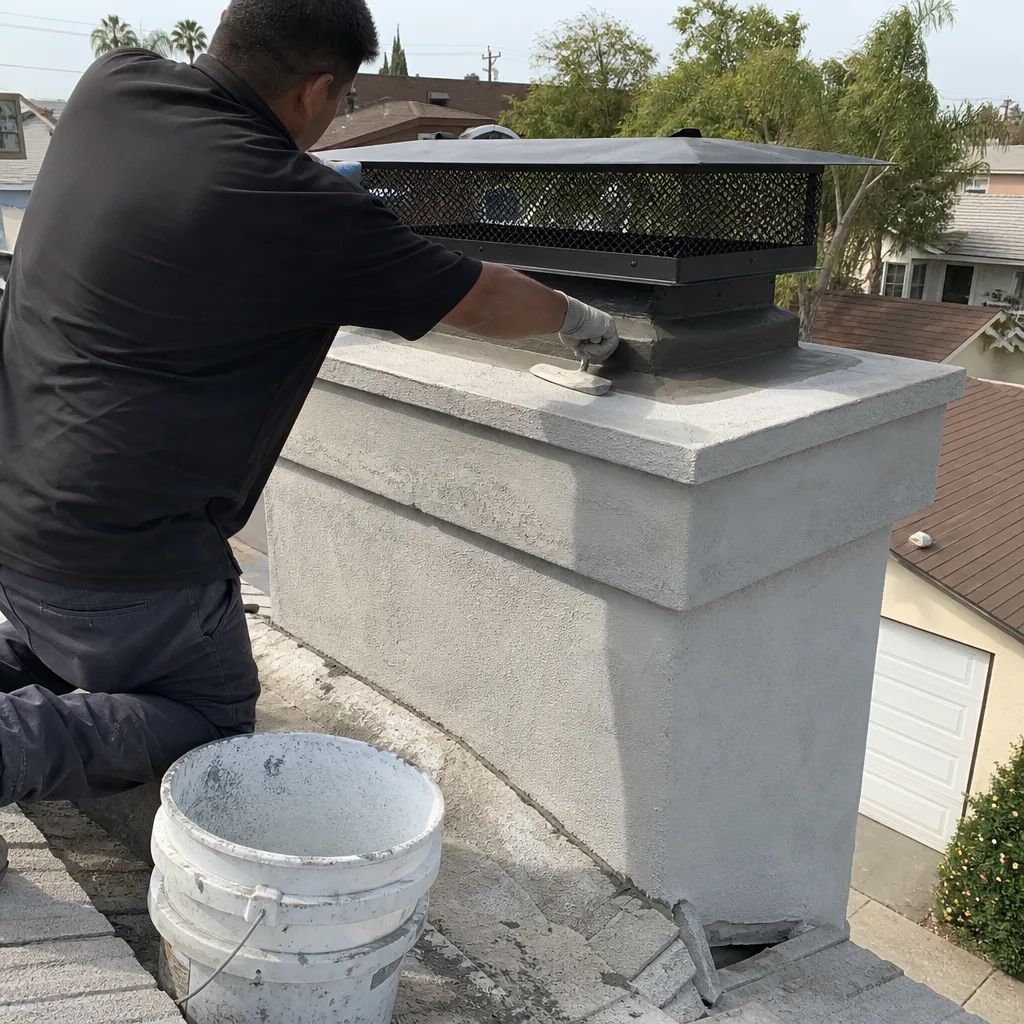 After
After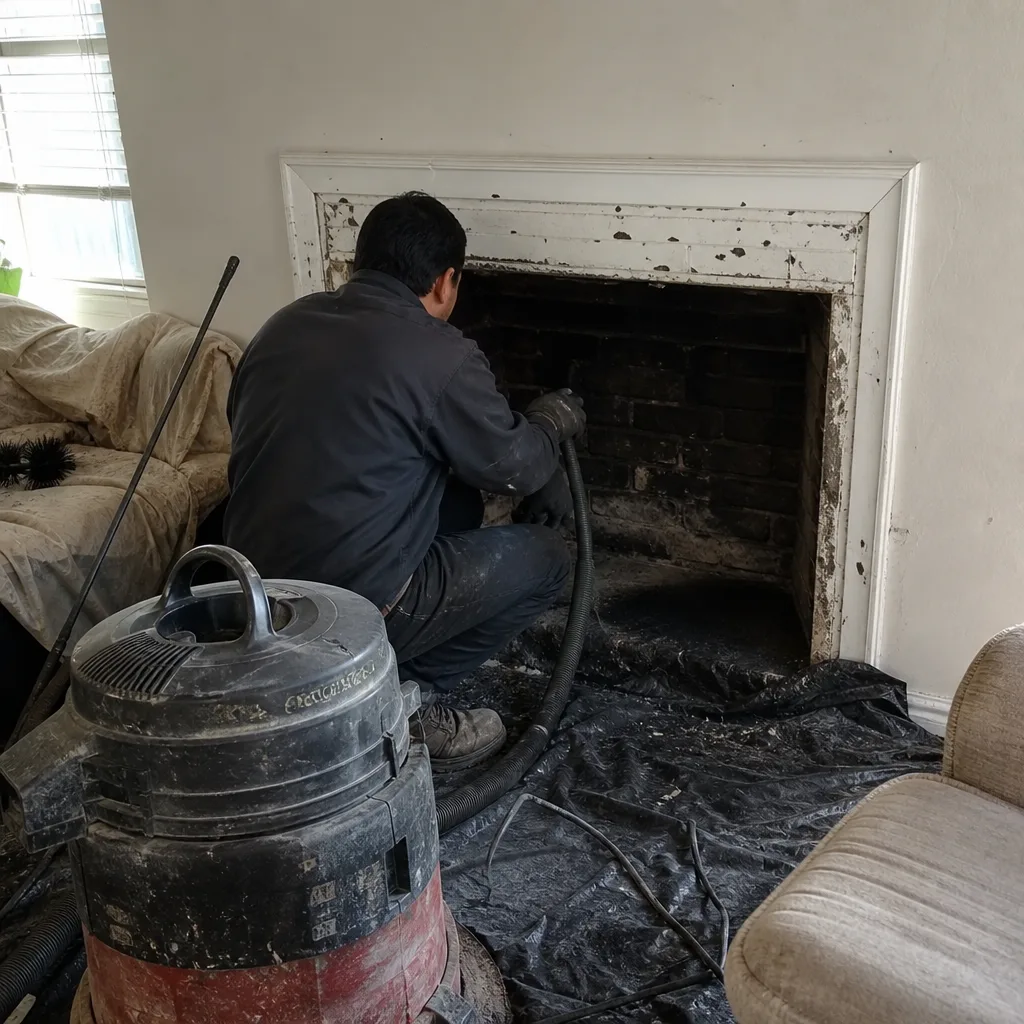 Before
 After
After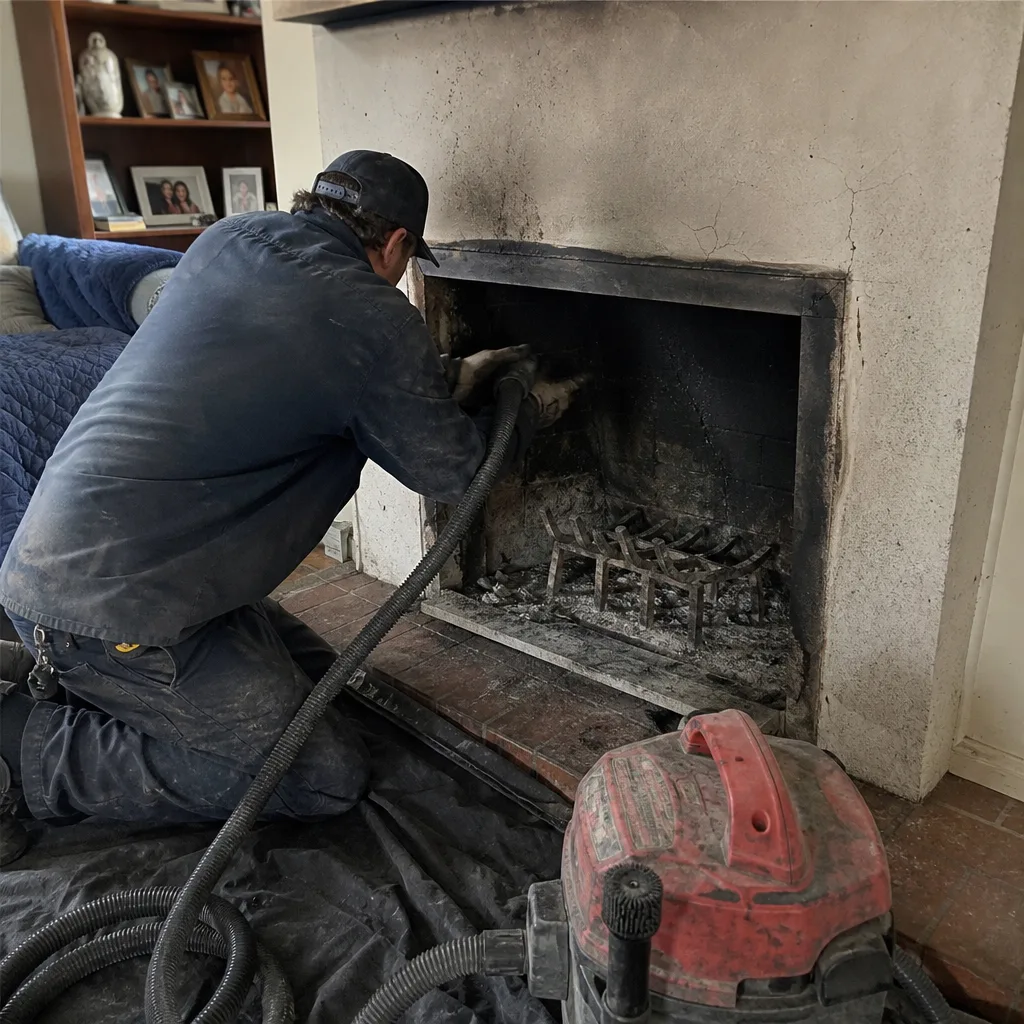 Before
 After
AfterChimney Cleaning Warning Signs: A Long Beach Homeowner’s Reference Guide
A white staining line running horizontally across the exterior of a chimney is called efflorescence - it means water has moved through the masonry and is carrying salts out. In Long Beach, it shows up within two seasons of undetected mortar joint failure, and most homeowners think it’s decorative residue. By the time smoke is backing up into your living room, the condition has been developing for months. This guide covers the early-stage visual and performance indicators that appear long before a dangerous condition develops, with specific attention to what they look like in Long Beach’s coastal environment and how to document them for your insurance record.
Quick Answer
The most important chimney warning signs for Long Beach homeowners are: exterior efflorescence or spalling brick indicating moisture intrusion through failed mortar; draft hesitation or smoke rollout during fires pointing to flue blockage or liner damage; and sulfurous or musty odors signaling creosote buildup or water infiltration. Gas-log inserts show different early warnings: pilot light instability, delayed ignition, and carbon deposits on the firebox floor. Any sign of smoke entering the room or a persistent gas odor requires stopping use immediately and calling a professional.
Table of Contents
- Exterior Visual Signs on Long Beach Chimneys
- Performance Warning Signs During a Fire
- What Odor Character Tells You About Chimney Condition
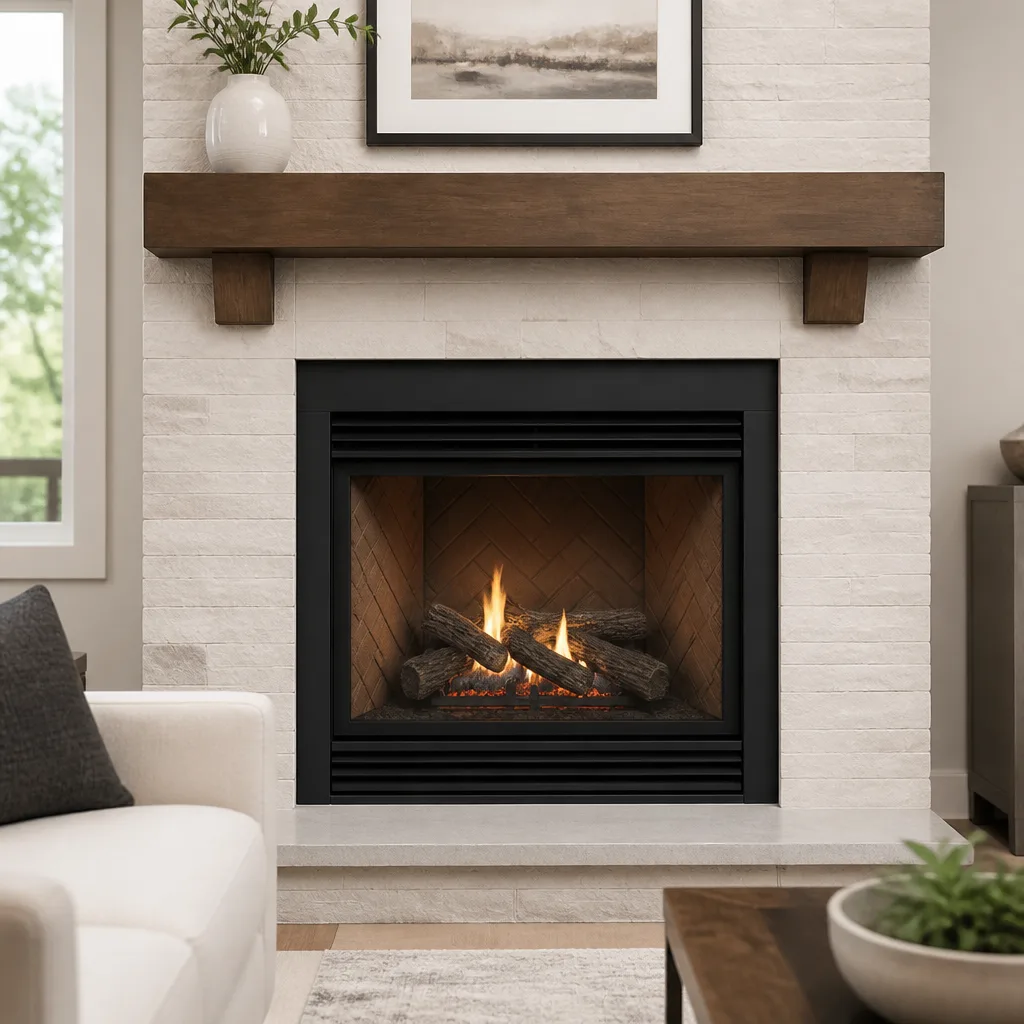
- Warning Signs Specific to Gas-Log Inserts
- Warning Sign Urgency: Schedule Soon vs. Stop Using Now
- How to Document a Warning Sign With Your Smartphone
- Common Mistakes to Avoid
- When to Call a Professional
- Frequently Asked Questions
 Before
 After
AfterExterior Visual Signs on Long Beach Chimneys
Long Beach’s coastal climate - salt air, morning fog, and seasonal Santa Ana dryness - accelerates masonry deterioration in ways inland homeowners rarely see. The exterior of your chimney tells a story months before interior problems become obvious. Here’s what to look for and what each pattern means.
Efflorescence: The White Stain That Isn’t Decoration
Efflorescence appears as a white, powdery or crystalline deposit on brick or mortar surfaces. It forms when water penetrates the masonry, dissolves naturally occurring salts, and carries them to the surface as it evaporates. In Long Beach, we see it most often on the ocean-facing sides of chimneys in neighborhoods like Belmont Shore and Naples, where salt-laden fog provides both the moisture and the mineral content.
The critical distinction is pattern. A faint, scattered dusting near the chimney crown may simply indicate normal seasonal moisture cycling. A horizontal band running across multiple courses of brick, or a thick accumulation at mortar joints, signals active water movement through the wall. That water is finding a path through failed mortar or cracked crown, and it’s reaching the flue liner.
What efflorescence means structurally: the interior flue liner is being exposed to moisture and thermal shock. Clay tile liners absorb water, then crack when heated. Stainless steel liners corrode at weld points. In either case, the liner’s ability to contain combustion gases is compromised.
Cap Rust Staining: Where Metal Meets Masonry
Galvanized steel chimney caps in Long Beach typically show surface rust within 5-7 years due to salt air exposure. The warning sign isn’t rust itself - it’s rust staining that runs down the masonry below the cap. This indicates the cap is failing at its attachment points, allowing water to bypass the cap entirely and enter the flue.
We document this frequently in the Alamitos Heights area, where 1960s-era caps are common. The stain pattern matters: vertical streaks suggest water is running down the exterior of the flue tile. A broad, fan-shaped stain below the cap suggests the cap is dished or improperly sized, collecting water that overflows during rain.
Spalling Brick: The Freeze-Thaw Misconception
Spalling - the flaking or peeling of brick faces - is often attributed to freeze-thaw cycles. In Long Beach, that’s rarely the primary cause. Our winters rarely drop below freezing. Instead, spalling here results from salt crystallization pressure (salt attack) combined with moisture trapping from failed mortar joints.
The sequence we observe: mortar joints erode from salt air exposure, water enters during fog or rare rain events, salts from the Pacific air crystallize in the brick pores, and the brick face pops off in layers. The warning sign appears first as a slight roughness or sanding at the brick surface, then as visible pitting, then as full spalling with exposed inner brick.
What spalling means structurally: the chimney’s outer shell is losing its ability to protect the flue liner from weather and impact. A spalling chimney in Long Beach is typically 3-5 years from requiring partial rebuild, and the interior liner condition is almost always worse than the exterior suggests.
Key Exterior Indicators Summary
- Efflorescence banding: Active moisture intrusion through failed mortar or crown - schedule inspection within 30 days
- Cap rust staining on masonry: Cap failure allowing direct water entry - schedule inspection within 14 days
- Early spalling (surface roughness): Salt attack beginning - schedule inspection within 60 days
- Advanced spalling (exposed inner brick): Structural compromise likely - schedule inspection within 7 days, verify liner condition
- Crown cracks with vegetation: Water pooling and biological growth - schedule inspection within 14 days, expect crown rebuild
Performance Warning Signs During a Fire
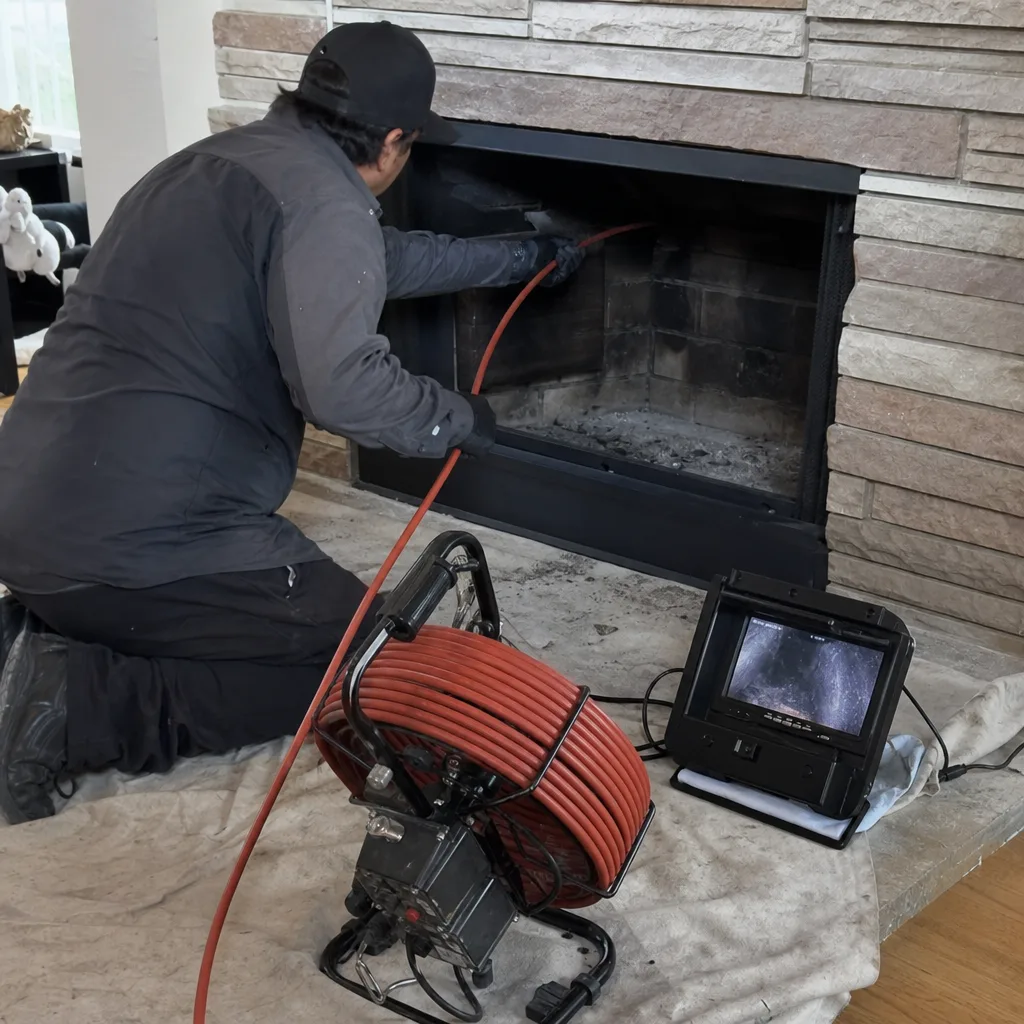
The behavior of your fire tells you about draft, flue condition, and airflow in real time. These performance indicators appear before smoke becomes visible in the room, and each points to a specific mechanical or structural issue.
Draft Hesitation: The Delayed Draw
A healthy fire establishes upward draft within 30-60 seconds of ignition. Draft hesitation - where smoke lingers in the firebox or visibly struggles to rise - indicates one of several conditions: flue blockage from creosote buildup, liner damage creating turbulence, or negative pressure in the home competing with the chimney’s draw.
In Long Beach, we see draft hesitation frequently in homes built 1945-1970 with original clay tile liners. These liners were sized for open fireplaces, not modern inserts. When a homeowner installs a gas log set or wood insert without proper liner resizing, the flue is too large for the appliance’s exhaust volume. The result is sluggish draft, especially on mild days when temperature differential between flue and outdoor air is minimal.
Draft hesitation is dangerous because it allows combustion gases to spill into the home before the fire is fully established. Carbon monoxide risk is highest during this startup period.
Smoke Rollout Timing: When It Happens Matters
Smoke entering the room at fire startup, before the flue is warm, is common and usually benign. Smoke rollout after the fire has been burning 15+ minutes is a serious warning sign. It indicates either a blocked flue (creosote buildup, bird nest, or structural collapse) or a reversed draft condition caused by competing appliances or weather patterns.
Long Beach’s marine layer can create unusual pressure conditions. A chimney on the windward side of a home during a strong onshore flow may experience downdraft that overrides normal chimney physics. But persistent rollout during calm conditions, or rollout that worsens over multiple fires, indicates structural deterioration.
Fire Behavior Changes: The Subtle Shifts
Watch for these specific changes in how your fire burns:
- Flames leaning or pulsing: Indicates air starvation or competing drafts. Check for closed dampers, blocked combustion air inlets, or negative pressure from exhaust fans.
- Difficulty maintaining ignition: In wood fires, this suggests excessive moisture in fuel or restricted oxygen supply. In gas logs, it points to burner orifice blockage or gas pressure issues.
- Excessive sparking or popping: Beyond normal wood combustion, this indicates resinous buildup or, in masonry fireplaces, pyrolysis of accumulated creosote deposits.
- Uneven flame pattern across gas logs: Suggests burner port blockage, improper log placement, or deteriorating burner assembly.
Each of these performance changes correlates with a specific inspection finding. The flame behavior is the symptom; the camera inspection reveals the cause.
What Odor Character Tells You About Chimney Condition
Smell is the most underutilized diagnostic tool in chimney maintenance. Homeowners often describe odors vaguely as “fireplace smell,” but the character of the odor indicates distinct conditions requiring different responses.
Musty or Damp Earth Odor
A musty smell, especially after rain or during humid periods, indicates water infiltration into the chimney system. The odor comes from mold or mildew growth on creosote deposits, deteriorating mortar, or accumulated debris in the smoke chamber. In Long Beach, this is common in chimneys with failed crowns or deteriorated flashing, where Pacific moisture enters continuously.
The musty odor is your earliest warning. By the time you see water stains on the ceiling near the chimney, the interior damage is extensive. The odor typically intensifies in summer when humidity is highest and the chimney is unused, allowing microbial growth to progress unchecked.
Acrid or Sharp Smoke Odor
An acrid, sharp smoke smell that persists between fires indicates active creosote buildup, typically Class II or Class III glazed creosote. This material is highly combustible and the leading cause of chimney fires. The odor is most noticeable on humid days when creosote hygroscopically absorbs moisture and releases volatile compounds.
Class III creosote - shiny, tar-like, and difficult to remove - produces a particularly pungent acrid odor. In Long Beach, we see this most often in chimneys burning improperly seasoned wood or in fireplaces with restricted airflow that creates cooler flue temperatures. The odor is a warning that a chimney fire is possible with the next hot fire.
Sulfurous or Rotten Egg Odor
A sulfurous smell from a gas fireplace or insert is an immediate stop-use warning. Natural gas is odorized with mercaptan compounds specifically to make leaks detectable. A sulfurous odor indicates gas leak, incomplete combustion, or sewer gas entry through a compromised flue.
Less commonly, a faint sulfur odor in wood-burning systems indicates pyritic mineral content in the masonry or, in coastal areas, salt-related chemical reactions in deteriorating mortar. This requires professional evaluation to distinguish from gas-related issues.
Odor Character Diagnostic Table
| Odor Character | Typical Cause | Required Action |
|---|---|---|
| Musty, damp earth | Water infiltration, microbial growth | Inspection within 14 days; expect crown, flashing, or liner evaluation |
| Acrid, sharp smoke | Class II-III creosote buildup | Stop using until swept; schedule Level 2 inspection with camera scan |
| Sulfurous, rotten egg | Gas leak or incomplete combustion | Stop use immediately, ventilate, call gas utility and chimney professional |
| Sweet, tar-like | Class III glazed creosote, active pyrolysis | Stop using; immediate professional evaluation for chimney fire risk |
| Sharp, chemical | Improper materials burned, liner degradation | Stop using; inspection for liner damage and combustion byproduct analysis |
Warning Signs Specific to Gas-Log Inserts
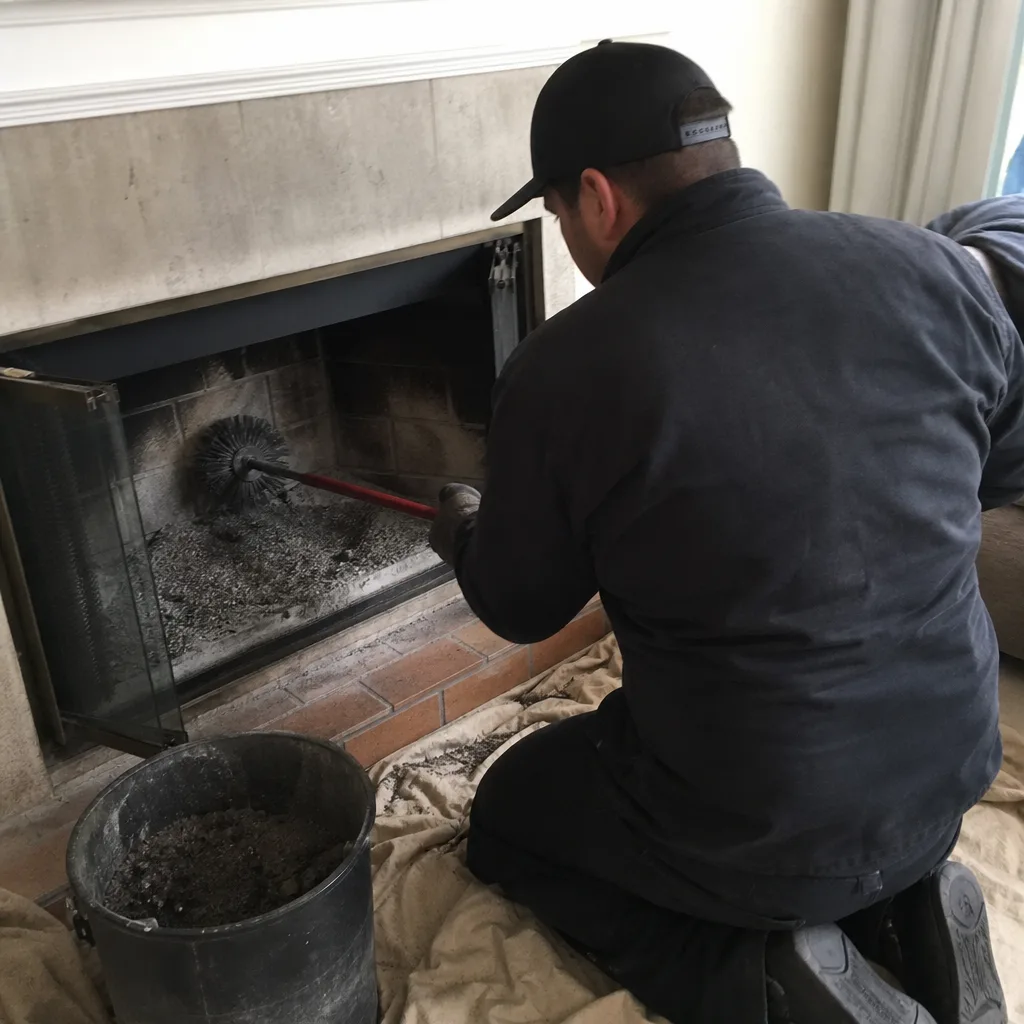
Gas-log inserts and direct-vent fireplaces present different warning signs than wood-burning systems, and most chimney warning sign guides omit them entirely. The combustion is cleaner, but the consequences of malfunction are equally serious - particularly carbon monoxide production from incomplete combustion.
Pilot Light Instability
A pilot that flickers, changes color from blue to yellow or orange, or extinguishes repeatedly indicates several possible conditions: inadequate gas pressure, oxygen starvation from blocked combustion air intake, or deteriorating thermocouple/thermopile. In Long Beach’s coastal environment, salt air corrodes pilot assemblies faster than inland locations.
The critical observation is pilot color. A healthy pilot burns sharp blue with minimal yellow tipping. A predominantly yellow or orange pilot indicates incomplete combustion and elevated carbon monoxide production. This is not a “wait and see” condition.
Delayed Ignition on Burner Startup
When the main burner ignites with a audible “whump” or puff rather than immediate smooth ignition, gas is accumulating before ignition occurs. This indicates dirty burner ports, misaligned logs disrupting flame propagation, or improper gas pressure. The delayed ignition can damage the firebox and, in extreme cases, create a flash fire hazard.
We’ve documented delayed ignition in Long Beach homes where homeowners installed “universal” log sets without proper burner-to-log compatibility. The logs shield the flame from reaching the gas stream promptly, creating accumulation and delayed ignition.
Carbon Signature on Firebox Floor
Soot or carbon deposits on the firebox floor, particularly beneath the burner, indicate incomplete combustion. In a properly adjusted gas fireplace, the firebox should remain clean. Carbon accumulation means the fuel-air mixture is too rich, burner ports are partially blocked, or combustion air is restricted.
The carbon signature pattern matters. Even, light dusting suggests minor adjustment need. Heavy, localized deposits indicate specific burner port blockage or log interference. A rising carbon line on the firebox rear wall indicates flame impingement on a cold surface, causing quenching and incomplete combustion.
Thermostat or Remote Control Irregularities
Modern gas inserts with electronic controls can mask combustion problems. If your remote or thermostat shows correct operation but the fire behavior seems different - lower flame height, different color, or changed sound - trust the physical observation over the electronic display. The control system measures inputs, not combustion quality.
Condensation on Glass
Persistent condensation on the interior glass surface during operation indicates excessive moisture in combustion products. In direct-vent systems, this suggests improper vent configuration or blockage. In vent-free systems (not recommended in California due to air quality regulations), it indicates the unit is producing more moisture than the room can absorb, with associated carbon monoxide risk.
Warning Sign Urgency: Schedule Soon vs. Stop Using Now
Not every warning sign demands immediate cessation of use, but the consequences of misjudging urgency can be severe. Here’s how we categorize warning signs based on 38,000+ inspections under the Haven Standard.
Schedule Within 30 Days: Monitor and Plan
- Early efflorescence without interior symptoms
- Slight draft hesitation only at fire startup, resolving within 2 minutes
- Musty odor detectable only during humid weather, no visible water damage
- Minor surface spalling on non-structural chimney portions
- Pilot color with slight yellow tipping, stable flame
These conditions warrant professional evaluation but don’t create immediate hazard. Schedule a Chimney Cleaning & Sweep in Long Beach with included Level 2 camera inspection. The documented photo record establishes baseline condition for future comparison.
Schedule Within 7-14 Days: Accelerated Attention
- Established efflorescence bands with interior dampness signs
- Draft hesitation persisting beyond 5 minutes of fire operation
- Acrid smoke odor between fires, especially in summer
- Cap rust staining with visible water entry path
- Delayed ignition with audible puff on burner startup
- Carbon deposits spreading across firebox floor
These conditions indicate active deterioration or combustion malfunction. Use of the appliance should be limited to brief, supervised fires until inspection. Schedule Chimney Repair in Long Beach evaluation with camera documentation.
Stop Using Immediately: Active Hazard
- Smoke rollout occurring after fire is established
- Sulfurous or rotten egg odor from any gas appliance
- Visible flame rollout from firebox or burner
- Spalling brick with exposed liner or flue gases visible
- Cracked or displaced flue liner visible from firebox
- Any indication of chimney fire (roaring sound, sparks from top, hot exterior masonry)
These conditions present immediate risk of fire, carbon monoxide exposure, or structural collapse. Extinguish any active fire, shut off gas supply if applicable, and call for professional evaluation before any further use. Fireplace Services in Long Beach can assess whether repair or replacement is appropriate.
How to Document a Warning Sign With Your Smartphone
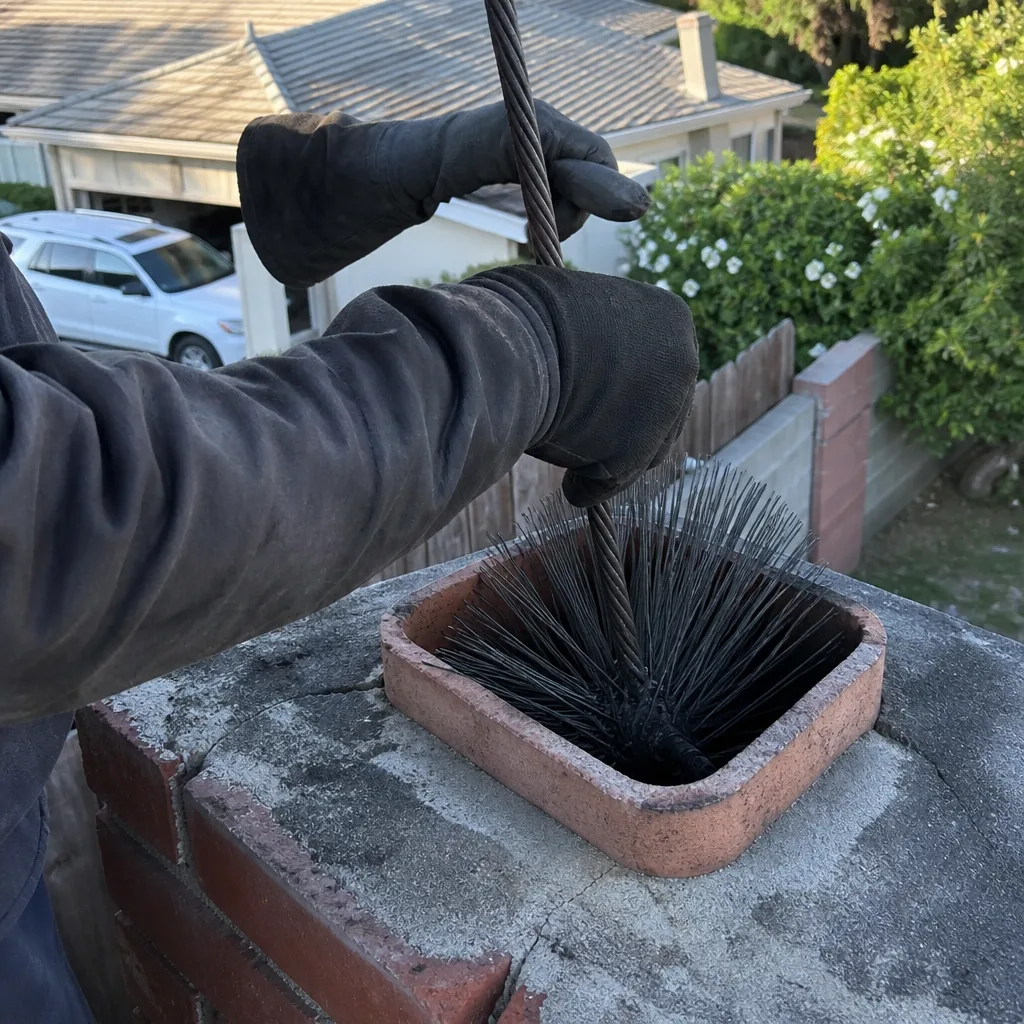
Documentation serves two purposes: it helps your chimney professional understand what you’re observing before arrival, and it creates a timestamped record for insurance or warranty claims. The Haven Standard Clause 4 photo record we create during inspection is the professional documentation; your smartphone images are the preliminary evidence that establishes when the condition was first observed.
Step-by-Step Documentation Protocol
- Enable timestamp and location services. Before photographing, ensure your camera app records date, time, and GPS location. This metadata is admissible in insurance claims and establishes the timeline of condition development.
- Capture the wide context first. Stand back far enough to show the chimney’s position on the home, adjacent structures, and weather conditions. This establishes orientation and helps the professional locate the specific area.
- Photograph the specific warning sign at 90 degrees. For exterior signs like efflorescence or spalling, position the camera perpendicular to the surface to minimize distortion. Include a reference object (ruler, coin, or hand) for scale.
- Capture detail at 12-18 inches. Close enough to show texture and pattern, far enough to maintain focus. For efflorescence, this shows crystalline structure versus simple dust. For spalling, it reveals layer depth and brick composition.
- Photograph from multiple angles. Minimum three angles: direct perpendicular, 45-degree oblique to show depth, and from below looking up (for crown and cap conditions). The oblique angle reveals shadow detail that flat images miss.
- Document interior conditions simultaneously. If you observe exterior warning signs, photograph the corresponding interior area: ceiling near chimney, firebox condition, and any visible flue from below. Even poor-quality images help establish correlation.
- Record a brief video with narration. 30-60 seconds describing what you observe, when you first noticed it, and any changes. Verbal timestamp in the recording (“This is [date], [time]”) reinforces the metadata.
- Store in cloud service with automatic backup. Email to yourself, upload to cloud storage, or use a home maintenance app. The goal is preservation independent of your phone.
What to Include in Your Service Request
When you contact Emberly Chimney Cleaners Long Beach home with documentation, include:
- Date first observed and date photographed
- Weather conditions at time of observation (fog, rain, Santa Ana winds)
- Appliance type, fuel, and frequency of use
- Any changes in performance (draft, odor, flame appearance)
- Previous service history if known
This information allows us to assign the appropriate technician and equipment, and to reference similar conditions we’ve documented in comparable Long Beach homes.
Common Mistakes to Avoid
- Assuming efflorescence is cosmetic. In Long Beach’s salt air environment, that white staining is active mineral migration indicating water passage through masonry. Power-washing removes the symptom and accelerates mortar erosion; it doesn’t address the cause.
- Using the fireplace to “test” whether a warning sign is serious. Draft hesitation that resolves after 10 minutes doesn’t mean the condition improved; it means the flue finally warmed enough to overcome the underlying problem. The underlying problem remains.
- Applying waterproofing sealants to spalling brick without repairing mortar joints first. Sealants trap moisture inside the wall, accelerating freeze-thaw damage during rare cold snaps and promoting salt crystallization behind the sealed surface.
- Installing a chimney cap without inspecting the flue condition beneath it. A new cap on a deteriorated liner is cosmetic improvement with continued safety risk. The cap installation should follow, not replace, structural evaluation.
- Ignoring gas-log warning signs because “gas burns clean.” Clean combustion doesn’t mean safe combustion. Carbon monoxide production from incomplete gas combustion is odorless and invisible; the pilot color and carbon deposits are your only visible warnings.
- Waiting for “burning season” to schedule inspection. In Long Beach, chimney professionals are busiest October through January. Warning signs observed in spring or summer worsen during idle months. Off-season inspection allows time for repair before demand peaks.
- Relying on home inspector findings from purchase without follow-up. Home inspections are limited visual evaluations, not Level 2 camera inspections. The inspector who noted “chimney appears serviceable” didn’t run a camera down the flue or inspect the smoke chamber.
When to Call a Professional
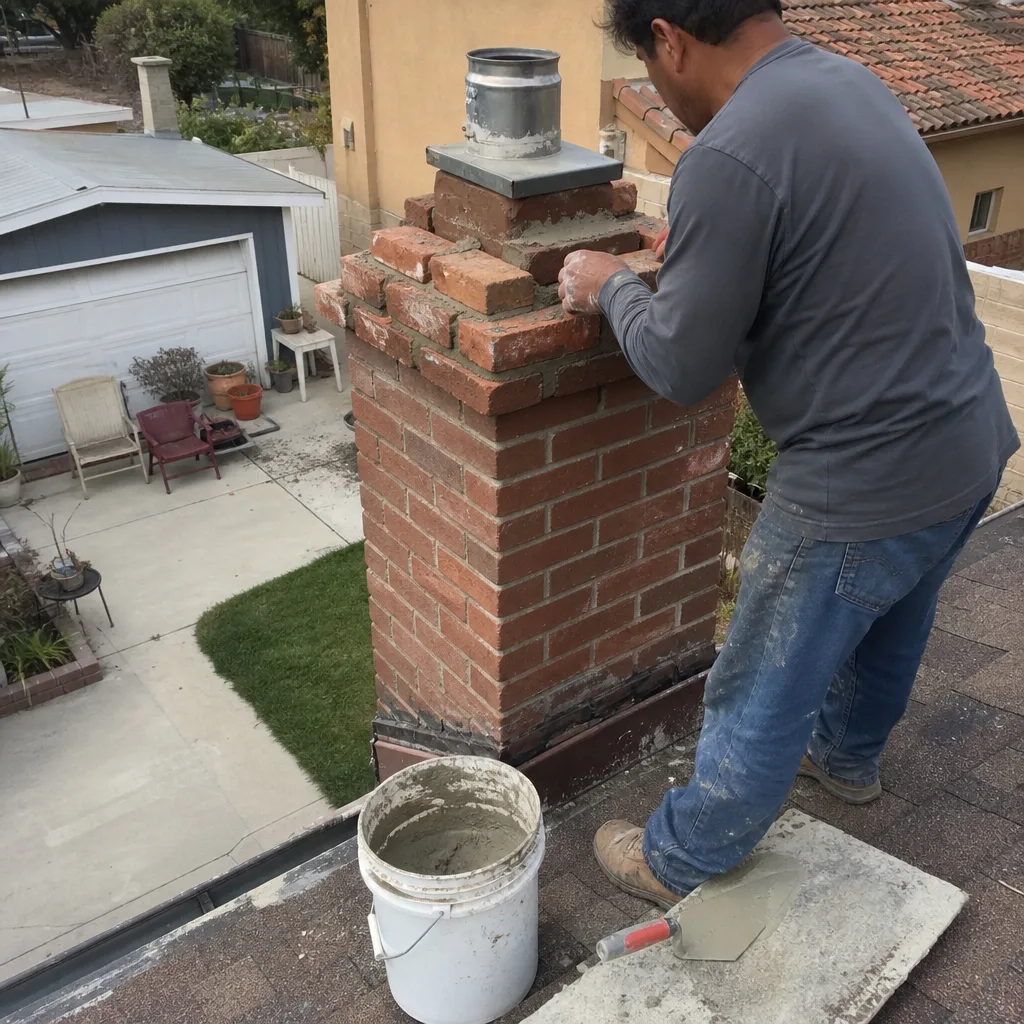
Call a professional when any warning sign in this guide persists beyond a single fire cycle, changes over time, or you cannot confidently identify its source. The cost of inspection is modest compared to the cost of undetected deterioration or a chimney fire. Read our How to Hire a Chimney Cleaning Contractor in Long Beach: A Step-by-Step Guide before you call.
Specifically: call when you observe exterior efflorescence that returns after cleaning, any smoke in the living space during normal operation, odors that persist between fires, or any gas appliance behavior change. Call before burning season if your chimney hasn’t had a Level 2 camera inspection within 24 months - the NFPA 211 standard for annual inspection applies to all solid fuel appliances, and gas appliances in frequent use benefit from equivalent evaluation.
Emberly Chimney Cleaners Long Beach offers free estimates in Long Beach - call (424) 401-5585. Every estimate includes a written price before work starts, a documented photo record on completion, and the 365-Day Done Right Promise. We provide free second opinions on any competitor’s written estimate, and our live phone support is available 24 hours a day, 7 days a week.
Frequently Asked Questions
A standard chimney sweep and Level 2 camera inspection in Long Beach typically ranges from $250 to $450 for a single-flue masonry chimney, depending on accessibility, creosote accumulation level, and whether the sweep reveals conditions requiring repair documentation. Emberly Chimney Cleaners Long Beach delivers a written price before any work starts - Clause 1 of the Haven Standard - and that price includes the camera-scan inspection and documented photo record, not as optional add-ons. Call (424) 401-5585 for an exact quote; estimates are free.
You need a new flue liner only when camera inspection documents that the existing liner is cracked, displaced, or improperly sized for the appliance it serves - and only after you’ve seen the images yourself. In Long Beach’s coastal environment, clay tile liners deteriorate faster than inland locations due to thermal shock from moisture infiltration. Stainless steel liners from DuraFlex or Olympia Chimney, properly insulated and sized, typically last 15-25 years. We never recommend liner replacement without camera evidence you can review, and we’ll tell you plainly when existing conditions allow safe continued use with monitoring. Call (424) 401-5585 for an exact quote - estimates are free.
NFPA 211 recommends annual inspection for all solid fuel chimneys and sweeping when inspection reveals 1/8 inch or more of creosote buildup. In Long Beach’s mild climate, where fireplaces see lighter use than colder regions, many homeowners extend to 18-24 months between sweeps if burning dry hardwood and maintaining proper airflow. However, coastal moisture accelerates liner deterioration and creosote hydration, so the annual inspection remains essential even when sweeping frequency varies. Gas-log inserts require annual service of the burner and pilot assembly, though the flue itself typically stays cleaner. Call (424) 401-5585 to schedule; estimates are free.
Skipped maintenance leads to progressive, often hidden deterioration: creosote accumulates to Class III glazed deposits that are difficult to remove and highly combustible; moisture infiltration cracks clay liners and corrodes steel liners; gas burner ports clog and combustion becomes incomplete; and the smoke chamber accumulates acidic deposits that erode mortar joints. The result is elevated chimney fire risk, carbon monoxide exposure potential, and repair costs that multiply as conditions worsen. A $300 sweep deferred becomes a $3,000 liner replacement deferred becomes a $15,000 rebuild. Call (424) 401-5585 for an exact quote on preventive maintenance - estimates are free.
Summer odor occurs because humidity reactivates creosote deposits and microbial growth, and the chimney’s natural draft reverses in warm weather, pulling air downward through the flue into the home. In Long Beach’s humid summer mornings, this reverse draft carries musty or acrid odors from the smoke chamber and firebox. The odor indicates existing creosote or moisture problems that winter fires temporarily suppress through heating and upward draft. A thorough sweep removes the odor source, and a top-sealing damper or proper chimney cap installation prevents reverse airflow. Call (424) 401-5585 for an exact quote - estimates are free.
Use depends on crack location, pattern, and whether the flue liner is intact. Hairline vertical cracks in exterior brick facing, with no displacement and a confirmed intact liner, may allow limited use with increased monitoring. Horizontal cracks, stair-step cracks following mortar joints, or any crack with visible liner damage or smoke staining require stopping use until professional evaluation. The critical factor is liner integrity - the brick is structural backup, but the liner contains combustion gases. Only a Level 2 camera inspection can confirm liner condition. Emberly Chimney Cleaners Long Beach provides this evaluation with documented photo record under Haven Standard Clause 4; call (424) 401-5585 for a free estimate.
The Bottom Line
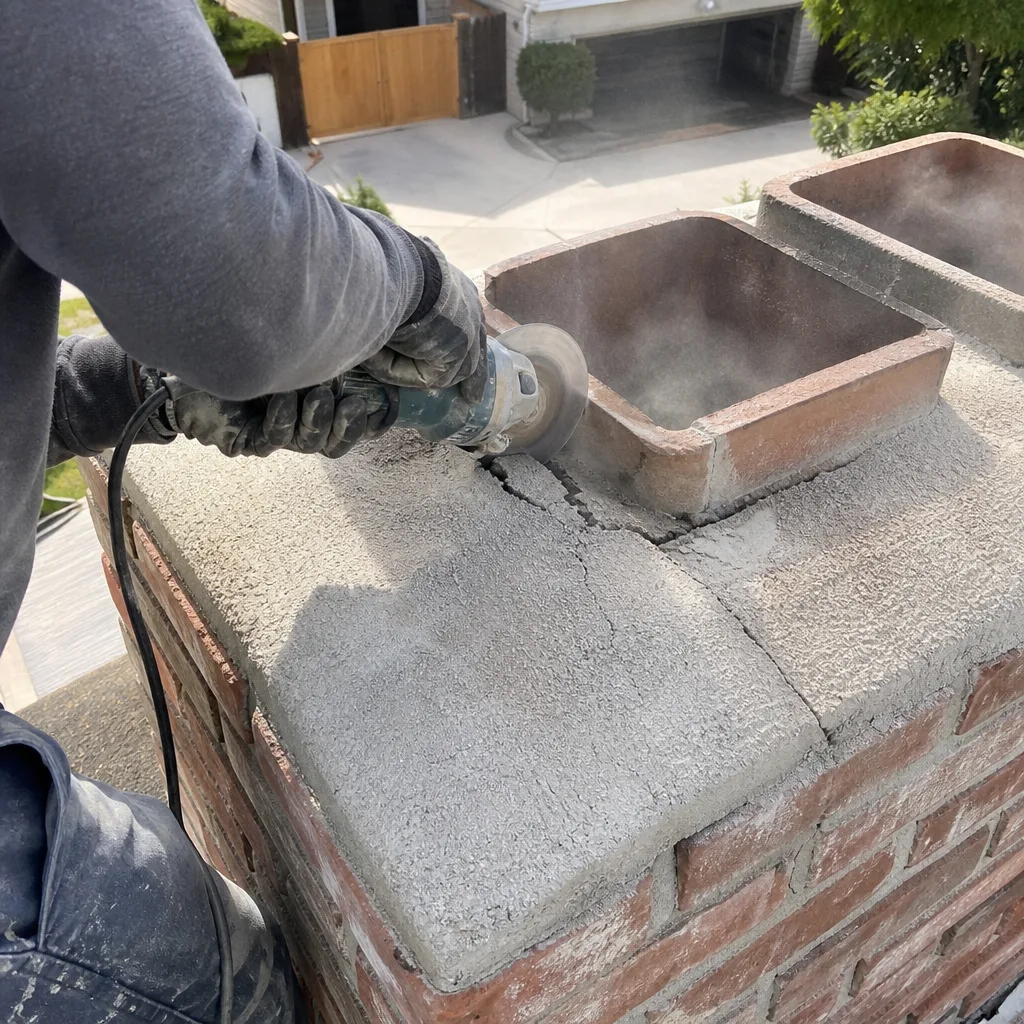
Chimney warning signs in Long Beach homes follow patterns shaped by coastal climate: salt-accelerated mortar deterioration, moisture infiltration from marine layer exposure, and gas appliance corrosion from salt air. The early indicators - efflorescence, draft hesitation, odor character changes, pilot instability - appear months before dangerous conditions develop. Document what you observe, understand the urgency level, and schedule professional evaluation before burning season demand peaks. The inspection standard matters: a flashlight look from the firebox isn’t equivalent to a Level 2 camera scan of the entire flue, smoke chamber, and accessible exterior. The written price before work starts, the documented photo record on completion, and the 365-Day Done Right Promise are protections that matter when you’re making decisions about your home’s safety.
Written by Corrine Halstead, Owner at Emberly Chimney Cleaners Long Beach, serving Long Beach since 2009.