
Level 1 sweep and inspection to the NFPA 211 annual standard - flue, crown, cap, and flashing checked and photographed
Chimney sweep logs do not sweep chimneys. They loosen some creosote - which then falls where a brush and vacuum still have to collect it.
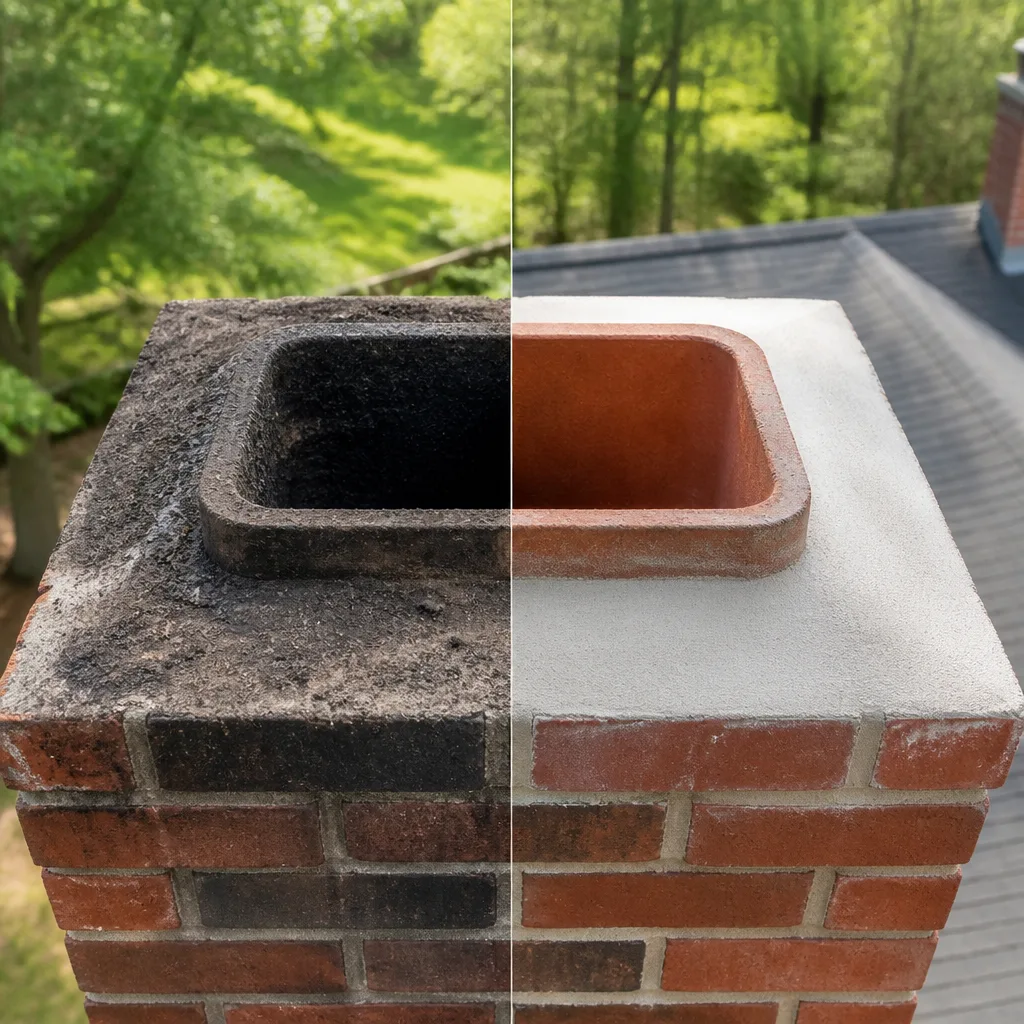
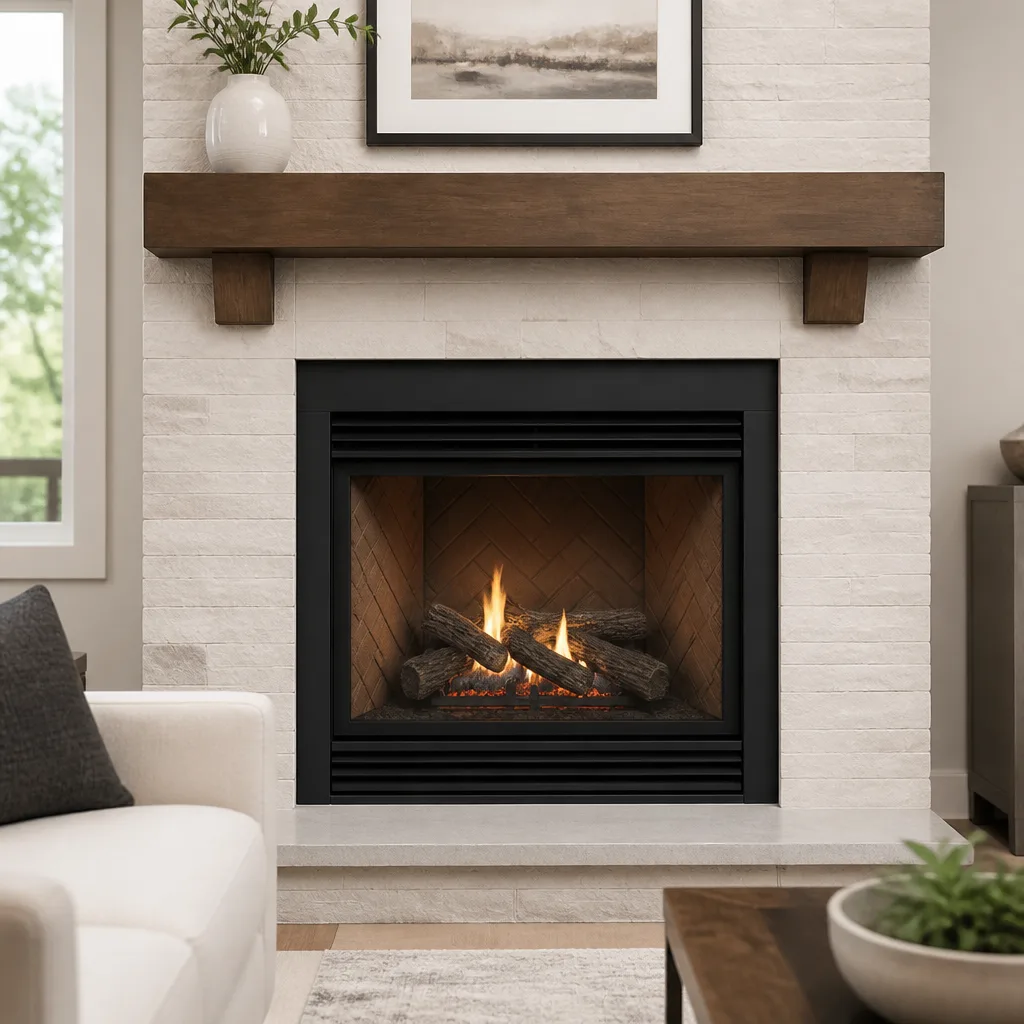
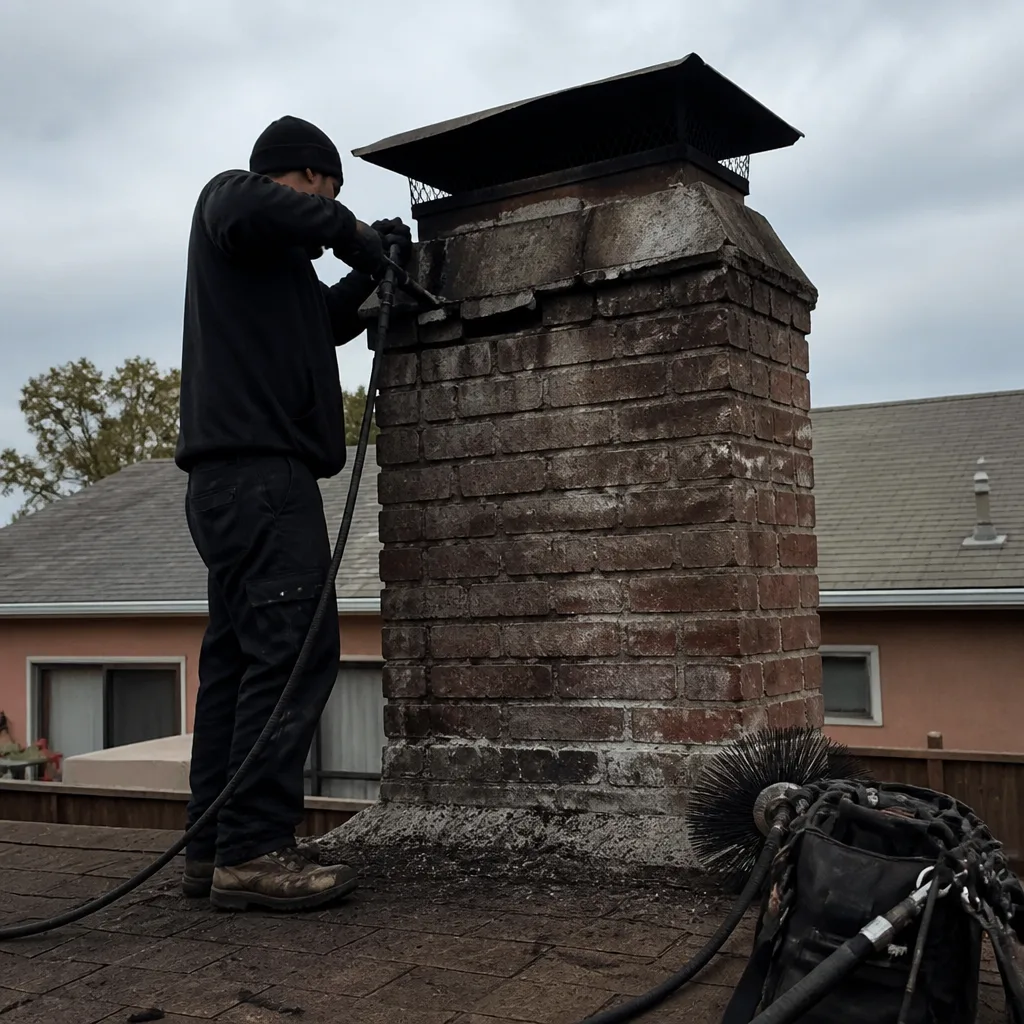 Before
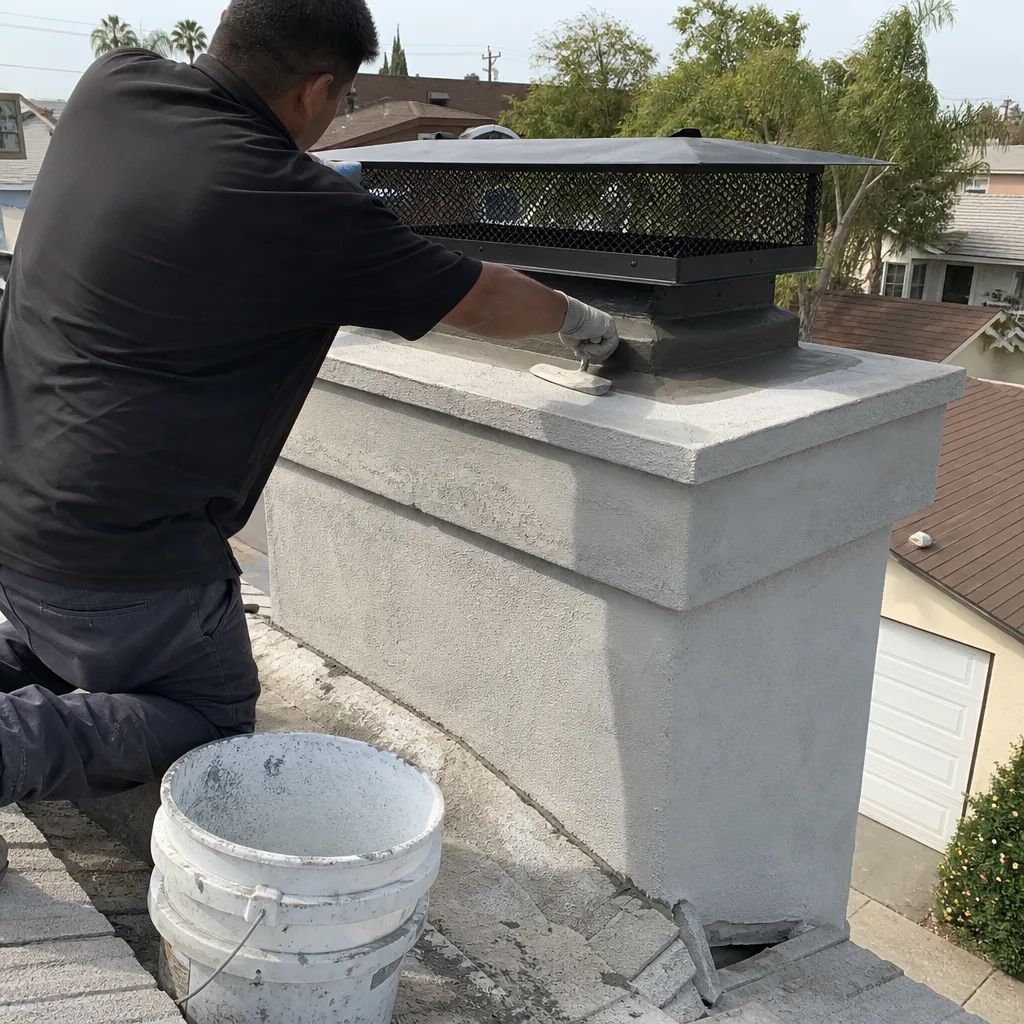 After
After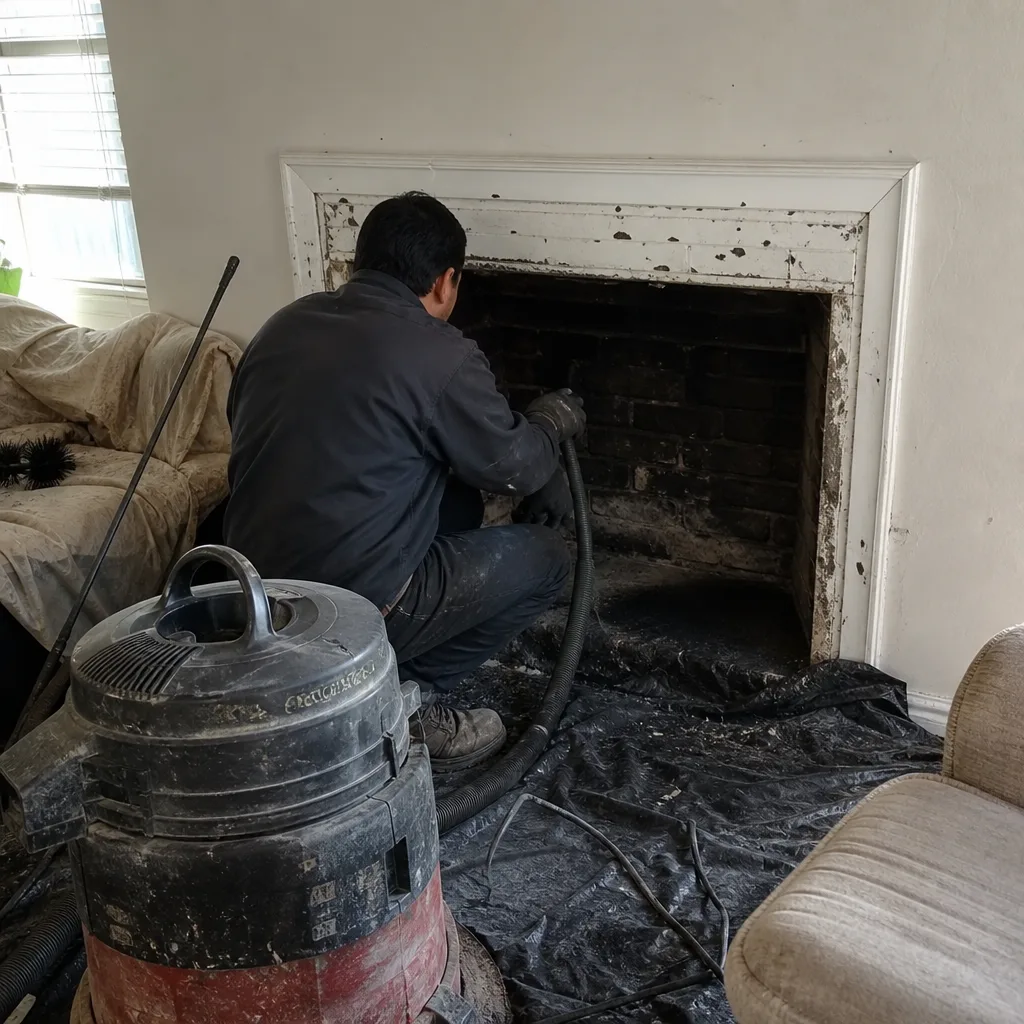 Before
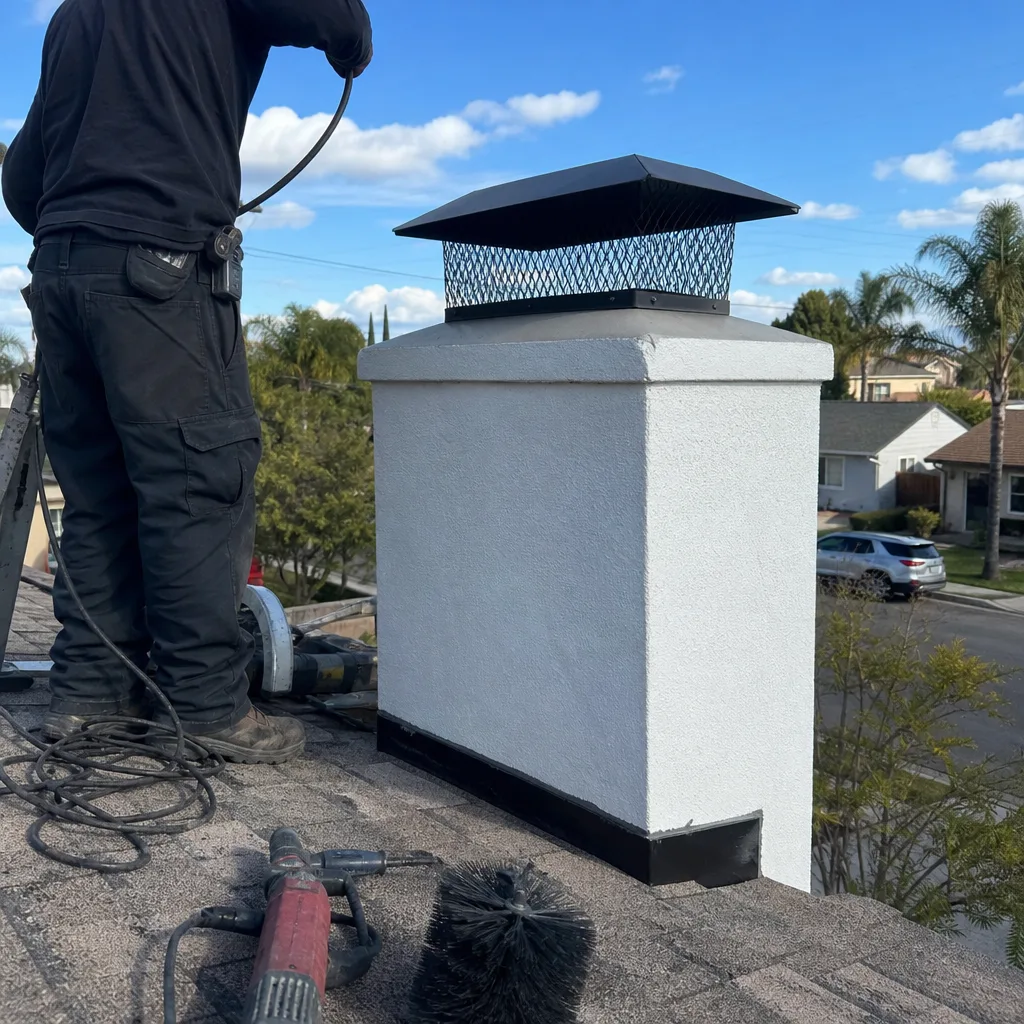 After
After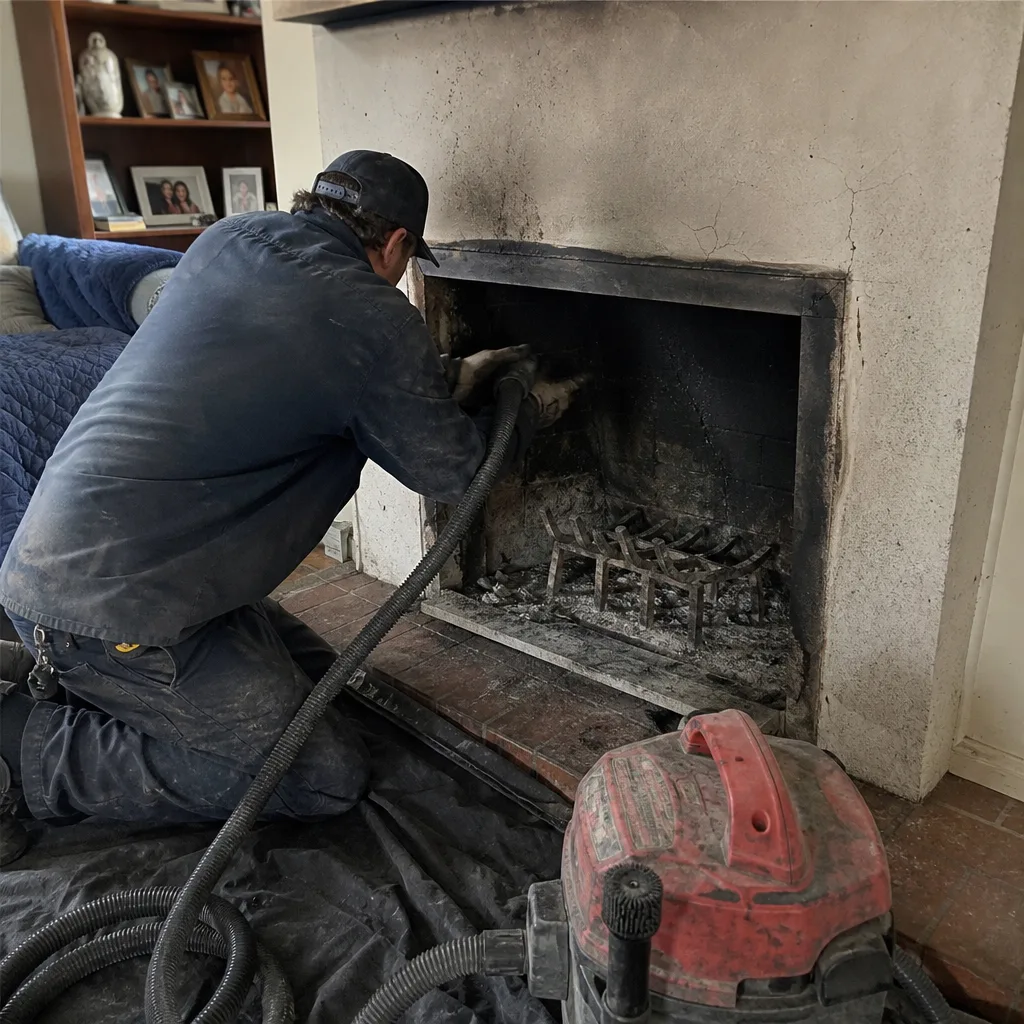 Before
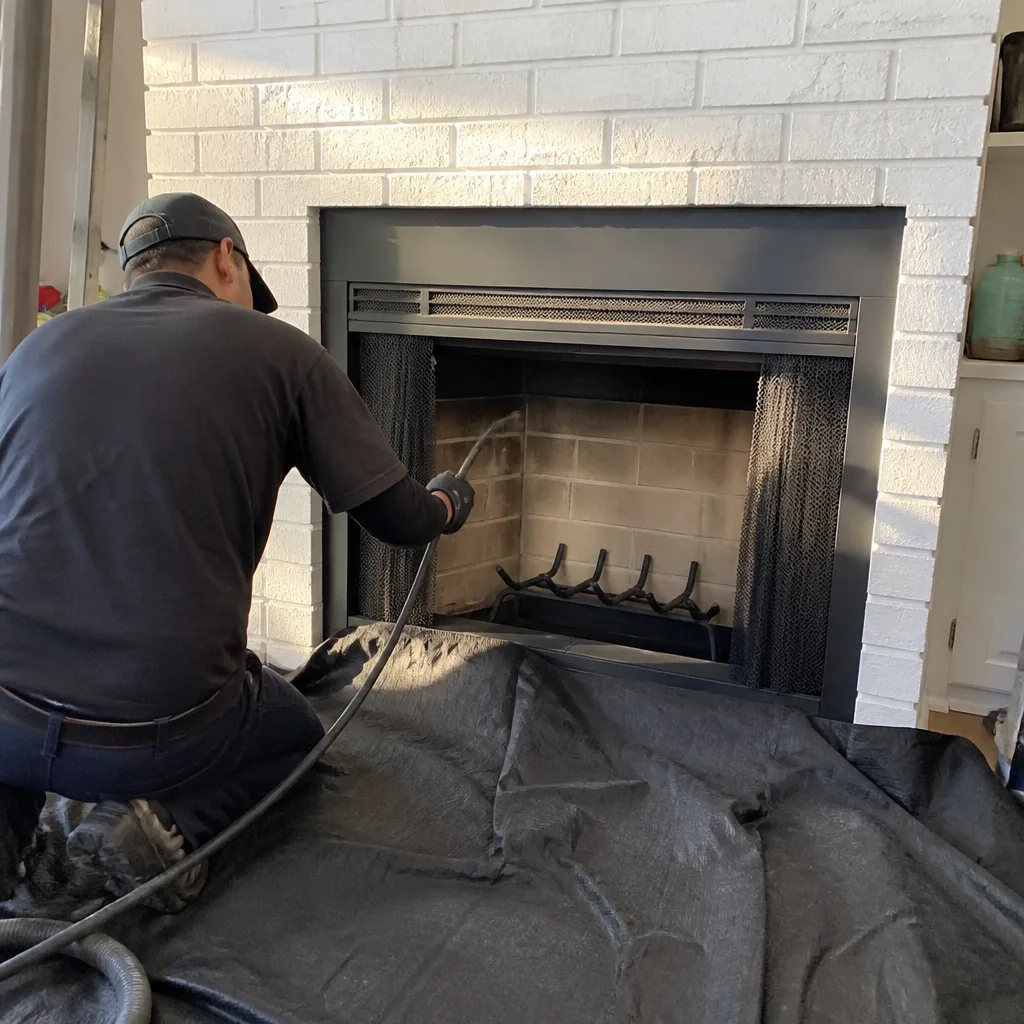 After
AfterSoot Removal in Long Beach, CA
How Much Does Chimney Cleaning & Sweep Cost? (2026 Price Guide) - Long Beach, CA: soot removal in Long Beach typically runs $149 to $349, depending on how much soot has accumulated, which part of the system is affected, and whether a Level 2 camera inspection reveals additional work. Most jobs are completed in a single visit, with a written price delivered before anyone picks up a tool.
If your fireplace smells like cold ash even when it hasn’t been lit, or you’re seeing black staining around the firebox opening, soot has built up past the point where it’s just cosmetic. Soot – fine carbon particles left over from incomplete combustion – collects on flue liner walls, smoke chamber surfaces, and firebox brick. Left alone, it traps moisture, accelerates corrosion of the liner, and creates the kind of acidic environment that chews through masonry faster than most Long Beach homeowners expect. It also reduces draft, which means your fire smokes into the room instead of up the flue.
At Emberly Chimney Cleaners Long Beach, we treat soot removal as a documented job, not a quick brush-and-go. Every visit includes a camera-scan inspection under NFPA 211 Level 2 standards, a written price before work starts, and a photo record when it’s done – because our work should be verifiable, not just our word. Call us at (424) 401-5585 to get a written quote, or read on to understand what the process actually involves.
Soot removal is part of our broader Chimney Cleaning & Sweep in Long Beach service, and it’s rarely a standalone problem – which is why we look at the full system every time we open the flue.
When You Need Soot Removal
- Persistent smoky odor between fires: Long Beach’s coastal humidity – especially during June Gloom – pushes cold, damp air down the flue. When that air passes through soot-coated liner walls, it picks up the odor and deposits it in the living room. If your fireplace smells like a campfire on a foggy morning and you haven’t had a fire in weeks, soot accumulation is the most likely cause.
- Black staining on the firebox face or surround: Soot that has migrated out of the firebox and onto the surrounding masonry or tile is a sign that the smoke isn’t being drawn up the flue cleanly. This is common in older Long Beach bungalows and Craftsman-style homes where the firebox geometry was never optimized and the damper has lost some of its seal over the years.
- Visible dark buildup inside the firebox: A thin, even layer of gray ash is normal after a fire. A thick, matte-black coating – particularly one that smears when touched – is soot that has layered up over multiple seasons and is ready to be cleaned before it becomes a harder, glossier creosote deposit.
- Reduced draw or smoke entering the room: If your fires smoke into the room or take a long time to establish a draft, restricted airflow through a soot-narrowed flue is a common culprit. Flue liners that are already on the smaller side – typical in pre-1980 Long Beach homes – can see noticeable draft reduction from even moderate soot buildup.
- It’s been more than a year since the last professional cleaning: The Chimney Safety Institute of America and NFPA 211 both recommend annual cleaning for actively used fireplaces. Long Beach’s mild winters mean many homeowners use their fireplace less than a household in a colder climate would – but even light, infrequent use deposits soot, and a year without inspection is enough time for early-stage buildup to require professional removal.
- You’re buying or selling a home in Long Beach: Many lenders and insurers now want documented chimney condition at the time of sale. A soot-laden firebox shows up clearly in camera footage and will likely generate a repair line item on a home inspection report. Getting ahead of it before listing – or before you close – is straightforward and cheaper than a negotiated credit.
Our Soot Removal Process
-
Written price and scope before anything starts.
Before a single tool comes out, you’ll have a written price, a written description of what we’re doing, and a written warranty – in your hand or in your inbox. This is Haven Standard Clause 1: no surprises after the tech is already in your home. The quote is based on what we see when we arrive, not a number we gave you on the phone before seeing the system. -
Camera-scan inspection of the full flue system.
We run a camera down the flue liner before cleaning begins. This tells us exactly where the soot is concentrated, whether there are cracks or spalling in the liner that cleaning could expose, and whether any section of the flue tile has soot that has hardened into Class II or Class III creosote – which requires a different approach than standard soot. Soot and light creosote are both combustible, but they’re not the same material and they don’t respond to the same tools. The pre-cleaning camera scan is non-negotiable for us; it’s been part of every job since 2009, long before it became part of the Haven Standard’s Clause 4. -
Drop cloths, HEPA vacuum setup, and firebox protection.
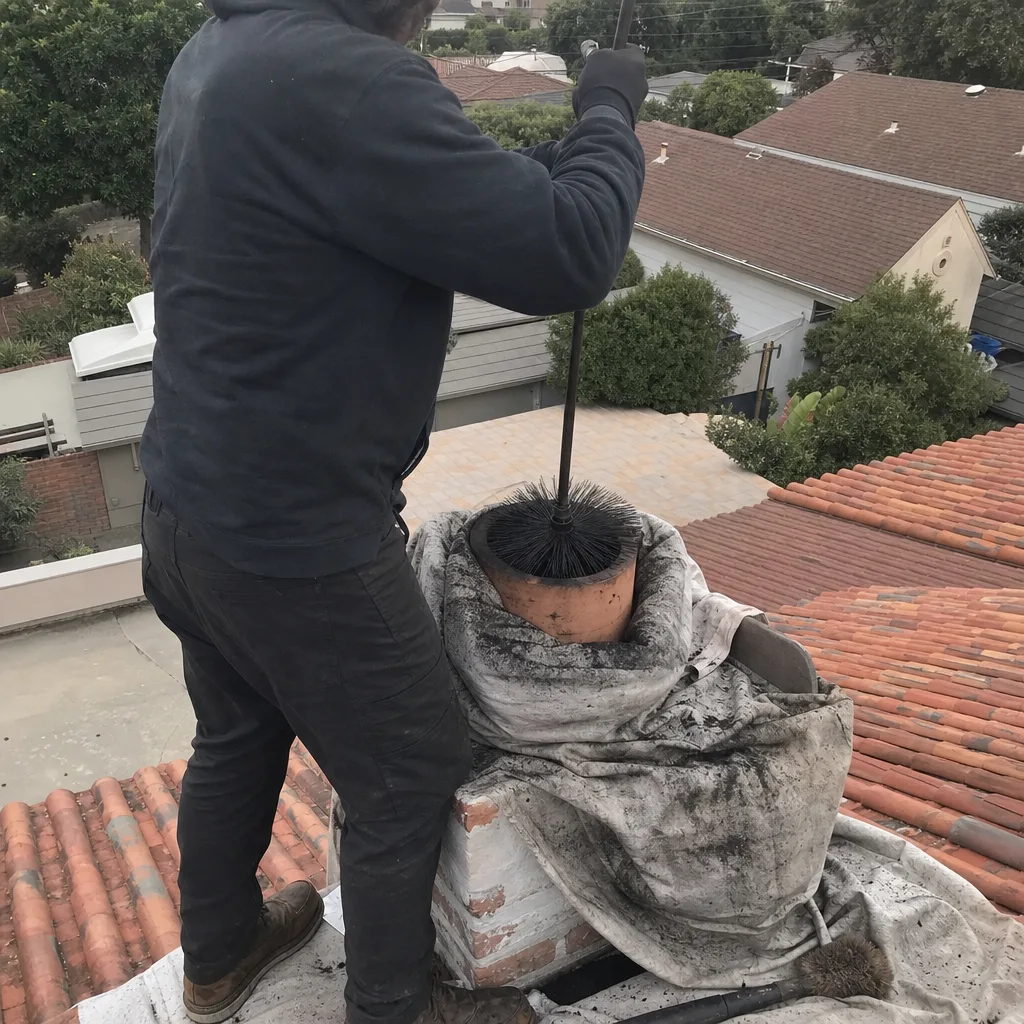
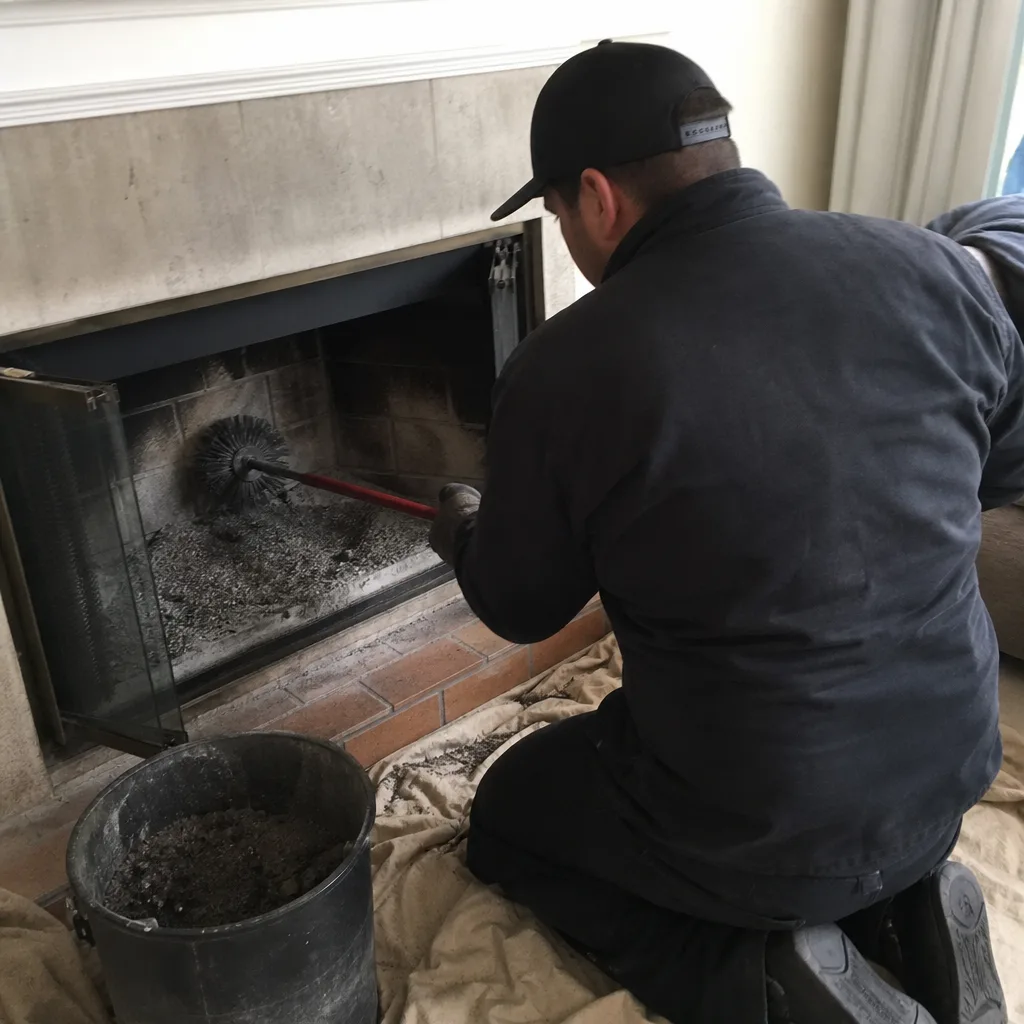
Soot is fine-particle carbon. Without proper containment, it will coat every surface in the room before the brush clears the first section of liner. We seal the firebox opening, connect a commercial-grade HEPA vacuum to the flue, and lay drop cloths over flooring and furniture within the work area. Long Beach homes – especially those with original hardwood or tile floors – don’t need carbon dust settling into the grain. Neither do you. -
Rotary brush cleaning of the flue liner and smoke chamber.
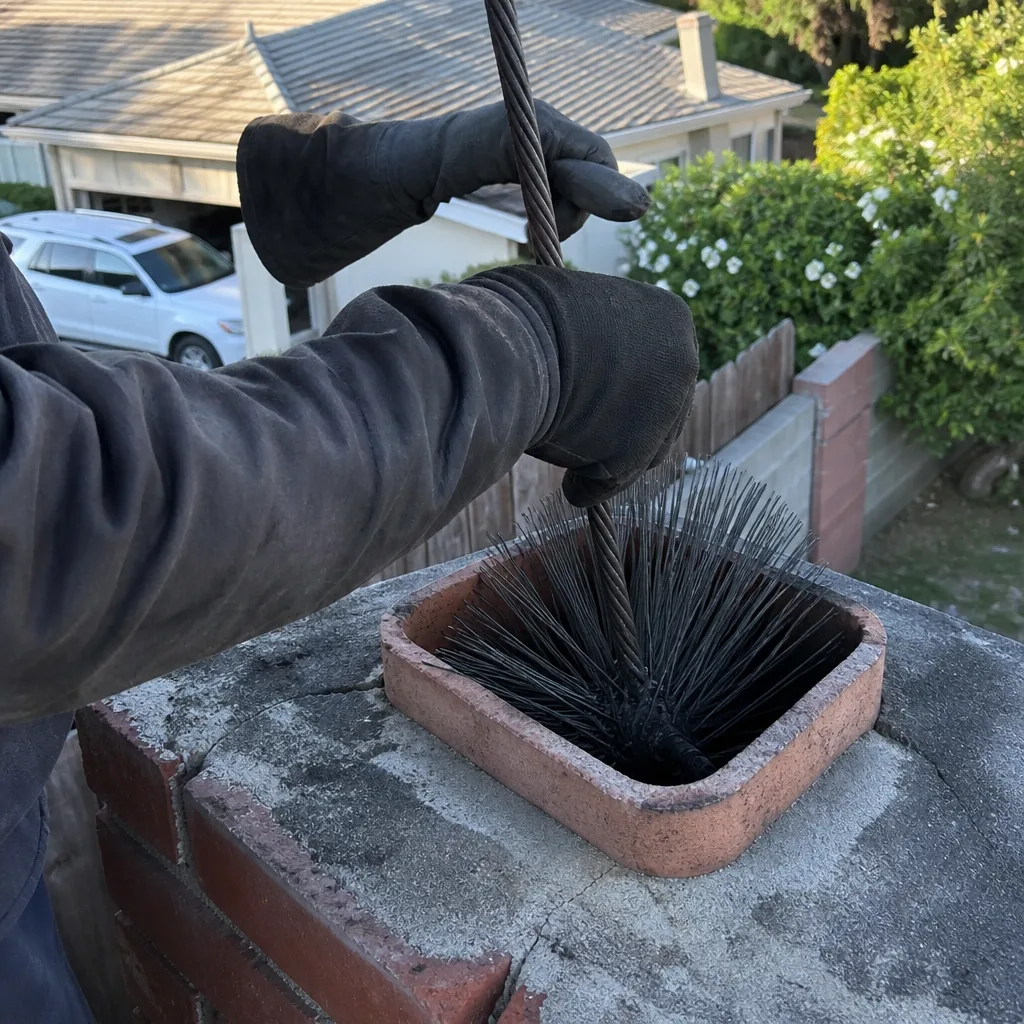
We use rotary chimney brushes sized to your specific flue liner diameter – typically a clay tile or stainless steel liner in Long Beach’s housing stock – and work from the firebox up toward the crown. The smoke chamber, the corbelled masonry section just above the fireplace opening, traps a disproportionate amount of soot and is often missed in a basic cleaning. We clean it as part of the standard process, not as an add-on. -
Firebox and damper cleaning.
Once the liner and smoke chamber are clear, we address the firebox itself – removing loose soot and ash from the floor, back wall, and sides – and inspect the damper plate and frame for corrosion or warping. A warped damper is one of the main reasons soot odors migrate into Long Beach living rooms on humid coastal evenings, and if we see it, we’ll note it in writing. -
Post-cleaning camera scan and documented photo record.
When the cleaning is done, the camera goes back in. We document the post-cleaning condition of the liner with photos that become part of your job record under Haven Standard Clause 4. You get the photo record. It’s not archived somewhere inaccessible – it goes to you, so you have it for your insurance file, your home records, or your next real estate transaction.
 Before
 After
AfterSoot Removal Pricing in Long Beach
Soot removal in Long Beach costs $149 to $349 for most residential jobs. That range covers a standard single-flue fireplace with moderate soot accumulation and no structural complications. Here’s what moves the number in each direction:
| Scenario | Estimated Range |
|---|---|
| Light soot, single flue, recent prior cleaning | $149 – $199 |
| Moderate soot buildup, standard single-flue fireplace | $199 – $279 |
| Heavy soot, smoke chamber work included, full camera inspection | $279 – $349 |
| Soot with early Class II creosote deposits (requires chemical treatment) | $349 – $499+ |
| Multi-flue systems (e.g., dual-fireplace homes or gas log fireplaces with separate flues) | Quoted per flue |
A few things that affect where your job lands in that range: how long it’s been since the last cleaning, whether the smoke chamber has been cleaned before (they often haven’t, even in homes that had regular sweeps), and what the camera reveals about liner condition before we start. If the camera shows Class III creosote – a glazed, tar-like deposit that requires rotary chemical removal – that’s a separate scope of work and a separate written price before we proceed.
Every estimate is written and delivered before work begins. If you have a written quote from another chimney company, bring it to us – we offer a free second opinion on any written estimate, and we’ll tell you plainly whether the scope of work described matches what your system actually needs.
Call (424) 401-5585 to schedule your inspection and get a written price. Estimates are free and the quote comes before any work starts.
What Makes Long Beach Chimneys Accumulate Soot Differently
Long Beach’s climate is one of the few things that makes chimney maintenance here genuinely different from inland cities. The marine layer – the low coastal fog that rolls in off the Pacific from late May through early July and returns most evenings – keeps ambient humidity elevated even when it isn’t raining. A flue that sits cold and damp for days between fires develops a condensation cycle on the liner walls. When you light the next fire, the smoke hits cold, moist tile and deposits soot faster and in a stickier form than it would in a drier climate.
We also see a specific pattern in the neighborhoods closest to the water – Belmont Shore, Naples, Bluff Park – where salt air accelerates the corrosion of damper hardware and metal liner components. Corroded dampers don’t seal properly, which means cold, moist outside air is constantly cycling down into the firebox and creating the condensation conditions that build soot more aggressively. If your fireplace is within a mile of the coast, that’s worth knowing when you’re setting a cleaning schedule.
In older Long Beach neighborhoods like Wrigley and Bixby Knolls, where housing stock from the 1930s through 1950s is common, the original clay tile flue liners are often narrower than current standards recommend and have joints that have shifted over decades of settling. Soot accumulates faster in a narrower flue, and shifted tile joints create ledges where soot collects rather than passing through. The camera scan before cleaning is particularly useful in these homes because it shows us exactly what we’re working with before we start.
This is also why soot removal in Long Beach can’t be quoted accurately over the phone – not because we want to upsell you in person, but because the variables are real and a number given without seeing the system is a number we’d have to change anyway. The written price you get after the camera-scan inspection is the price.
Soot vs. Creosote: Why the Distinction Matters
Soot and creosote are both byproducts of wood combustion, but they’re different materials with different risks and different removal requirements.
Soot is fine, powdery carbon – it brushes off cleanly with the right equipment and poses a lower fire risk than creosote, though a heavily soot-coated flue does restrict airflow and can smolder if an ember reaches it. Creosote, by contrast, condenses from smoke at lower flue temperatures and progresses through three stages: a dry, flaky deposit (Class I), a tar-like coating (Class II), and a glazed, extremely flammable crust (Class III). Class III creosote requires chemical treatment and rotary removal tools; a standard rotary brush won’t clear it and can actually push it deeper into liner joints.
When the camera goes down before cleaning, we’re specifically looking at which material we’re dealing with and in what proportions. If what appears to be a soot job turns out to have Class II or Class III creosote in sections of the liner, we stop, show you the camera footage, and give you a written price for the appropriate treatment before we proceed. We don’t convert a soot job to a creosote job without showing you exactly what we found and why.
A note on safety: If you notice any dark glazed deposits inside your firebox or a shiny, tar-like coating visible through the damper opening, don’t use the fireplace until a professional has inspected it. Class III creosote is the leading cause of chimney fires, and it ignites at temperatures that can be reached by a normal wood fire. Call us at (424) 401-5585 before lighting another fire.
The Haven Standard and What It Means for Your Job
Emberly Chimney Cleaners Long Beach operates under the Haven Standard – a documented set of job requirements that was built into the business from its founding in 2009. For a soot removal job, the Haven Standard means four things you can verify:
- Clause 1 – Written price before work starts: The tech won’t begin until you have a written scope, written price, and written warranty in hand. Not approximate, not “around this range” – a fixed number for the agreed scope.
- Clause 4 – Documented photo record on every job: Before-and-after camera footage and photos are included on every visit. You receive the record when the job is done.
- Background-checked, uniformed technicians: The person coming into your home is verified, identified by name before arrival, and sends a text when they’re on the way.
- 365-Day Done Right Promise: If something we did isn’t right, we make it right. That’s documented on every job, not offered selectively.
We’ve completed more than 38,000 chimney inspections and cleanings since 2009. Every one had a written price before work started and a documented record when it was done. That’s not a marketing claim – it’s a job count that can be checked against the archive.
Key Takeaways
- Soot removal in Long Beach costs $149 to $349 for most single-flue jobs, with a written price delivered before work starts.
- Long Beach’s coastal humidity accelerates soot buildup – especially in Belmont Shore, Naples, and Bluff Park – and makes annual cleaning more important than many homeowners realize.
- Every soot removal job includes a camera-scan inspection before and after cleaning, per Haven Standard Clause 4.
- Soot and creosote are different materials. If the camera finds creosote alongside soot, you get a separate written price for the appropriate treatment – we don’t proceed without showing you what we found.
- The 365-Day Done Right Promise covers every job. If it isn’t right, we make it right.
- Bring us any written competitor estimate – we’ll give you a free second opinion.
FAQs – Soot Removal in Long Beach
How much does soot removal cost in Long Beach?
Soot removal in Long Beach costs $149 to $349 for a standard single-flue fireplace, depending on the level of accumulation and whether the smoke chamber requires separate attention. Jobs where the camera reveals Class II or Class III creosote alongside soot are quoted separately in writing before any additional work begins. Call (424) 401-5585 – the estimate is free and the price is written before any work starts.
Is soot removal the same as a chimney sweep?
Soot removal is one component of Chimney Cleaning & Sweep services, but the terms aren’t interchangeable. A chimney sweep covers the entire system – liner, smoke chamber, firebox, damper, and exterior components including the crown and cap. Soot removal focuses on the carbon deposits inside the flue and firebox. At Emberly Chimney Cleaners Long Beach, every soot removal visit includes a camera inspection of the full system, so if there are issues beyond soot accumulation, we’ll document them and give you a written price – not a verbal upsell at the end of the job.
Can I remove soot myself?
You can wipe down the visible firebox walls with a dry soot sponge, and that’s reasonable maintenance. What you can’t do safely at home is clean the flue liner, smoke chamber, or areas above the damper – and those are exactly where the most significant soot accumulates. Attempting to brush a flue without the right equipment and HEPA containment will distribute fine carbon particles through the room. More importantly, you won’t know whether what you’re dealing with is soot or early creosote, and Class II or III creosote brushed incorrectly can be pushed deeper into liner joints. A camera inspection before cleaning is the part that actually protects you.
How often do Long Beach chimneys need soot removed?
Annual Sweep and inspection is the standard recommendation from NFPA 211 for any actively used fireplace. In Long Beach specifically, the marine layer and salt air environment means that even light, infrequent use deposits soot in a stickier form than in drier inland climates. Homeowners in Belmont Shore, Naples, or anywhere within a mile of the water should stick to annual service regardless of how often they use the fireplace. If you haven’t had a cleaning in more than a year, a camera-scan inspection will show you exactly what’s accumulated and what it costs to clear it. Call (424) 401-5585 to schedule.
Schedule Your Soot Removal in Long Beach
If your fireplace has been sitting through another Long Beach winter without a documented cleaning, the time to deal with it is before the next time you light a fire. Call (424) 401-5585 to schedule Chimney Cleaning & Sweep Near Me in Long Beach, CA. A live person answers, 24 hours a day, 7 days a week – no voicemail, no web form. You’ll get a written price before work starts, a camera record when it’s done, and the 365-Day Done Right Promise on every job. Estimates are free.
Written by Corrine Halstead, Owner at Emberly Chimney Cleaners Long Beach, serving Long Beach.