
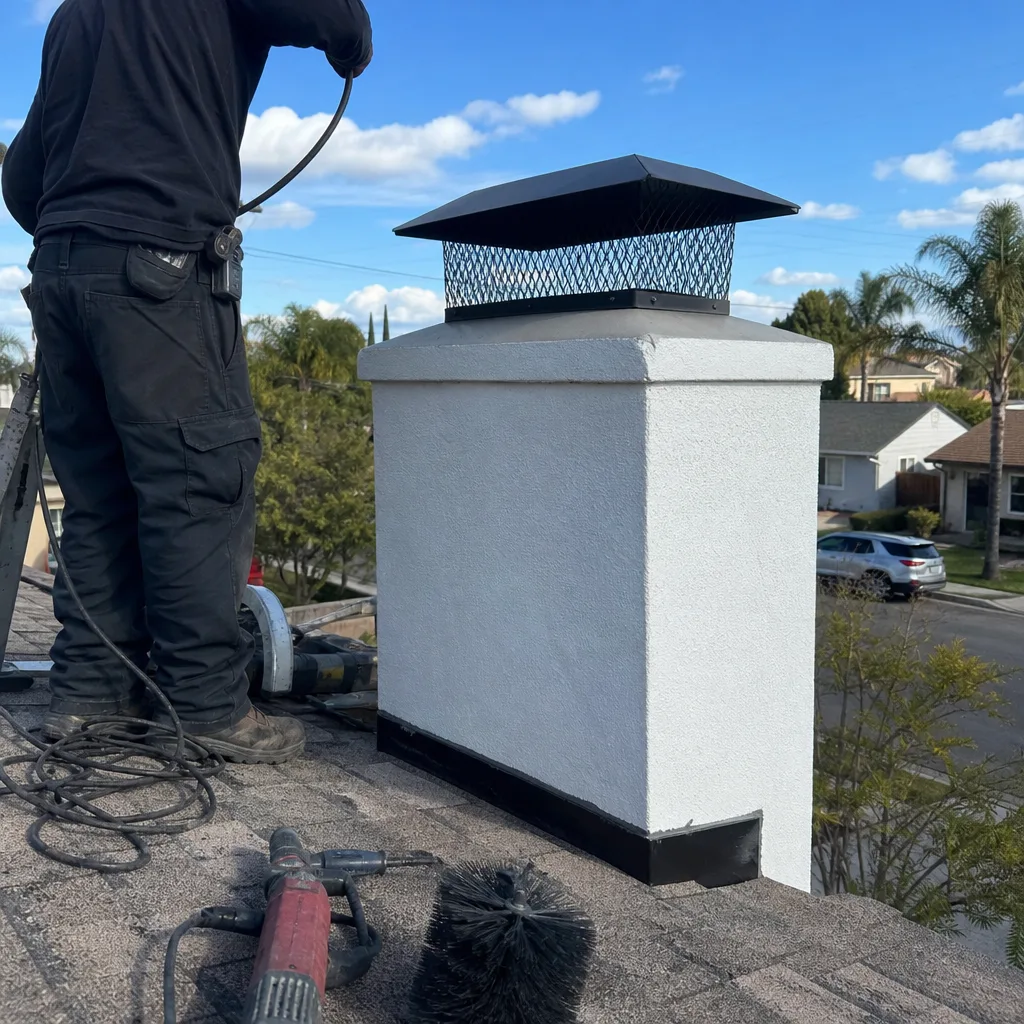
Level 1 sweep and inspection to the NFPA 211 annual standard - flue, crown, cap, and flashing checked and photographed
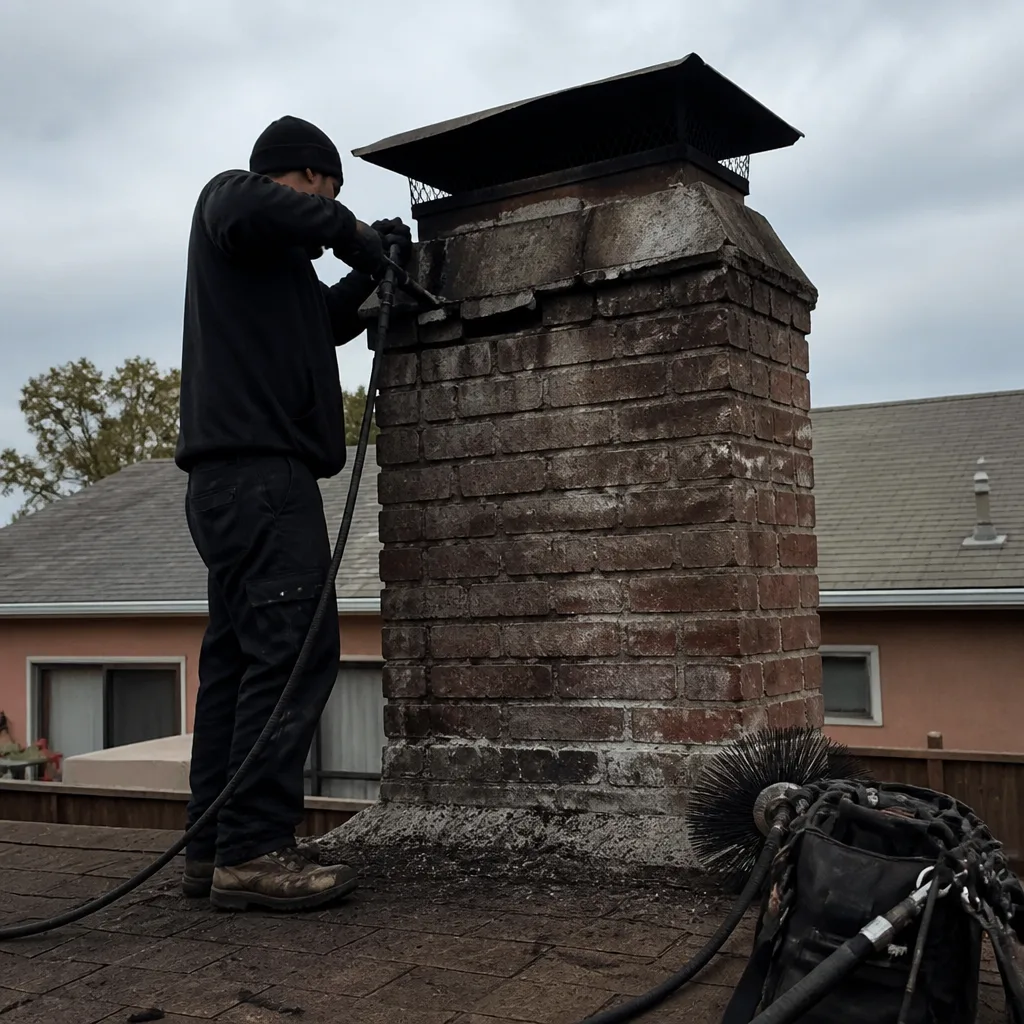
Chimney sweep logs do not sweep chimneys. They loosen some creosote - which then falls where a brush and vacuum still have to collect it.
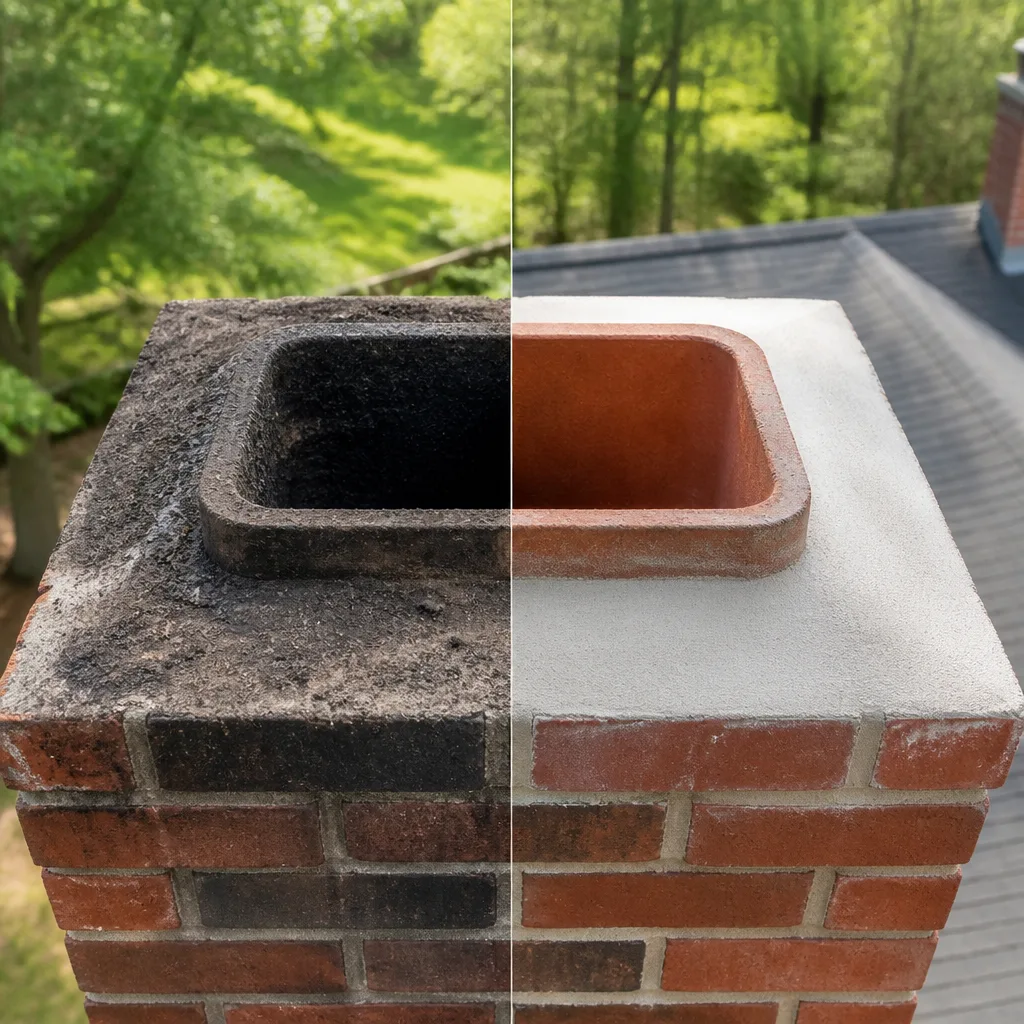
 Before
 After
After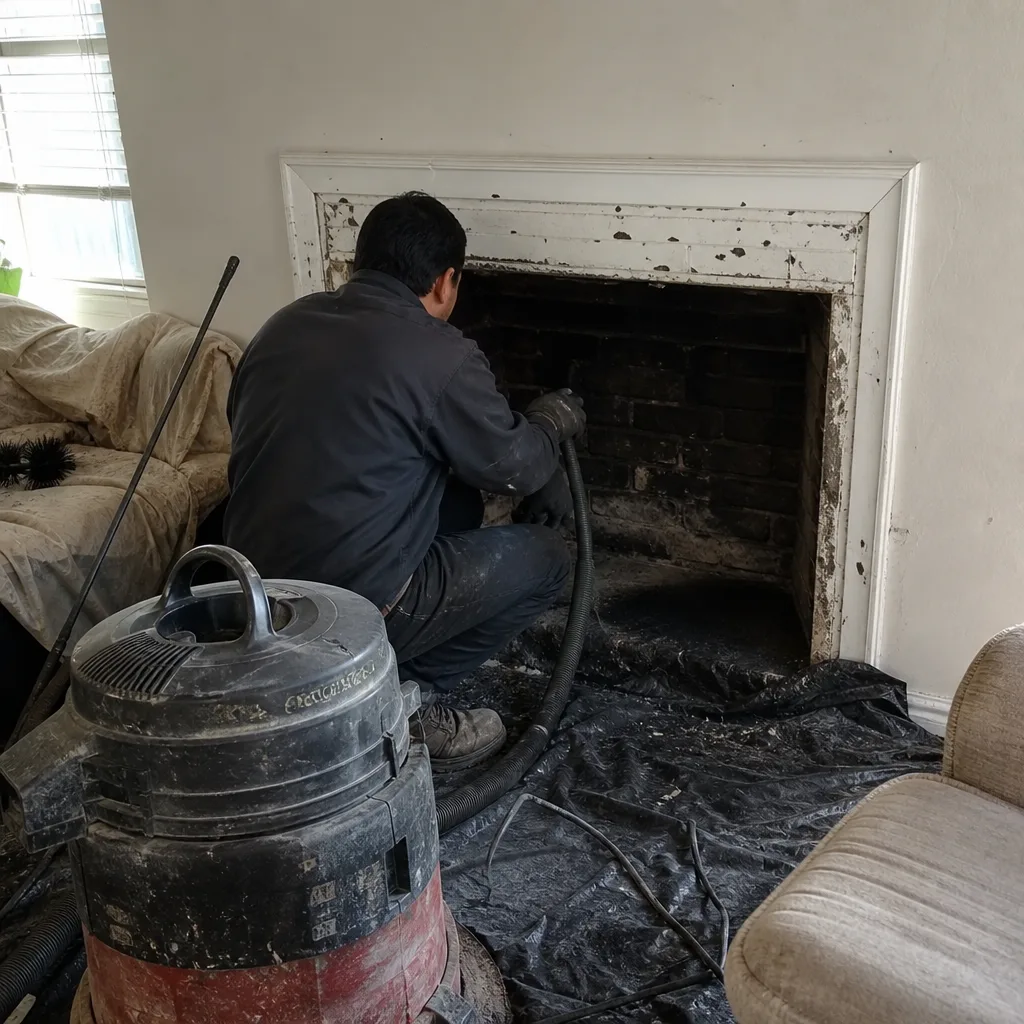 Before
 After
After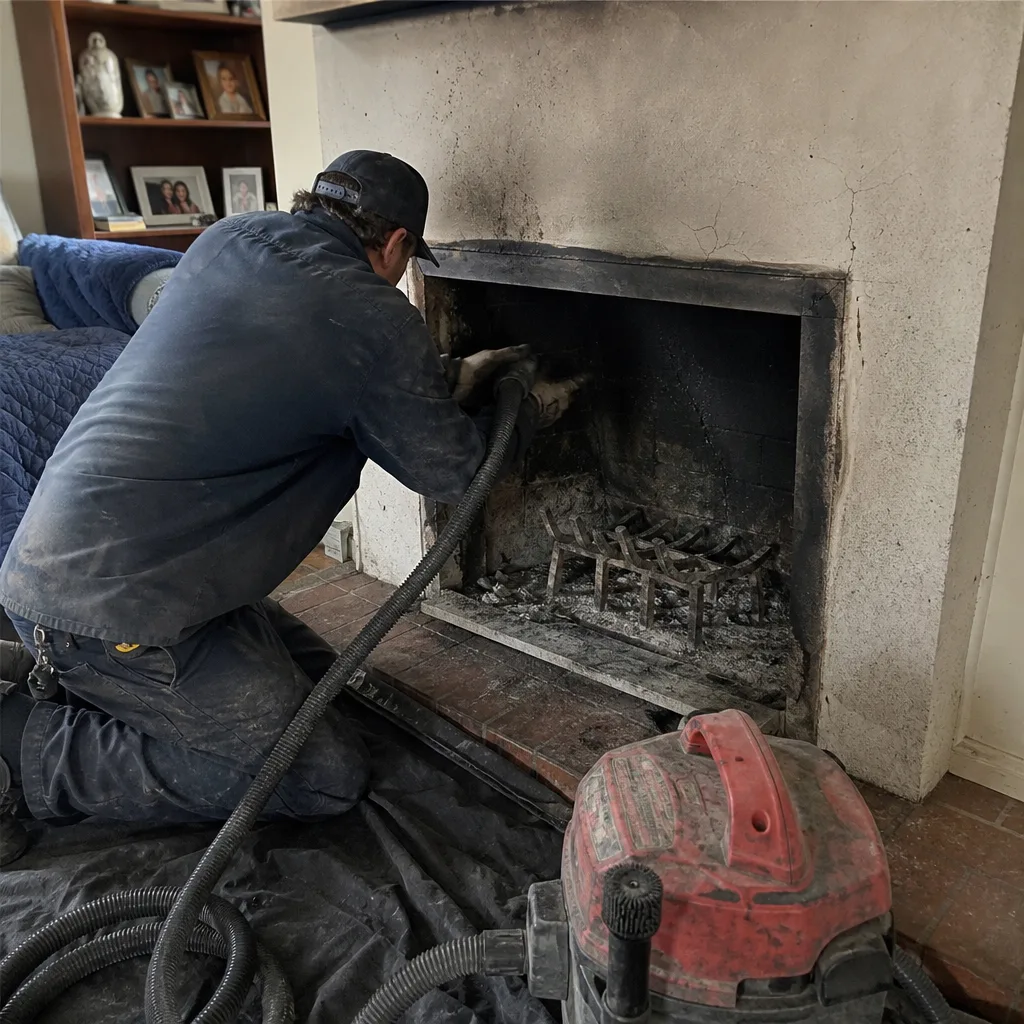 Before
 After
AfterCreosote Removal in Long Beach, CA
Creosote removal in Long Beach typically runs $180 to $600, depending on how much has built up and which removal method the flue requires. Most appointments are completed in a single visit, and every job at Emberly Chimney Cleaners Long Beach starts with a Level 1 Inspection camera scan down the flue so you know exactly what you’re dealing with before anyone quotes a price or picks up a brush.
If you’ve noticed a sharp, tar-like smell coming from your fireplace – even when it isn’t in use – or if it’s been more than a year since your chimney was last cleaned, there’s a reasonable chance creosote has accumulated to a level worth addressing. Long Beach’s mild winters mean most homeowners use their fireplaces in short, frequent bursts during the November-to-February stretch rather than burning long overnight fires. That pattern – lots of low-temperature, incomplete burns – is exactly what produces heavy creosote deposits faster than most people expect.
Our full Chimney Cleaning & Sweep in Long Beach service includes creosote assessment on every visit. When removal is what’s needed, we scope it, price it in writing, and do the work on the same visit whenever possible. Live phone support runs around the clock at (424) 401-5585 if you’d rather talk through what you’re seeing before booking.
What Is Creosote, and Why Does It Matter?
Creosote is the byproduct of wood combustion that condenses inside a flue liner as smoke cools on its way out. It’s unavoidable if you burn wood – the question is which form it’s taken and how much has accumulated.
Chimney professionals classify creosote in three stages:
- Class I (First Degree): Dusty, flaky soot. Brushes off cleanly with standard rotary equipment. This is the easiest and least expensive removal scenario.
- Class II (Second Degree): Porous, tar-like buildup that has partially hardened. Standard brushing removes light deposits; heavier accumulations require chemical pretreatment before mechanical removal.
- Class III (Third Degree): Glazed, dense, shiny creosote that has baked onto the flue liner walls. This is the stage that carries real fire risk. It does not brush off. Chemical conversion agents are applied, then the loosened material is mechanically removed – sometimes over multiple visits for severe cases.
Class III creosote is the one inspectors and fire investigators talk about. It ignites at roughly 451 degrees Fahrenheit, and a chimney fire burning at that stage can reach internal temperatures above 2,000 degrees – hot enough to crack a clay tile liner, damage the surrounding masonry, and transfer heat into adjacent framing. We flag this clearly in the written inspection report rather than letting the camera footage do the talking on its own.
Long Beach’s coastal humidity plays a role here, too. The salt air and marine layer that roll in off the Pacific don’t cause creosote, but they do accelerate oxidation of clay liner tiles. A liner that’s already been weakened by moisture cycling is a worse environment for any creosote accumulation – especially Class III – because there’s less margin before a chimney fire causes structural damage. That’s why our inspection doesn’t stop at measuring creosote depth; it also documents the liner condition so both things are on the table at the same time.
When You Need Creosote Removal
- You smell something sharp or acrid from the fireplace when it’s cold. A strong tar or burned-wood odor with no active fire is one of the clearest signs of significant creosote buildup, particularly Class II or III. The smell intensifies when humidity is high – common in neighborhoods like Belmont Shore and the Peninsula during June Gloom season.
- Your fireplace produces more smoke than usual, or smoke backs into the room. Heavy deposits narrow the flue opening and interfere with draft. If your damper is fully open and smoke still rolls into the room, creosote restriction is one of the first things to rule out.
- It’s been over a year since your last professional sweep. The NFPA 211 standard recommends annual inspection and cleaning for any wood-burning appliance. In Long Beach, where winters are short and fires tend to be low-intensity, many homeowners stretch this interval – and accumulation still happens, just more slowly.
- You’ve recently had a chimney fire, even a small one. What’s sometimes called a “soft” chimney fire – a brief roaring or rumbling sound in the flue – often goes unrecognized. If you’ve heard that sound, a camera inspection is the only way to confirm whether the liner survived intact and whether glazed creosote was the fuel source.
- You’re burning a lot of softwood or green wood. Pine, eucalyptus, and other high-resin or unseasoned woods are common in Southern California and produce significantly more creosote per cord than properly seasoned hardwood like oak. If that’s what’s been going into your firebox, expect heavier accumulation than the calendar alone suggests.
- You’re buying a home or haven’t had a Level 2 inspection done. Real estate transactions in Long Beach frequently surface deferred fireplace maintenance. A camera scan before or after closing gives you a documented baseline – useful both for your own records and for any insurance conversation that follows.
 Before
 After
AfterOur Creosote Removal Process
-
Camera Scan and Written Assessment
Before anything is quoted or scheduled for removal, a technician runs a camera down the full length of the flue liner. We photograph the firebox, smoke chamber, damper, and liner – and we classify the creosote present by degree. That classification drives the written scope and the written price. You see both before the technician picks up a brush or applies any chemical agent. This is Haven Standard Clause 1 in practice: have it in writing, before work starts. -
Containment Setup
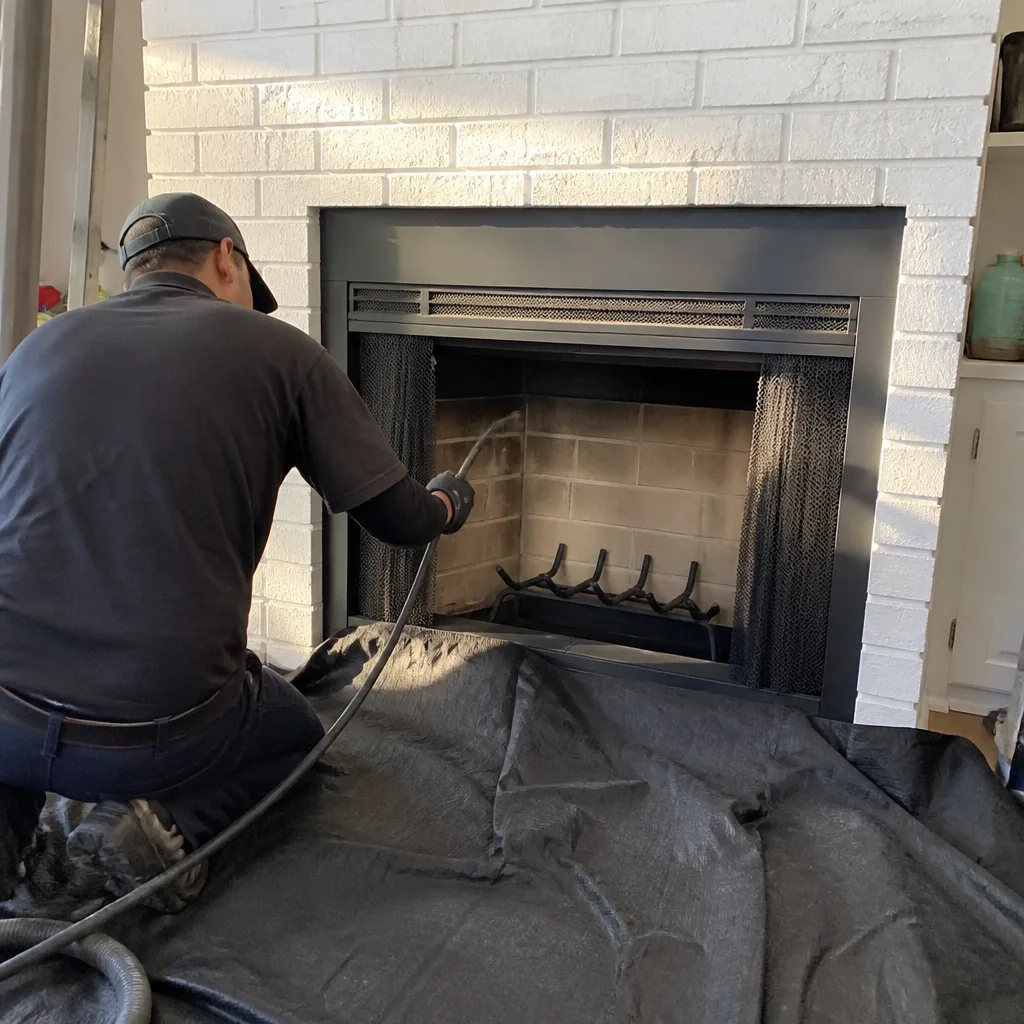
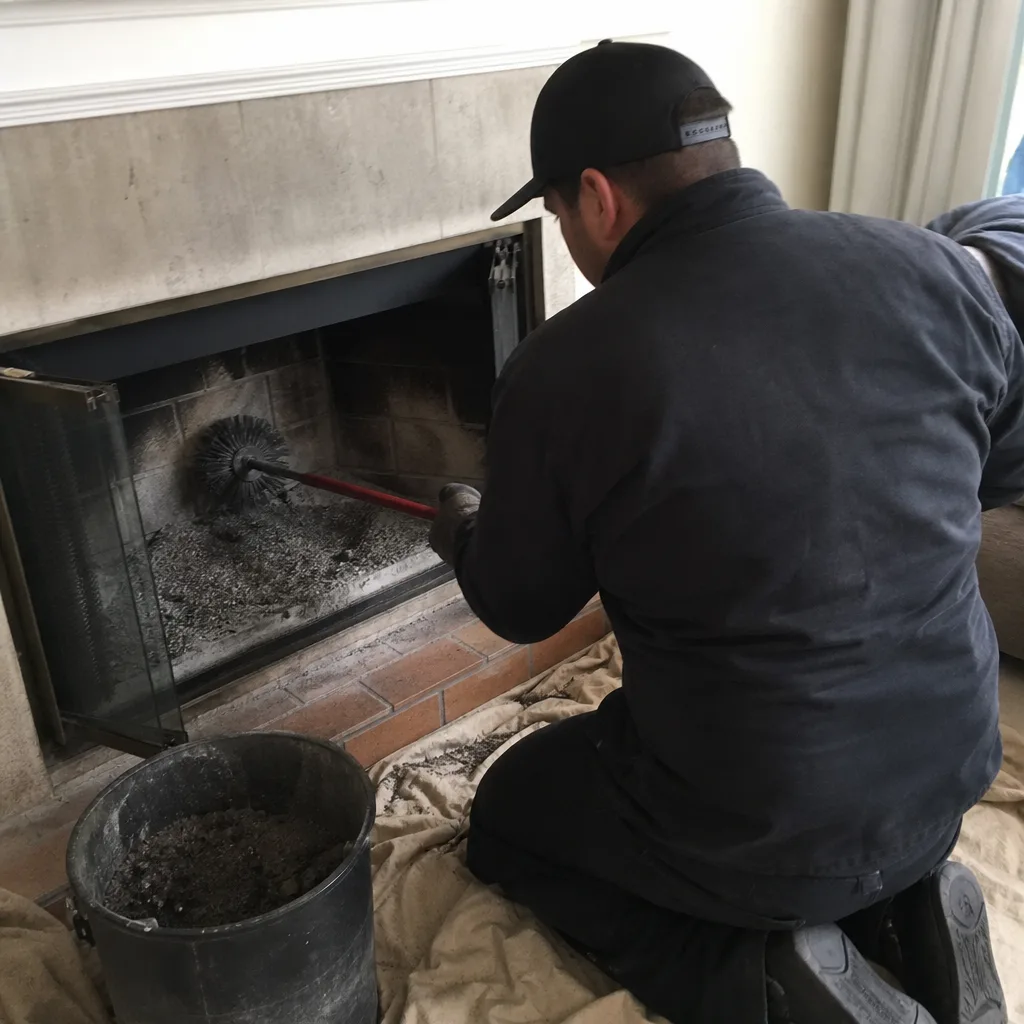
The firebox opening is sealed with a drop cloth and negative-pressure system before any brushing begins. This keeps soot and dislodged creosote from migrating into the room. Our technicians arrive in uniform and bring the equipment needed to protect your flooring, hearth, and surrounding surfaces – no garbage bags and painter’s tape. -
Mechanical Removal (Class I and Light Class II)
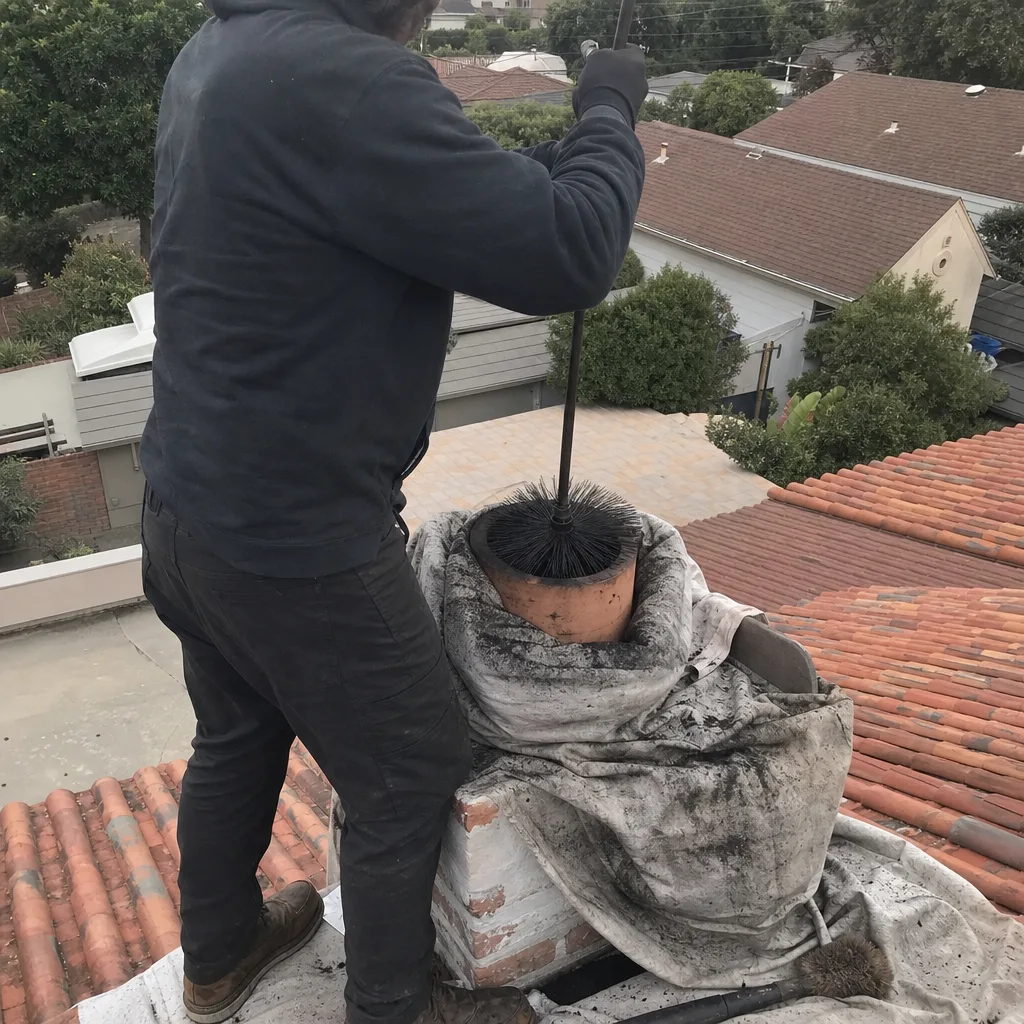
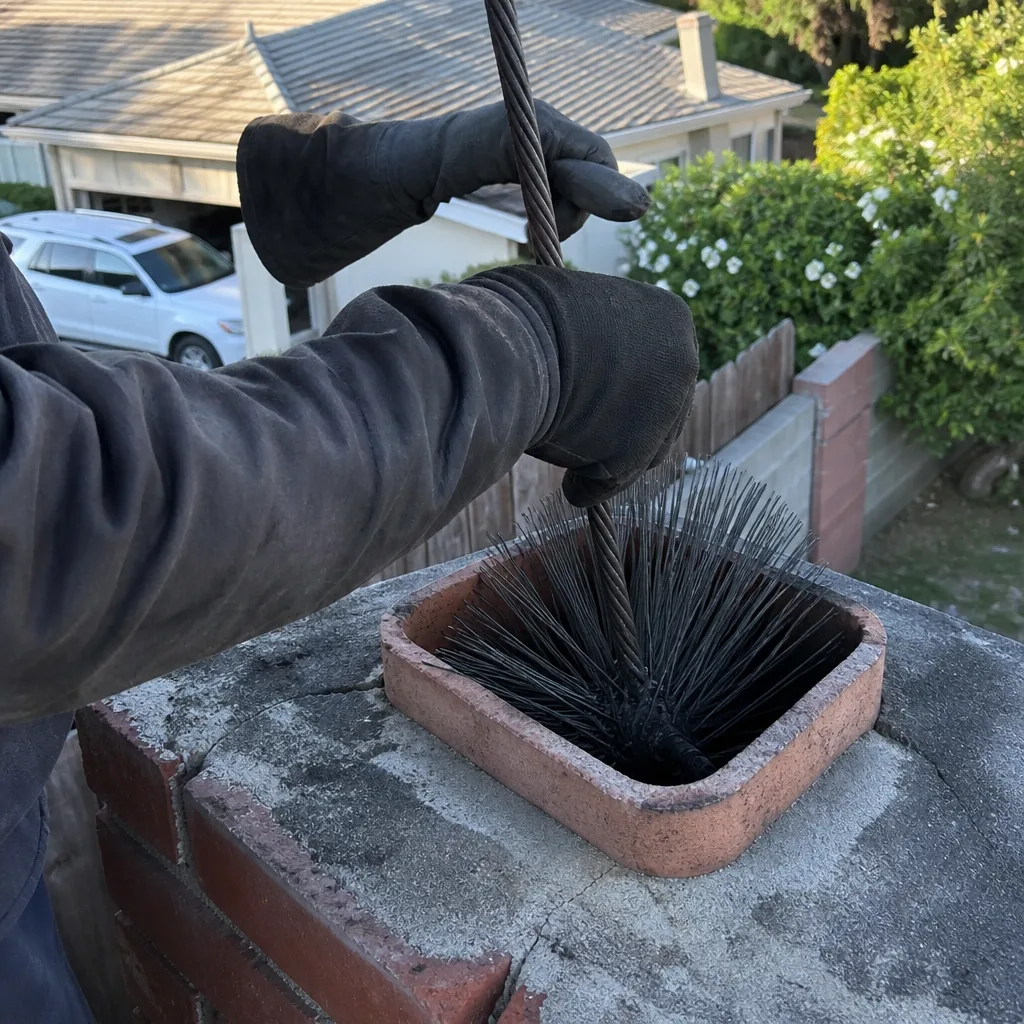
For standard dusty or lightly hardened deposits, rotary chimney brushes matched to your flue liner dimensions are worked from the top down. Dislodged material collects at the firebox base and is vacuumed out on completion. -
Chemical Pretreatment (Class II Heavy and Class III)
When glazed or heavily hardened deposits are present, a chemical conversion agent – typically a dry powder or spray formulation applied to the flue walls – is used to convert the dense, shiny creosote into a brushable, porous material. Depending on severity, this step may require a return visit 24 to 72 hours later for final mechanical removal. We tell you this up front, in the written scope, not after the first visit is done. -
Final Camera Verification and Photo Record
Once removal is complete, the camera goes back down. The post-job footage is documented alongside the pre-job scan so you can see exactly what changed. Clause 4 of the Haven Standard requires a photo record on every job; for creosote removal, that means before-and-after documentation included as standard, not as an upgrade. -
Written Scope and 365-Day Done Right Promise
Every creosote removal job is closed with a written summary of what was found, what was done, what materials were used, and what the warranty covers. The 365-Day Done Right Promise is stamped on the job record: if it’s not done right, we make it right. You leave with documentation, not a verbal handshake.
Creosote Removal Pricing in Long Beach
Creosote removal in Long Beach costs between $180 and $600 for most residential chimneys. Class III glazed creosote, which requires chemical pretreatment and sometimes two visits, can push costs toward the upper end of that range or beyond it on severely neglected flues. Here’s how the ranges typically break down:
| Creosote Class | Typical Cost Range | Notes |
|---|---|---|
| Class I (dusty/flaky) | $180 – $280 | Included in standard sweep; same-visit completion |
| Class II (tarry/semi-hardened) | $250 – $420 | May require chemical pretreatment; usually one visit |
| Class III (glazed) | $380 – $600+ | Chemical conversion required; sometimes two visits |
Several factors affect where your job lands in these ranges:
- Flue length and configuration. Single-story homes with short flue runs cost less to address than two-story Craftsmans or Spanish colonials in neighborhoods like Bluff Heights or Los Cerritos, where flue lengths can exceed 20 feet.
- Liner type. Clay tile, stainless steel, and cast-in-place liners each interact differently with chemical agents. The camera scan identifies this before pricing is set.
- Volume of buildup. A flue that hasn’t been touched in five or six years will take longer to clear than one swept annually, regardless of creosote class.
- Access and roof pitch. Some Long Beach properties – particularly older bungalows in Wrigley or craftsman-era homes near the Traffic Circle – have chimney configurations that require additional setup time from the roof side.
The written price you receive reflects what the camera found – not a ballpark based on a flashlight look from the firebox opening. If you have a competitor’s written estimate, bring it. We offer a free second opinion on any written quote, and we’ll tell you plainly whether it reflects the actual scope of work your flue requires.
FAQs – Creosote Removal in Long Beach
How much does creosote removal cost in Long Beach?
Creosote removal in Long Beach runs $180 to $600 for most homes, with glazed Class III deposits at the upper end of that range. The exact price depends on creosote class, flue length, liner type, and how much buildup is present – all of which a camera scan identifies before we write the price. Call (424) 401-5585 and we can walk you through what a typical job looks like for your chimney type.
Is creosote removal dangerous to do yourself?
For Class I dusty deposits, some homeowners use chimney brushes successfully. But Class II and Class III creosote are a different matter. Chemical conversion agents require proper respiratory protection and handling knowledge, and disturbing heavy glazed deposits without proper containment can release concentrated particulates into your living space. More critically, Class III creosote on a compromised liner is a structural fire risk – the kind that warrants a Level 2 Inspection with professional camera assessment before any removal attempt, not after. We’re not saying this to create work; we’re saying it because a chimney fire in a structurally damaged flue is a serious safety event, and the camera is the only way to know what condition the liner is in before you start.
How often should creosote be removed from a Long Beach chimney?
Annual Chimney Cleaning & Sweep services are the NFPA 211 standard for any wood-burning fireplace, and it’s a reasonable floor for Long Beach homes. That said, frequency depends on what and how much you’re burning. Homeowners in Lakewood Village or Signal Hill who burn two or three times a week through winter may need a mid-season check; those who use their fireplace four or five times a year rarely see more than Class I accumulation annually. A camera scan after each season gives you a documented record rather than a guess.
Can you remove creosote and inspect the liner in the same visit?
Yes, for Class I and most Class II jobs. The camera scan happens first, the written price follows, and then removal and final verification happen the same day. Class III glazed creosote sometimes requires a return visit 24 to 72 hours after chemical pretreatment – we tell you that in the written scope before we start, not after the first visit is complete. Call (424) 401-5585 to get an appointment scheduled; a live person answers every call.
What’s the difference between a chimney sweep and creosote removal?
A standard chimney sweep addresses Class I dusty deposits and light Class II buildup as part of routine annual maintenance. Creosote removal – as a distinct service – refers specifically to the chemical pretreatment and multi-step mechanical process required for heavy Class II and Class III glazed deposits that don’t respond to brushing alone. At Emberly Chimney Cleaners Long Beach, the camera scan at the start of every sweep tells us which service actually applies to your flue before any work begins.
What You Walk Away With After Every Job
A lot of chimney companies finish the work, collect payment, and hand you a receipt. That’s not what a documented job looks like.
After every creosote removal at Emberly Chimney Cleaners Long Beach, you receive: a before-and-after photo record from the camera scan, a written summary of creosote class found and method used, a written scope of what was done and what materials were applied, and the 365-Day Done Right Promise in writing. If something was found that we didn’t address – a cracked liner tile, a deteriorating crown, a missing or damaged chimney cap – it’s noted in the report with a plain description, not flagged verbally and forgotten.
That documentation practice has been part of how we work since 2009, across more than 38,000 chimney inspections and cleanings. It became Clause 4 of the Haven Standard because it turned out to be what homeowners actually needed: a record they could file, reference during a home sale, or show an insurance adjuster if a question ever came up.
If you have a gas insert, a wood stove, or a prefab fireplace alongside a traditional masonry system, the same standard applies. Every flue that burns something gets the same camera-first approach, because the flue liner doesn’t care what kind of firebox is below it.
Schedule Creosote Removal in Long Beach
If your fireplace smells off, hasn’t been swept in over a year, or you’re buying or selling a home in Long Beach and want a clean camera-documented record of the chimney’s condition, call Emberly Chimney Cleaners Long Beach at (424) 401-5585. A live person answers every call, every day. We’ll tell you what the camera finds, put the price in writing before anyone starts, and give you a photo record when the job is done.
A free second opinion on any written estimate is always available – bring us a competitor’s quote and we’ll review the scope honestly. No pressure, no countdown, just a plain read of whether the work and the price match what’s actually in your flue.
Written by Corrine Halstead, Owner at Emberly Chimney Cleaners Long Beach, serving Long Beach.